May 24, 2026
Amazon A+ Content for Beauty Products (2026 Guide)
Learn which A+ content modules convert for beauty brands on Amazon in 2026 — module stacks, subcategory strategy, and what to avoid on mobile.
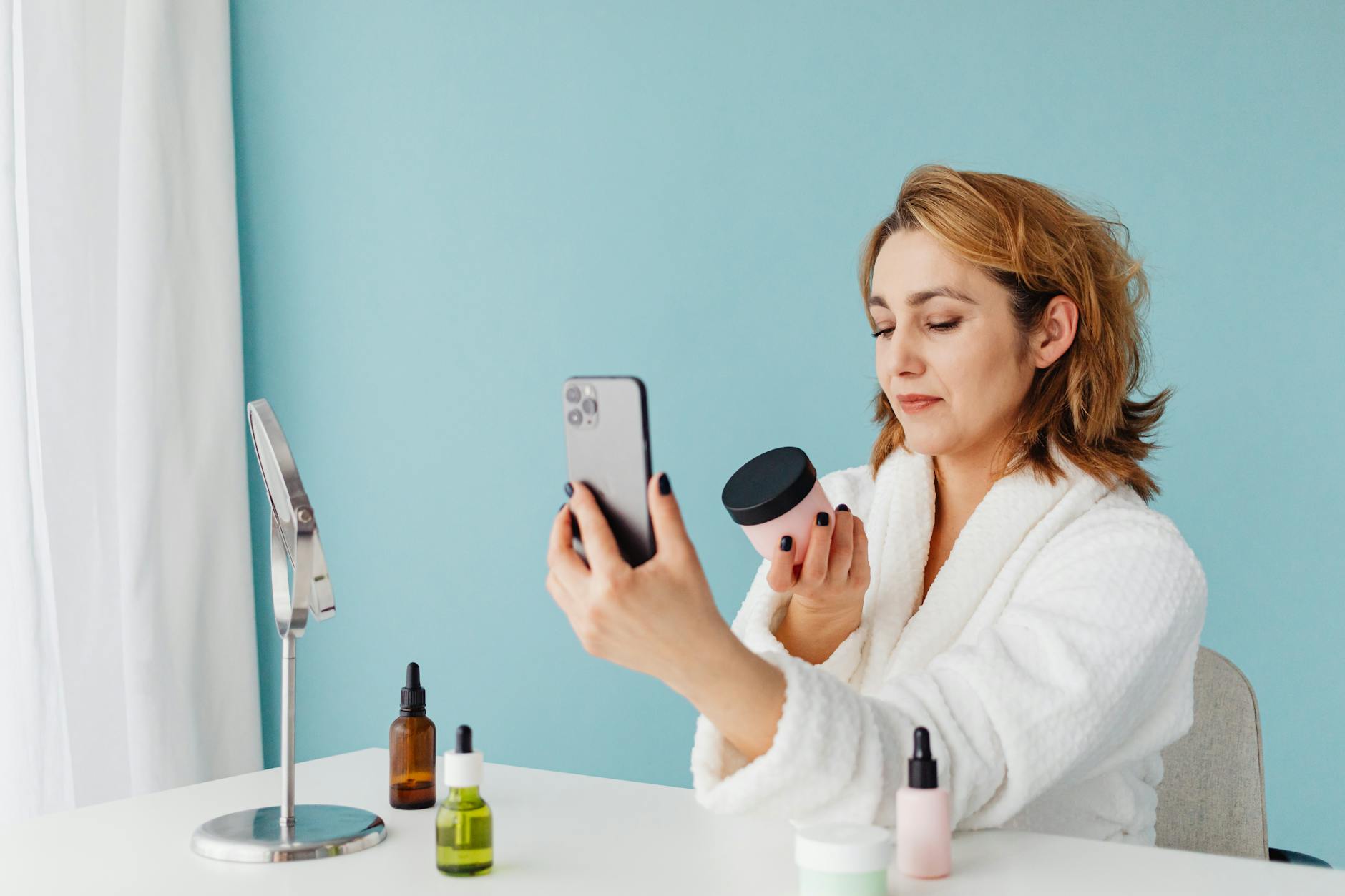
Amazon A+ content is the single biggest lever most beauty brands leave untouched on their listings — and in 2026, that gap costs real revenue.
TL;DR: For premium beauty and cosmetics brands selling on Amazon, A+ content is not decoration — it is a structured sales argument. The brands that get it right in 2026 use a specific module mix: a comparison chart, ingredient-led storytelling, lifestyle imagery sized to mobile, and a brand story that earns trust before the buy box does the closing. Booscala manages A+ strategy for premium beauty clients across the US and EU, and the patterns in top-performing listings are consistent and repeatable.
Why this matters
Amazon's own data (published 2023) shows A+ content lifts conversion rates by an average of 3–10% on existing ASINs. For a beauty product priced at $45 with 500 monthly units, a 5% conversion lift adds roughly $1,100 in monthly revenue from zero additional ad spend. In a category where CPC costs climbed sharply through 2025 and are holding in 2026, that organic lift matters more than it did two years ago.
Beauty is also one of Amazon's highest-competition categories. Shoppers compare ingredient stacks, texture claims, and brand provenance within seconds. A+ content is the only space on the page where you control the narrative without character limits.
Who this is for
This guide is for the founder or marketing lead at a premium beauty or cosmetics brand already selling on Amazon — or planning to launch in 2026. You have Brand Registry. You have product photography. What you likely do not have is a module strategy built specifically for how beauty shoppers actually scan a listing page on mobile before deciding.
What to look for in A+ content for beauty products
Module selection that matches the beauty buyer journey
Amazon offers multiple A+ module types, and most brands default to whatever their designer finds easiest. The problem: beauty buyers follow a specific sequence — visual hook, ingredient proof, texture/result, brand trust. Your module order should mirror that sequence. Putting a brand story module first when the shopper has not yet decided the product is for them loses the conversion before it starts.
Mobile-first image dimensions and text density
More than 60% of Amazon beauty purchases in 2026 happen on mobile. The standard A+ canvas is 970px wide, but on mobile that compresses dramatically. Images with text overlaid at small sizes become unreadable. Hero modules need clean hero images with minimal overlay copy — the detail goes in the text fields below, not burned into the image.
Ingredient and benefit specificity over generic claims
Beauty shoppers in the premium segment — the exact buyers Booscala's clients target — do not trust "nourishing formula" or "clinically tested" without context. A+ content that names the active, states the percentage when available, and explains the mechanism outperforms generic claim copy in click-through-to-cart rates. This is especially critical in skincare, where ingredient-literate buyers will verify what you say against third-party sources.
A comparison chart built for category conquest
The comparison module (Product Comparison Chart) is the highest-value module in beauty for brands with more than one ASIN. It keeps shoppers in your brand ecosystem instead of letting Amazon's algorithm pull them to a competitor. Build the chart around the axes that matter to your specific buyer: skin type, coverage level, SPF value, scent profile — not generic features like "size" or "color options."
Brand story that earns, not performs
The A+ Brand Story section (if you have Premium A+) is a persistent strip across all your ASINs. In 2026, shoppers increasingly use it as a trust signal when evaluating unfamiliar brands. Keep it factual: founding year, sourcing commitment, any third-party certifications. Skip the aspirational paragraph about "radiance and confidence" — it reads as filler and converts like filler.
Consistency across the catalog
If you have 12 SKUs and only 3 have A+ content, the 9 without it look like orphans — and Amazon's algorithm treats page quality as a signal in search ranking. Brands that Booscala manages see better category ranking stability when A+ coverage is complete across the full catalog, not just the hero ASIN.
Top configurations for beauty A+ content
The safe pick — ingredient-forward four-module stack
Module order: Header image (hero product shot, clean background) → Four-image + text (ingredient benefits, one per module) → Product description text → Comparison chart. This configuration works across skincare, haircare, and color cosmetics. It scores well on mobile because no single module demands excessive scroll depth. Verdict: Buy for any catalog launch or relaunch in 2026.
The conversion play — lifestyle-plus-comparison hybrid
Module order: Header image (in-use lifestyle shot) → Comparison chart (placed second, not buried) → Three-image text (results and routine context) → Brand story strip. Moving the comparison chart to position two captures shoppers comparing products early in their scroll rather than hoping they reach it. Booscala's premium skincare clients using this layout in 2025–2026 have shown it performs especially well on anti-aging and treatment SKUs where the buyer is evaluating multiple options. Verdict: Buy for brands with 3+ ASINs in the same subcategory.
The wildcard — video-led Premium A+
If you qualify for Premium A+ (Brand Story published, Brand Registry in good standing), a looping 30–90 second product video placed in the first module position outperforms static hero images on color cosmetics and makeup tools. The catch: video production quality must match the premium positioning. Low-resolution or unbranded video content reduces trust signals rather than building them. Verdict: Buy only if you can execute at the visual quality your price point demands. Skip if video budget is constrained.
The underperformer — wall-of-text modules
Four-column text-heavy modules with no imagery read like an instruction manual. They perform below baseline in beauty, where the category is fundamentally visual. Verdict: Skip.
The trap — full-bleed lifestyle with no copy
Full-bleed lifestyle images with zero text or structured copy look beautiful on desktop and communicate nothing on mobile. Amazon's indexing also cannot read image text, so these modules contribute zero keyword relevance. Verdict: Skip.
What to avoid
Generic claim language without evidence. "Dermatologist-approved" with no certification link, "best-selling formula" with no context — these phrases exist in hundreds of competing listings and carry no weight with premium buyers or with Amazon's ranking signals.
Ignoring the mobile render before publishing. Preview every module in Amazon's mobile simulator before setting to live. Modules that look correct in the desktop editor routinely break on 375px screens — text clips, images stack in the wrong order, CTA copy disappears.
Publishing A+ and leaving it static. A+ content is not a one-time task. Seasonal imagery, new clinical data, updated comparison charts as the catalog evolves — listings that refresh A+ content at least once per year maintain stronger engagement metrics than those set in 2023 and never touched.
Comparison: A+ configuration by beauty subcategory
Skincare / Treatment
Priority Module: Ingredient breakdown
Second Module: Comparison chart
Skip: Full-bleed lifestyle only
Color cosmetics
Priority Module: Video or lifestyle hero
Second Module: Shade comparison chart
Skip: Text-heavy four-column
Haircare
Priority Module: Before/after or texture
Second Module: Routine context
Skip: Generic brand story first
Fragrance
Priority Module: Brand story (provenance)
Second Module: Ingredient/note breakdown
Skip: Dense spec copy
Tools & devices
Priority Module: How-to or in-use
Second Module: Technical comparison
Skip: Copy-only modules
FAQ
What is Amazon A+ content for beauty products? A+ content is enhanced listing real estate below the bullet points on an Amazon product page. It lets brands add structured modules — images, text, comparison tables, and video — to make the case for purchase beyond what the title and bullets can hold. For beauty brands, it is the primary space to explain formulation, differentiate from competitors, and build trust before the buyer clicks "Add to Cart."
How much does Amazon A+ content cost to create? Amazon charges nothing to publish A+ content itself — it is included with Brand Registry. Production costs depend on what you bring in-house versus outsource. Expect $800–$2,500 per ASIN for professionally produced A+ content (copywriting, design, module build) from a specialist agency in 2026. Premium A+ with video adds to that range depending on production scope.
Does A+ content help SEO on Amazon? Directly, no — Amazon's A9 algorithm does not index text inside A+ image files. Indirectly, yes — A+ content improves conversion rate, session-to-purchase rate, and dwell time, all of which feed into Amazon's ranking signals. The text fields in A+ modules (not image overlays) are crawled and can support indexing.
Is A+ content worth it for a new beauty brand on Amazon? Yes, and the earlier the better. A new ASIN with A+ content from day one avoids the lower-conversion baseline that makes it harder to build organic ranking in the first 90 days. In 2026, launching without A+ in beauty is a structural disadvantage in every subcategory above $20 price point.
What is Premium A+ and how do I qualify? Premium A+ (formerly A++ content) gives access to larger image modules, interactive hotspots, video, and the Brand Story carousel. Qualification in 2026 requires an active Brand Story published on at least one ASIN, Brand Registry enrollment, and meeting Amazon's publishing thresholds (typically 5 approved A+ projects in the past 12 months, though Amazon adjusts criteria periodically).
How long does A+ content take to get approved on Amazon? Amazon's review queue for A+ submissions runs 7–10 business days in standard conditions. During peak periods (Q4, Prime Day lead-up), approvals can extend to 14+ days. Build that timeline into any launch or relaunch plan.
Can I use A+ content on every beauty ASIN? Yes, as long as the ASIN is enrolled under your brand in Brand Registry. Parent and child ASINs (e.g., a foundation in multiple shades) share the same A+ content by default, so the modules must work for all variants. Where variants differ substantially, the comparison chart module handles differentiation within a single A+ template.
Should I hire an agency to manage A+ content or do it in-house? For a single hero ASIN, in-house is viable if you have a designer familiar with Amazon's module specs. For catalogs of 10+ SKUs, multi-market listings (US plus EU), or when A+ is part of a broader listing optimization and PPC strategy, an agency that specializes in Amazon beauty — like Booscala — produces faster turnaround and avoids the common mobile-render and approval errors that delay launches.
One last thing
Amazon deprecated several legacy A+ module types in 2023–2024. If any of your existing A+ content was built before mid-2023, check now whether any modules have been auto-converted or flagged — converted modules often lose their original formatting and can significantly degrade the mobile experience without triggering any notification to the brand.
