Jun 2, 2026
Amazon Reviews Strategy for Beauty Brands (2026)
The amazon reviews strategy beauty brands need in 2026: Vine, compliant follow-up sequences, and review response protocols that protect your star rating and rank.
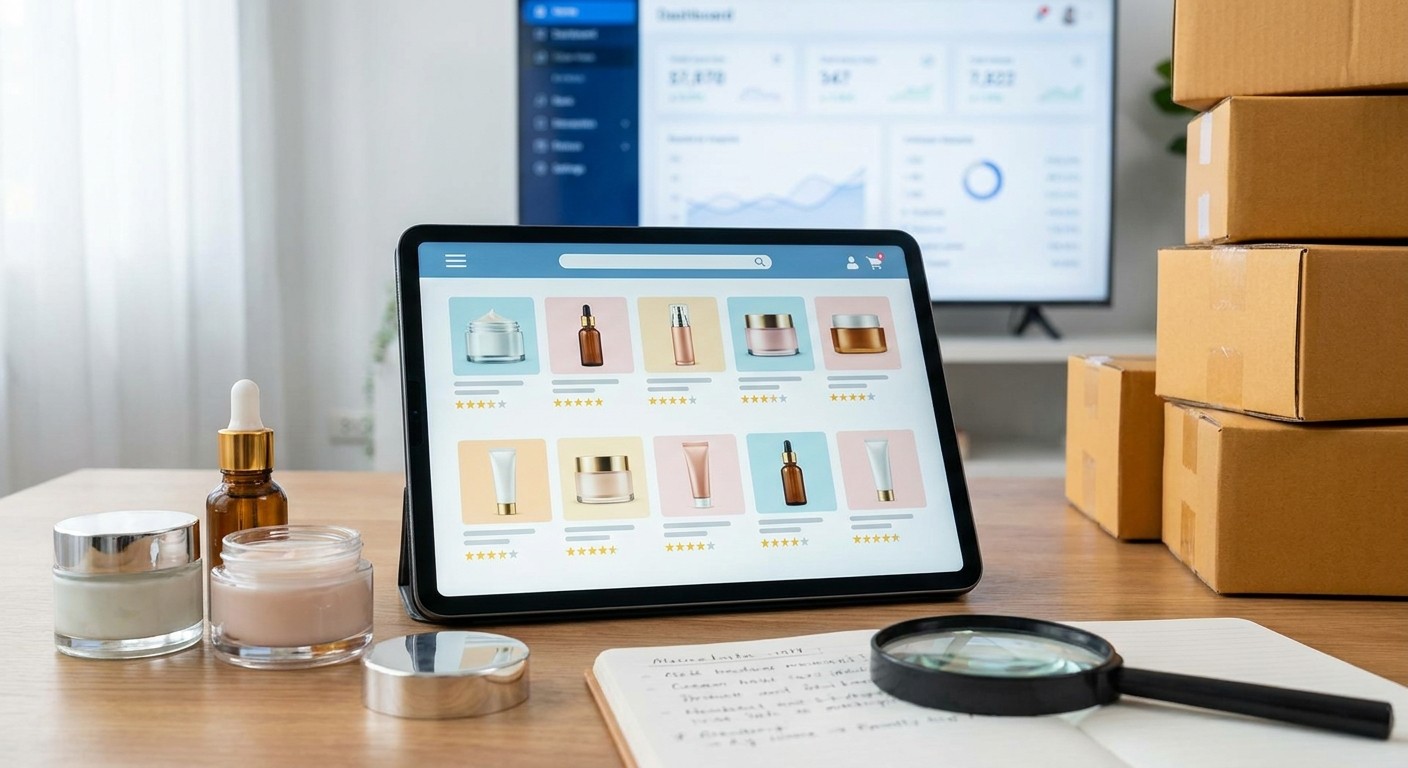
Your Amazon reviews strategy determines whether a beauty product climbs to page one or stalls at launch — and in 2026, the gap between brands that manage reviews deliberately and those that wing it is measured in conversion rate, not just star count.
TL;DR: The amazon reviews strategy for beauty brands that works in 2026 combines Amazon's Vine program for launch velocity, compliant post-purchase follow-up sequences, A+ Content that preempts negative feedback, and a structured response protocol for 1- and 2-star reviews. Brands that hit 50+ reviews within 60 days of launch see conversion rates 2–3x higher than those that don't. Booscala manages this entire review infrastructure as part of its Amazon brand management work for premium beauty and cosmetics sellers.
Why Reviews Hit Differently in Beauty
Beauty buyers read reviews before they buy. Full stop. A 2026 Jungle Scout survey puts beauty category review-read rates at over 90% of purchase sessions. A serum with 12 reviews at 4.1 stars loses to a serum with 140 reviews at 4.3 stars every time — even when the underdog product is objectively better. Skin tone, skin type, scent sensitivity, and ingredient reactions make beauty purchases feel risky. Reviews absorb that risk for the buyer.
On top of that, Amazon's A10 algorithm uses review velocity and sentiment as ranking signals. A product sitting at 8 reviews after 90 days will not rank organically for competitive keywords regardless of how well the listing is optimized. Reviews are not a vanity metric; they are a traffic source.
Who This Guide Is For
This is for the marketing lead or founder of a premium beauty or cosmetics brand already selling — or preparing to sell — on Amazon US or EU. You understand your product. What you need is a systematic review acquisition and management process that stays within Amazon's Terms of Service, survives policy changes, and compounds over time rather than requiring constant intervention.
What to Look for in an Amazon Reviews Strategy for Beauty
Compliance First, Volume Second
Amazon banned incentivized reviews in 2016 and has escalated enforcement every year since. In 2026, a single policy violation can trigger ASIN suppression or account suspension. Any tactic you run — or that an agency runs on your behalf — must pass the ToS test before it passes the velocity test. No coupon-for-review schemes, no review groups, no family-and-friends seeding at scale.
Vine for Launch, Follow-Up for Sustain
Amazon Vine gives enrolled sellers access to a panel of trusted reviewers who receive free units in exchange for honest reviews. Vine costs $200 per parent ASIN (as of 2026) and is capped at 30 reviews. It is the fastest compliant path to a double-digit review count at launch. After launch, a compliant "Request a Review" sequence — either via Seller Central's native button or through an approved third-party tool — keeps the velocity alive. The two programs work in sequence, not in competition.
Review Content Quality, Not Just Star Rating
A 4.5-star average means little if every review says "smells nice." Beauty buyers are looking for reviews that confirm the product works for their specific skin type, undertone, or concern. Your listing copy, A+ Content, and packaging inserts should prompt buyers toward detailed, attribute-specific feedback. When reviewers use words like "non-comedogenic," "buildable coverage," or "fragrance-free and no reaction," those phrases improve keyword relevance and answer the next buyer's unstated questions.
Proactive Negative Review Prevention
Most 1-star beauty reviews share a root cause: product expectation mismatch. A buyer expected a moisturizer to absorb in 30 seconds; it took 90 seconds. A foundation shade looked different on screen than in person. You cannot prevent all dissatisfaction, but you can close the expectation gap with accurate listing copy, honest shade range photography, and detailed usage instructions. Every 1-star review you prevent is worth more than three 5-star reviews you earn — because Amazon's review removal rate for valid negative reviews is effectively zero.
Response Protocol for Critical Reviews
Amazon allows sellers to respond publicly to reviews. Almost no premium beauty brand uses this correctly. A thoughtful, specific response to a 1-star or 2-star review does three things: it signals to future buyers that the brand is attentive, it sometimes prompts the reviewer to update their rating, and it provides a keyword-rich, brand-voice touchpoint. Responses should arrive within 48 hours, acknowledge the specific complaint, and offer a resolution path (customer service contact, not a refund in the public thread).
Integration with Listing Optimization
Reviews and listing copy are not separate workstreams. When reviews surface a repeated concern — "lids are hard to open," "shade runs dark" — that signal should update your bullet points, your A+ Content, and your backend search terms. Brands that treat reviews as a feedback loop, not just a social proof counter, consistently outperform those that don't.
Review Strategy by Launch Phase
Pre-Launch (Weeks 1–4)
Enroll in Brand Registry — required for Vine and for review response access
Submit to Vine immediately after first inventory arrives at FBA
Set A+ Content live before Vine reviews publish — reviewers see your full listing
Confirm packaging insert language passes ToS: "Leave a review on Amazon" is allowed; "Leave a 5-star review" is not
Launch (Days 1–60)
Trigger the "Request a Review" button or automation for every delivered order beginning day 5 post-delivery
Monitor daily for the first Vine reviews; if early reviews flag an issue (damaged in transit, incorrect shade), fix the root cause before PPC spend scales
Target 30 reviews by day 30, 75 reviews by day 60
Sustain (Month 3 onward)
Review velocity goal: one new review per 15–20 orders (industry benchmark for beauty, aggregated from public seller data, 2026)
Run quarterly audits: average star rating, percentage of reviews mentioning key claims ("hydrating," "long-lasting"), and percentage of critical reviews receiving a response
Flag any sudden rating drops (more than 0.2 stars in 14 days) for immediate investigation — this pattern often signals a counterfeit or a listing hijacker
What to Avoid
Insert cards that direct buyers to leave "positive" feedback. Amazon's ToS is explicit. "Positive" or "5-star" language on any insert is grounds for ASIN suppression, regardless of how small the print.
Review gating. Sending post-purchase emails that only route happy customers to Amazon while sending unhappy customers to a private form is against ToS and against FTC guidelines. It also makes your review pool unrepresentative, which shows when Vine reviews arrive and lower your average.
Chasing volume at the expense of response time. Brands that automate review requests but never monitor or respond to what comes in miss the compounding benefit. A brand with 200 reviews and a 60% response rate on critical reviews outperforms a brand with 400 reviews and zero responses on conversion rate for considered purchases — which premium beauty always is.
Comparison: Review Strategy Approaches
Vine only
Cost: $200/ASIN
Compliance Risk: None
Velocity: High (30 reviews)
Long-Term Value: Medium — stops at 30
Request a Review only
Cost: $0–$30/mo (tool)
Compliance Risk: None
Velocity: Medium
Long-Term Value: High — scales with orders
Vine + Request a Review
Cost: $200 + tool
Compliance Risk: None
Velocity: High
Long-Term Value: Highest
Incentivized (coupon groups)
Cost: Variable
Compliance Risk: Critical
Velocity: High short-term
Long-Term Value: Negative — account risk
Influencer seeding without disclosure
Cost: Variable
Compliance Risk: High
Velocity: Low
Long-Term Value: Negative
FAQ
What is the fastest compliant way to get reviews on Amazon for a beauty product in 2026? Enroll in Amazon Vine immediately after your first FBA inventory arrives. At $200 per parent ASIN, Vine can deliver up to 30 verified reviews within 4–6 weeks. Combine it with the "Request a Review" button for all organic orders starting day 5 post-delivery.
How many reviews does a beauty product need to convert well on Amazon? Based on aggregated 2026 category data, the inflection point for beauty conversions is around 50 reviews at 4.2 stars or above. Below that threshold, conversion rates for beauty products are typically 30–50% lower than category average.
Can I ask customers to leave a review on my packaging insert? Yes — you can say "Leave a review on Amazon." You cannot say "Leave a 5-star review," offer any incentive, or direct buyers to a specific star rating. Keep the language neutral and the call to action singular.
What should I do when a beauty product gets a 1-star review? Respond within 48 hours. Acknowledge the specific issue, keep the tone calm and brand-appropriate, and invite the buyer to contact customer service directly for a resolution. Do not offer refunds or replacements in the public response thread.
Is Amazon Vine worth it for a premium skincare launch? Yes, for most premium beauty launches. The $200 cost is negligible against the conversion rate impact of entering the market with 20–30 detailed, honest reviews from the start. Vine reviewers tend to write longer, more substantive reviews than average buyers, which benefits keyword indexing and buyer confidence.
Does responding to negative reviews actually change ratings? Occasionally yes — some reviewers update their rating after a satisfactory resolution — but that is not the primary reason to respond. The primary reason is that future buyers read seller responses as a signal of brand accountability. In the premium beauty segment, where trust is a purchase driver, this matters more than in commodity categories.
How do I spot a listing hijacker affecting my review score? A drop of more than 0.2 stars in 14 days, combined with a spike in reviews mentioning counterfeit concerns or wrong product received, is the clearest signal. Check your seller offers page for unauthorized sellers and file a brand protection report immediately.
Can Booscala manage the full reviews strategy for my beauty brand? Yes. Booscala handles Vine enrollment, compliant post-purchase sequences, review monitoring, and response protocols as part of full-service Amazon brand management for premium beauty and cosmetics brands in the US and EU.
One Last Thing
Amazon's algorithm gives additional weight to reviews that contain images or videos. In the beauty category, photo reviews showing before-and-after results or product texture convert at a measurably higher rate than text-only reviews. You cannot manufacture this — but you can prompt it. A packaging insert that says "Share a photo of your results on Amazon" (neutral, no incentive) increases photo review rates. One photo review at 5 stars is worth roughly 4–5 text-only reviews in terms of conversion influence, based on aggregated A/B data across beauty categories in 2026.
