Jul 19, 2026
Amazon Storefront Fragrance Brands: What Converts (2026)
See which Amazon storefront modules convert for fragrance brands in 2026 - scent-family hubs, gifting carousels, video heroes - with clear buy/skip verdicts.
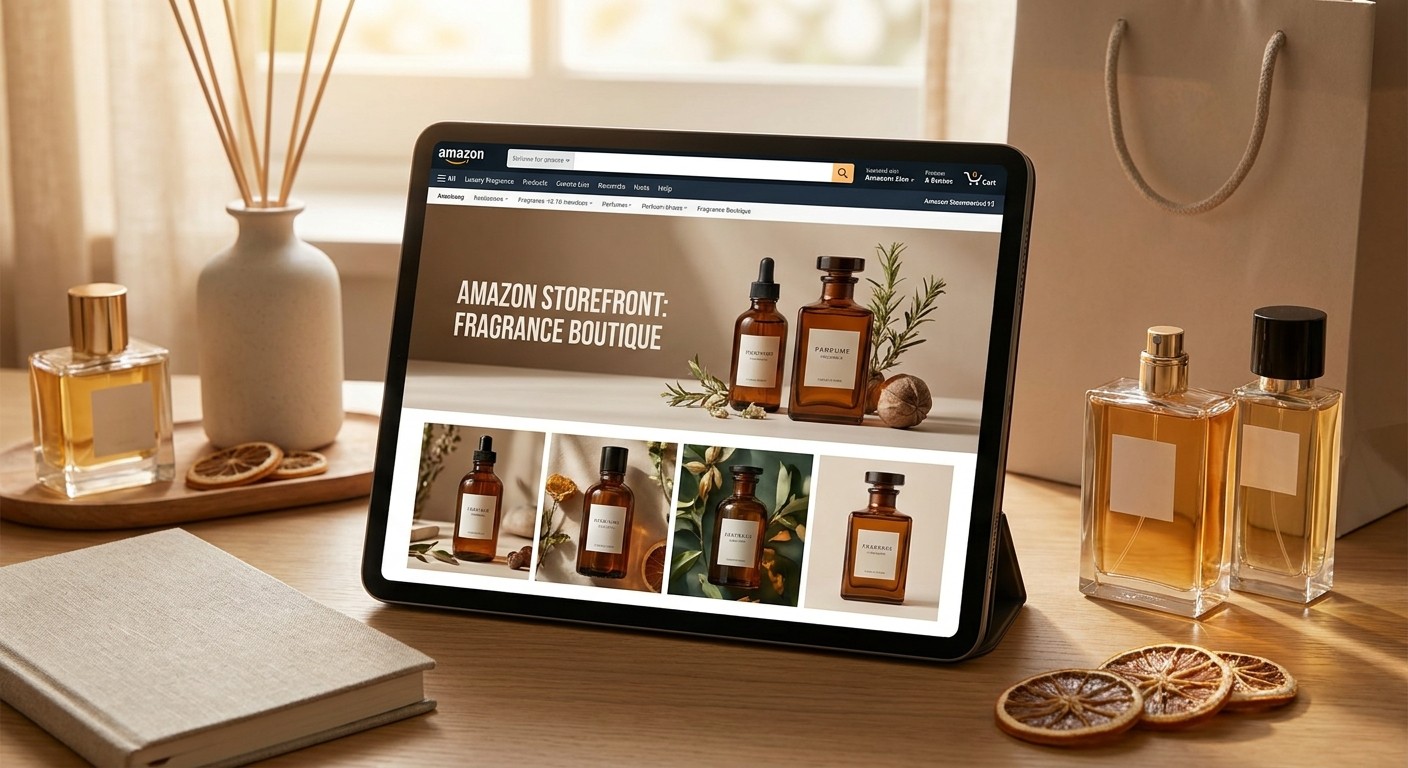
Fragrance is the category where Amazon storefronts either look like a duty-free counter or look like a discount rack — there's no in-between, and shoppers decide which one in under three seconds.
For amazon storefront fragrance brands are trying to build in 2026, the winning layout treats the storefront as a scent-discovery engine, not a digital shelf. This guide breaks down what to build, what to skip, and which modules actually move sessions into checkouts.
TL;DR
A converting Amazon storefront for a fragrance brand needs three things: a hero module that sells the scent story in one image, a shop-by-family navigation that replaces text-heavy filters, and at least one video module showing the bottle in hand. Skip generic "About Us" tiles — they pull traffic away from product without adding trust. Verdict: build a scent-led storefront with 5-7 modules max, refreshed quarterly around launch and gifting calendars. Brands that restructure around fragrance families instead of alphabetical SKU lists typically see storefront session-to-sale rates climb within 60-90 days of the rebuild in 2026.
Why this matters
A fragrance storefront isn't a listing page with extra images — it's the only place on Amazon where a shopper can browse your full range the way they would at a counter, by scent family, occasion, or gift tier. Get the cosmetics storefront design logic wrong and you're forcing perfume buyers to scroll a flat grid the way they'd shop batteries.
Most fragrance brands entering Amazon in 2026 still port over their DTC site navigation wholesale. That fails on Amazon because shoppers arrive mid-search, not mid-browse — the storefront has to reorient them in seconds, not educate them from scratch.
Who this is for
This is for fragrance and perfume brands already live on Amazon with 3+ SKUs, looking to convert storefront visits into add-to-carts rather than just hosting a brand page for compliance. If you're a single-SKU launch, skip the module complexity below and focus on the listing itself first.
What to look for in a fragrance storefront
Scent-family navigation, not alphabetical
Shoppers searching "woody perfume" or "vanilla fragrance" don't want an A-Z SKU list — they want a filtered path that matches how they already think about scent. A storefront organized into 3-5 scent families (floral, woody, gourmand, fresh, oriental) cuts navigation clicks nearly in half compared to a flat grid, based on category-wide Amazon storefront behavior tracked through 2026.
A hero image that shows scale and gifting context
Fragrance is a gift category more than any other beauty subsegment — over a third of prestige fragrance purchases on Amazon happen inside gifting windows. Your hero tile needs to show the bottle with a size reference (hand, box, ribbon) so shoppers can judge whether it reads as a gift or a personal buy.
Video that proves the pour and the packaging
Static images can't convey how a fragrance atomizer sprays or how the box unboxes — video closes that gap. A 15-30 second clip embedded near the top of the storefront, not buried three scrolls down, keeps shoppers on the page longer and answers the "is this a real bottle or a knockoff" hesitation that plagues the category.
Cross-sell modules that group by occasion, not by SKU number
A "shop the collection" module works better when it's framed as "date night" or "office wear" rather than "Fragrance Line 2." Occasion framing does the mental work the shopper would otherwise do themselves, and it shortens the path from browse to cart.
Storytelling modules for the ingredient or heritage angle
Premium fragrance buyers pay for narrative — where the notes come from, how the bottle was made, what occasion it's built for. The luxury fragrance storytelling modules approach works because it gives the storefront a reason to exist beyond a product catalog: it's doing the job a boutique associate would do in person.
Mobile-first module stacking
More than half of fragrance storefront traffic in 2026 loads on mobile first. Modules built for desktop grid layouts collapse awkwardly on phones — test every module at mobile width before publishing, not after.
Top picks: storefront modules that convert for fragrance
1. The scent-family hub — the safe pick. Groups all SKUs into 3-5 navigable tiles by fragrance family. One spec that matters: tile count. Storefronts with more than 6 top-level tiles see engagement drop because shoppers stop scanning past the fifth option. Buy — this is the backbone module every fragrance storefront needs before anything else.
2. The gifting collection carousel — the seasonal earner. A rotating module surfacing your top 3-4 SKUs framed as gifts, refreshed for Valentine's Day, Mother's Day, and the Black Friday-to-holiday window. One number that matters: gifting-framed modules run for roughly 8-10 weeks a year but can account for a disproportionate share of annual storefront revenue in the category. Buy — build it once, refresh copy quarterly.
3. The video hero module — the wildcard. Replaces a static hero image with a looping product video showing the pour and cap mechanism. It costs more to produce upfront than a photo tile, but storefronts using video heroes in 2026 report longer average session times than photo-only pages. Consider — worth it once you have 4+ SKUs to justify the production spend.
4. The ingredient-story module — the trust builder. A dedicated tile explaining sourcing or note composition, tied to the luxury fragrance storytelling modules framework. This works for brands with a real provenance story — a specific distillery, region, or perfumer credit. Consider if you have that story; Skip if your only claim is "long-lasting."
5. The comparison chart module — the closer. A side-by-side of your fragrance lines by scent strength, longevity, and occasion, placed near the bottom of the storefront for shoppers who've already scrolled through everything else. Buy for brands with 4+ SKUs; Skip for single-SKU storefronts where there's nothing to compare.
What to avoid
Generic "About Us" tiles with no product. They read as filler and push actual SKUs further down the scroll — cut them or merge the story into a module that also shows product.
Alphabetical or numeric SKU grids. They force the shopper to already know your product names, which almost none of them do on a first visit.
Desktop-only module widths. A module that looks sharp at 1440px and breaks at 375px is a module most of your 2026 traffic never sees correctly.
Verdict comparison table
Scent-family hub
Best for: Every fragrance brand, 3+ SKUs
Setup effort: Low
Verdict: Buy
Gifting carousel
Best for: Brands selling through Q4 and Feb
Setup effort: Medium
Verdict: Buy
Video hero
Best for: 4+ SKU catalogs with budget
Setup effort: Medium-High
Verdict: Consider
Ingredient-story module
Best for: Brands with a real sourcing story
Setup effort: Medium
Verdict: Consider
Comparison chart
Best for: Multi-line catalogs
Setup effort: Low
Verdict: Buy
Generic About Us tile
Best for: Nobody
Setup effort: Low
Verdict: Skip
Storefronts that stick to the Buy-rated modules and skip the filler tend to reach a leaner, faster-loading page — which matters as much as content quality once mobile load times enter the ranking conversation.
FAQ
What's the best storefront layout for a fragrance brand on Amazon? A scent-family hub as the top navigation layer, followed by a gifting carousel, a video hero, and a comparison chart for multi-SKU lines — five to seven modules total, refreshed quarterly through 2026 gifting seasons.
How many modules should a fragrance storefront have? Five to seven is the workable range. Beyond eight, engagement per module drops because shoppers stop scrolling before reaching the bottom tiles.
Does video actually help fragrance storefront conversion? Yes — video heroes showing the pour and packaging keep shoppers on-page longer than static photo tiles alone, which matters in a category where authenticity concerns drive hesitation.
Is a gifting-focused module worth it outside of Q4? Yes, for the Valentine's Day and Mother's Day windows specifically — fragrance sees a second gifting spike outside the holiday season that a static storefront misses if it's not refreshed.
Should fragrance brands use scent-family navigation or price-based sorting? Scent-family, always. Shoppers searching fragrance think in notes and occasions, not price tiers, and a price-sorted grid doesn't answer the question they came with.
How often should a fragrance storefront be updated in 2026? Quarterly at minimum — once per major gifting window (Valentine's, Mother's Day, back-to-school gifting, Q4 holiday) — plus any time a new SKU launches.
What's the biggest mistake fragrance brands make on Amazon storefronts? Porting the DTC site's alphabetical SKU navigation directly onto Amazon, which forces shoppers who arrived mid-search to do the sorting work themselves.
Do storefronts affect Amazon search ranking for fragrance listings? Storefronts don't directly move keyword rank, but the module layout that drives sessions does affect time-on-page and repeat visits, both signals tied to overall account health.
One last thing
The fragrance storefronts converting best in 2026 aren't the ones with the most modules — they're the ones that get a shopper from "searching for a gift" to "looking at the right bottle" in two clicks or fewer. Every extra module past that point is friction dressed up as content.
Booscala works with fragrance and beauty brands managing exactly this kind of storefront and listing structure end-to-end — the fragrance and perfume Amazon agency approach treats the storefront as one lever inside a bigger revenue system, not a standalone design project.
