Amazon Beauty Product Recall: 2026 Response Playbook
Handling an amazon beauty product recall in 2026 means filing within 24 hours and relisting in 30-45 days. Here's the exact step-by-step process to follow.
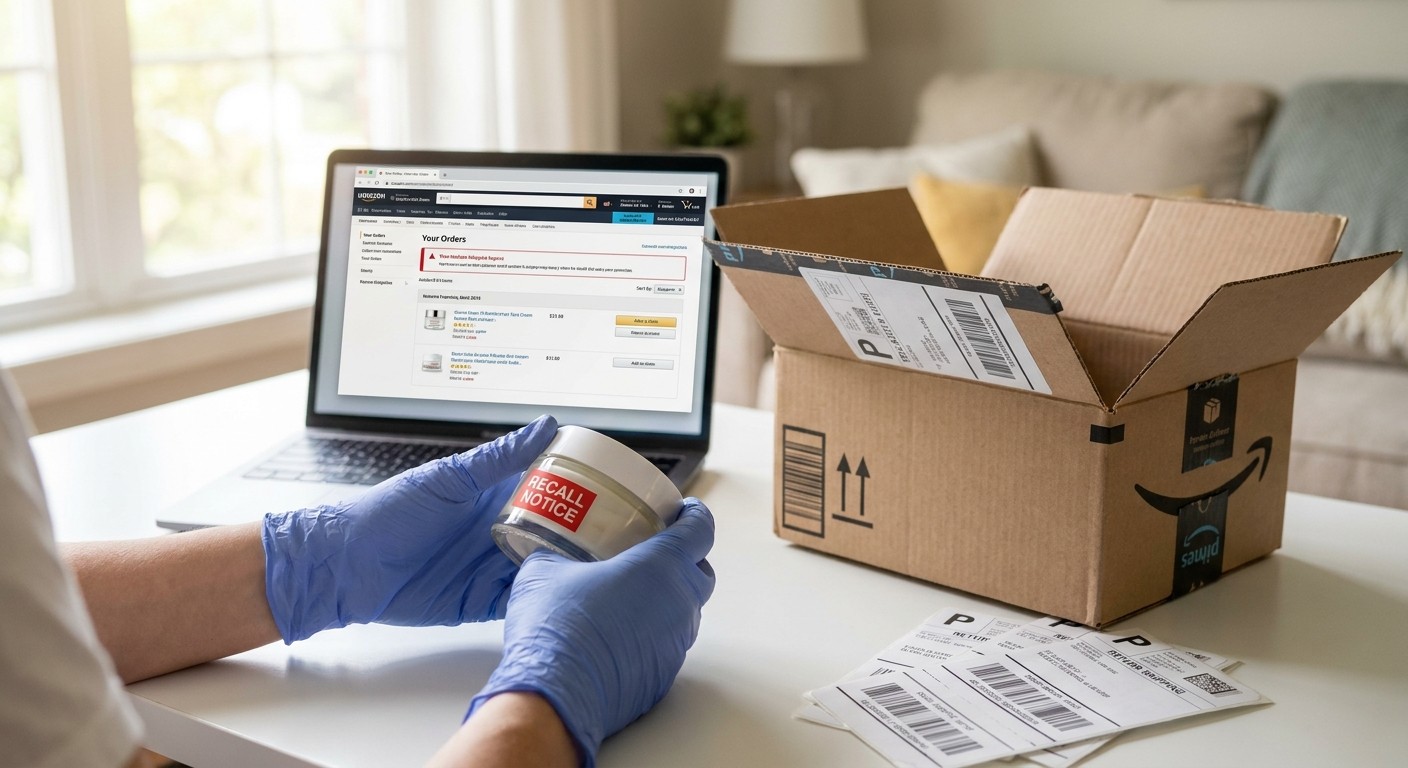
An Amazon beauty product recall in 2026 moves fast once Amazon's compliance team flags an ASIN. The difference between a 30-day recovery and a frozen seller account comes down to what happens in the first 24 hours.
TL;DR
An amazon beauty product recall starts with a Product Safety Report in Seller Central, not a phone call to Amazon.
FBA inventory freezes automatically once a recall is confirmed, and 2026 seller reports put the hold at 3 to 7 days.
Notify affected buyers within 48 hours and log every message; Amazon checks this trail before letting you relist.
Quietly deactivating the listing instead of disclosing the recall is the fastest route to an account suspension.
Recovery from notice to relist averages 30 to 45 days when the root cause gets fixed on the first pass.
Why this matters
Amazon tightened cosmetics enforcement through 2026, and beauty ASINs get pulled faster than almost any other category on the platform. A single ingredient mismatch or a contamination complaint can trigger a Product Safety Report before you've even seen the customer email.
Most Amazon beauty brands treat a recall as a listing problem. It's an account-health problem first. Get the ingredient compliance paperwork wrong once, and Amazon starts watching every future ASIN you launch under that seller account.
The brands that recover cleanly in 2026 treat the first 24 hours as a checklist, not a scramble. Everything below is that checklist.
What you'll need
Seller Central access with Brand Registry permissions
The affected ASIN(s) and every child variation tied to it
Batch or lot numbers for the flagged units
Ingredient documentation and safety data sheets for the formulation
A current customer contact list pulled from Amazon order history
FDA or CPSC filing history if the product has been reported before
A single point of contact who owns every message to Amazon during the recall
The steps
1. Confirm the trigger before you touch the listing
Find out exactly what flagged the ASIN: a customer complaint, an FDA adverse event report, a third-party lab test, or an internal QA catch. This determines whether you're dealing with a voluntary recall or an Amazon-initiated one, and the two paths require different documentation.
Pull the batch and lot numbers tied to the complaint before you do anything else. Expected outcome: a clear scope — one lot, one ASIN, or the entire SKU line. Common mistake: assuming the whole catalog is affected when it's a single manufacturing run, which triggers unnecessary inventory holds on unaffected stock.
2. File the Product Safety Report in Seller Central
Amazon requires sellers to self-report safety issues through the Product Safety Report tool inside Seller Central, and doing this within 24 hours of confirming the trigger is the single biggest factor in how fast you recover. Waiting for Amazon to find it first turns a recall into a compliance investigation.
Be specific: list the ASIN, the lot numbers, the nature of the risk, and the corrective action already underway. Expected outcome: Amazon assigns a case ID and a compliance reviewer. Common mistake: filing a vague report that forces Amazon to ask follow-up questions, which adds days to the freeze.
3. Notify affected customers within 48 hours
Pull the order history for the flagged ASIN and lot range, then email every buyer with a plain explanation of the issue and the next step — refund, replacement, or disposal instructions. Amazon reviews this communication trail before approving a relist in 2026.
Don't bury the recall in marketing language. Expected outcome: a documented, timestamped notice to every affected buyer. Common mistake: notifying only buyers who left a review, which misses the silent majority who never complained but still received the lot.
4. Coordinate the FBA inventory hold
Once the Product Safety Report is filed, Amazon typically freezes the FBA inventory tied to the ASIN within 3 to 7 days. Request a removal order or a return-to-vendor instruction immediately rather than waiting for Amazon to act on its own timeline.
Check managing beauty and cosmetics returns for the mechanics of getting FBA stock back or destroyed without eating unnecessary storage fees. Expected outcome: flagged units removed from sellable inventory within a week. Common mistake: letting the stock sit in unfulfillable status for months because nobody files the removal order.
5. File with the FDA or CPSC if the risk warrants it
Cosmetics with an injury report, an allergic reaction cluster, or a contamination finding need a filing with the FDA's MedWatch or the CPSC, depending on the product classification. Amazon will ask for this documentation before it lets you relist a recalled beauty ASIN in 2026.
Expected outcome: a federal case number that closes the loop for Amazon's compliance team. Common mistake: skipping the federal filing because the issue seems minor — Amazon cross-checks against public recall databases.
6. Fix the root cause before you touch the listing again
Don't relist until the manufacturing, labeling, or formulation issue is actually fixed. Run the corrected listing through a full safety compliance review before it goes live again.
Expected outcome: a listing that passes Amazon's re-review on the first submission. Common mistake: relisting the same content with a new photo, which Amazon's automated compliance checks flag almost immediately.
Get your listings audited before a recall hits
Booscala reviews compliance gaps across your Amazon beauty catalog.
7. Relist and monitor account health daily for 30 days
Once Amazon clears the case, relist and check Account Health daily for the first month. A recall that closes cleanly still leaves a mark on your metrics dashboard, and a second complaint during that window compounds the risk.
Expected outcome: a stable Account Health score with no repeat flags. Common mistake: going back to normal reporting cadence too soon and missing an early signal of a repeat issue.
Troubleshooting
Amazon suspends the account before paperwork is done. File the Product Safety Report the same day you confirm the trigger — most account suspension for beauty brands cases trace back to a delayed or missing self-report, not the recall itself.
Reviews mention the recall and tank conversion. Respond to each review with a factual, non-defensive note pointing to the resolution, and let the review velocity recover naturally once the corrected product ships.
FBA won't release the flagged inventory for return. Submit a removal order specifying the exact lot numbers rather than a blanket removal request for the ASIN — blanket requests get stuck in manual review longer.
Customers demand refunds outside the standard return window. Process these manually through Seller Central's customer service tools; Amazon expects exceptions during an active recall and penalizes sellers who cite policy instead of resolving it.
Multiple ASINs share the same formulation and the scope is unclear. Pull the full bill of materials across your catalog before filing — a recall that widens after the initial report looks like concealment to Amazon's compliance team.
Tools and resources
Seller Central's Product Safety Report tool for the initial filing
FDA MedWatch or CPSC filing portals for federal-level cosmetics complaints
Your ingredient documentation and safety data sheets, organized by lot
Amazon Brand Registry dashboard for monitoring listing status changes
A shared log tracking every customer notification sent
What to do next
Once the recall closes, audit how the listing got flagged in the first place. If it traces back to a labeling or claims issue rather than manufacturing, review how to respond to a listing suppression — the same documentation discipline applies to both.
FAQ
What triggers an Amazon beauty product recall?
A recall triggers from a customer injury complaint, an FDA or CPSC report, a failed lab test, or an internal QA finding tied to a specific batch. Amazon's compliance team can also initiate one independently if it detects a pattern of complaints across an ASIN.
How fast does Amazon freeze FBA inventory during a recall?
FBA inventory typically freezes within 3 to 7 days of a confirmed recall in 2026. The exact timeline depends on how quickly the seller files the Product Safety Report and how clear the scope of the affected units is.
Do I have to notify the FDA or CPSC for a cosmetics recall?
You only need a federal filing if there's an injury report, an allergic reaction pattern, or a contamination finding. Minor labeling or formulation corrections without a safety risk usually stay within Amazon's own compliance process.
Can my Amazon account get suspended over a recall?
Yes, and the most common cause is a delayed or missing self-report rather than the recall itself. Amazon treats undisclosed safety issues as a policy violation separate from the underlying product problem.
How long does it take to relist after a recall in 2026?
Recovery from notice to relist averages 30 to 45 days when the root cause gets fixed on the first submission. Listings that fail the re-review and need a second correction round add another two to three weeks.
What's the difference between a recall and a listing suppression?
A recall involves an actual safety risk to consumers and requires a Product Safety Report; a suppression is usually a compliance or content issue that pulls the listing from search without a safety component. Both freeze sales, but only one requires customer notification.
Do I need to refund customers outside Amazon's standard return window?
Yes, Amazon expects sellers to process refunds outside the normal window during an active recall. Citing standard return policy during a recall reads as non-compliance to Amazon's review team.
Should I use Amazon Vine again after relisting a recalled product?
Wait until the ASIN has at least 30 days of clean sales history before re-enrolling in Vine. A fresh batch of reviews on a recently recalled listing invites extra scrutiny from Amazon's compliance system.
One last thing
Most beauty recalls in 2026 don't start with an injury report. They start with a batch or lot number that doesn't match what's declared on the label — a paperwork gap, not a safety failure. Fix the lot-tracking discipline and a large share of recall risk disappears before Amazon ever flags the ASIN.