Jul 22, 2026
Amazon Conversion Rate Haircare Products: 2026 Fix Guide
Improve amazon conversion rate haircare products with a step-by-step 2026 fix: titles, bullets, images, A+ content, and review velocity that actually move the number.
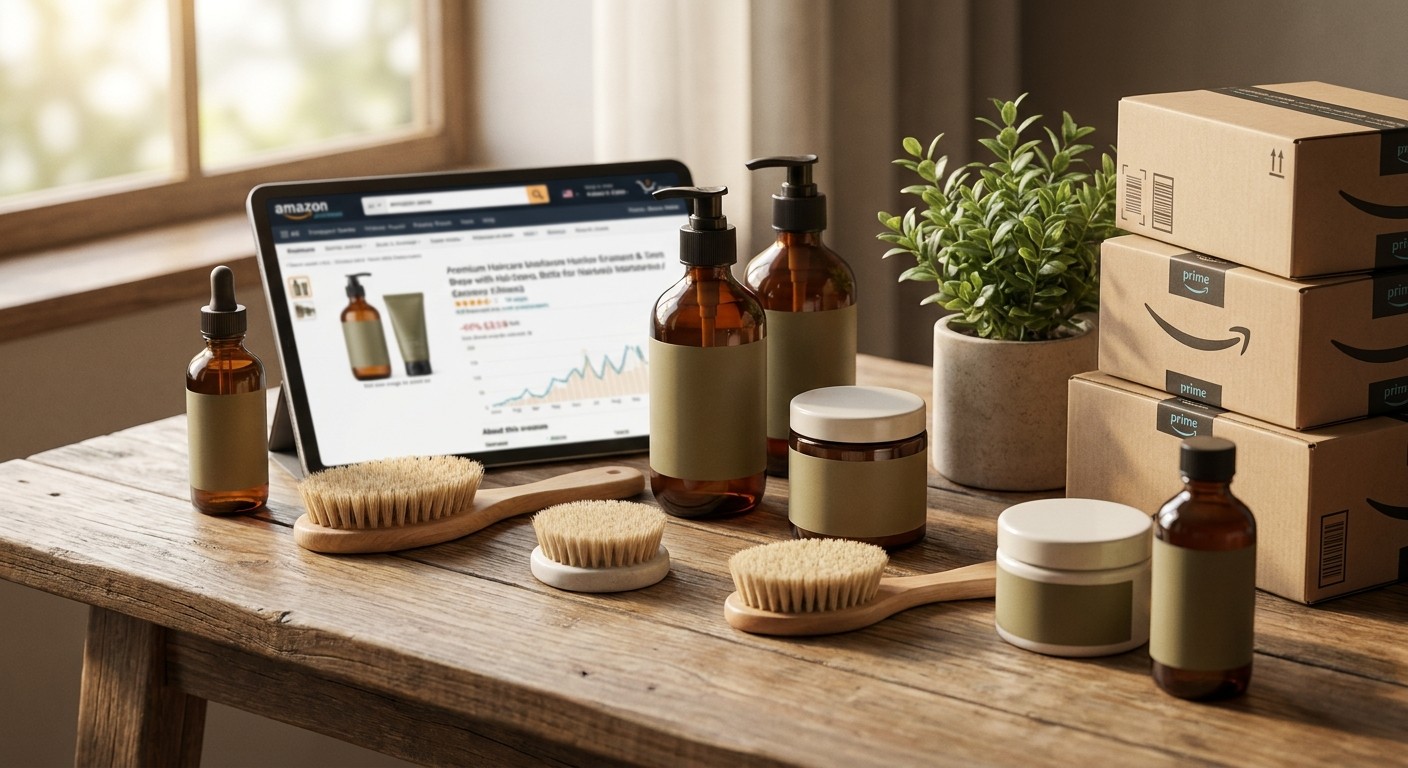
A haircare listing that gets clicks but not carts is a conversion problem, not a traffic problem — and on Amazon, five specific pages of your listing decide whether a shopper buys or bounces.
TL;DR
Amazon conversion rate for haircare products improves fastest when title, bullets, and A+ content all point to one hair type or concern — fix alignment first, not traffic volume.
Curl pattern, porosity, or scalp-condition callouts inside the first 80 characters of the title outperform generic titles in 2026 listings. Buy this framework.
Before-and-after texture images in the first four image slots move haircare conversion more than lifestyle-only galleries. Skip lifestyle-only image sets on a hero SKU.
A hero haircare SKU with under 50 reviews stalls conversion regardless of listing quality — fix review velocity before increasing ad spend.
Why this matters
Haircare shoppers on Amazon buy for a specific hair problem — frizz, breakage, scalp buildup, color fade — and they decide in seconds whether your listing solves it. Generic beauty-listing advice ignores this and treats haircare like skincare or color cosmetics, which is why so many haircare brands plateau at a 6-8% session-to-order rate instead of pushing into the double digits.
Fixing amazon conversion rate for haircare products is a sequencing problem: title decides who clicks, bullets and images decide who adds to cart, and reviews decide who actually checks out. A conversion rate optimization for beauty listings approach built for skincare or cosmetics will miss the hair-type and routine-step signals that haircare buyers actually search on. Booscala treats haircare as its own category inside beauty, not a subcategory of general personal care, because the buying triggers are different.
What you'll need
Access to Seller Central or Vendor Central with edit rights on the listing
Current Brand Analytics data for search terms driving to the ASIN
At least 6 product images plus room for 2-3 more (before/after, texture close-up, ingredient callout)
A+ Content or Premium A+ eligibility (Brand Registry required)
30-60 days of runway — conversion rate improvements from content changes take 2-4 weeks to show in Brand Analytics, and review velocity work takes longer
A list of your top 3 competitor ASINs by category rank
The steps
1. Audit what's actually killing conversion first
Don't touch anything until you know where shoppers drop off. Pull the ASIN's session-to-unit-ordered rate from Brand Analytics and compare it against your top 3 competitors in the same haircare subcategory — curly, damaged, color-treated, scalp care.
If your click-through rate is healthy but conversion lags, the problem is on-page: images, bullets, or A+ content. If both are weak, the title isn't attracting the right shopper in the first place. Common mistake: brands assume low conversion means the price is wrong, when in 2026 pricing is rarely the top lever for haircare — content specificity is.
2. Rebuild the title around hair type, not ingredient list
Amazon gives you roughly 200 characters for a title, and haircare shoppers scan the first 60-80 before deciding to click. Lead with the hair type or concern (for fine, oily scalp or for tight curls, 4C) ahead of ingredient callouts like with argan oil — ingredients matter, but they're the second sentence a shopper reads, not the first.
A haircare title optimization pass should also include the format (shampoo, conditioner, leave-in) and size, since haircare shoppers frequently search by routine step. Expected outcome: a measurable lift in click-through rate within 1-2 weeks as Amazon's algorithm re-indexes for the new title. Common mistake: burying the hair-type keyword after character 100, where Amazon's mobile truncation cuts it off entirely.
3. Rewrite bullets around the routine, not the formula
Haircare buyers think in routines — wash, condition, treat, style — and your five bullet points should map to how the product fits that sequence, not just list what's inside the bottle. Bullet one should state the primary result (frizz control, breakage reduction) with a specific claim, bullet two should address application (leave-in for 3-5 minutes, use 2-3x weekly), and the remaining three should hit ingredient proof, hair-type fit, and a use-case detail.
Haircare bullet points that name a specific hair concern in the first 10 words convert better than bullets that open with brand language. Expected outcome: fewer pre-purchase questions and returns tied to wrong-hair-type complaints. Common mistake: writing bullets for the brand's internal product hierarchy instead of the shopper's hair problem.
4. Replace one lifestyle image with a texture close-up
Haircare is a visual-proof category. A model with shiny hair in soft lighting tells the shopper nothing about how the product performs on their specific texture. Swap at least one of your first four image slots for a close-up texture or before/after shot that shows curl definition, frizz reduction, or shine on a realistic hair type.
Expected outcome: a measurable bump in add-to-cart rate, since texture proof reduces the biggest haircare purchase hesitation — will this work on hair like mine. Common mistake: putting the texture proof in slot 6 or 7, where mobile shoppers never scroll to see it.
5. Build A+ content around the routine, not the brand story
A+ Content modules should walk the shopper through when and how to use the product inside a routine — comparison chart, application steps, before/after, ingredient breakdown — before you get to brand story. Haircare shoppers convert on functional clarity first, emotional brand connection second.
Expected outcome: longer time-on-page and a lift in units-per-session as shoppers self-select the right SKU in a line. Common mistake: leading A+ content with a founder story module when the shopper hasn't yet confirmed this is the right product for their hair type.
6. Fix review velocity before you touch ad spend
A haircare hero SKU with fewer than 50 reviews will underperform on conversion no matter how good the content is — shoppers in this category read reviews for hair-type-specific results before buying. Run a review request cadence through Amazon's post-purchase email tools and check Vine eligibility if the ASIN is new in 2026.
Expected outcome: crossing the 50-review threshold typically produces a visible jump in conversion rate within 30-45 days. Common mistake: increasing PPC spend on a low-review ASIN, which just burns budget against a conversion ceiling that content can't fix.
7. Match PPC targeting to the hair-type keywords you just added
Once the title and bullets carry hair-type language, your Sponsored Products campaigns should target those same terms — curly hair shampoo, scalp detox, color-safe conditioner — instead of generic haircare head terms that pull in low-intent traffic. Mismatched ad targeting sends the wrong shopper to a listing built for a specific hair type, which tanks conversion even when the content is strong.
Expected outcome: a lower advertising cost of sale as click quality improves. Common mistake: leaving broad match on generic haircare terms running after the listing has been rebuilt around a specific concern.
Troubleshooting
Conversion dropped after a title change — check if the new title lost a ranking keyword the ASIN was previously indexed for; re-add it further back in the title rather than reverting entirely.
A+ content approved but conversion flat — the modules may be brand-story-heavy with no routine or comparison chart; rebuild the first three modules around function, not narrative.
High traffic, low conversion on a variation listing — shoppers may be landing on the wrong hair-type variation from the parent page; check that the variation swatch or dropdown clearly labels each child by hair type.
Reviews stuck below 50 after 60 days — review request emails may be going out too late; trigger them 4-7 days post-delivery instead of at 14-21 days.
PPC ACOS climbing since the listing update — audit search term reports for irrelevant queries picking up the new hair-type keywords in broad match, and shift to phrase or exact match.
Conversion good on desktop, weak on mobile — check image slot order; mobile shoppers see fewer images before scrolling, so the texture proof needs to sit in slot 2 or 3, not slot 5.
Tools and resources
Amazon Brand Analytics for session-to-order rate by ASIN and search term performance
Amazon Vine for early review velocity on new haircare launches
A+ Content Manager inside Seller Central for module-by-module testing
Sponsored Products search term reports for match-type cleanup
A working knowledge of haircare title optimization and haircare bullet points as reference points before rewriting copy
What to do next
Once the listing content is fixed, the next lever is A+ content structure built for haircare routines rather than generic beauty layouts — module order, comparison charts, and routine sequencing all affect whether a shopper adds to cart or bounces to a competitor's ASIN. Booscala treats this as a distinct build step from skincare or cosmetics A+ content, since haircare shoppers read routine steps differently than a single-product skincare purchase.
FAQ
What is a good Amazon conversion rate for haircare products in 2026?
Haircare listings with strong title, image, and review alignment typically run 10-15% session-to-order rate in 2026, compared to 6-8% for generic, unoptimized listings. The gap usually comes down to hair-type specificity in the title and images, not price.
Does adding hair-type keywords to the title actually improve conversion?
Yes — hair-type and concern keywords in the first 80 characters of the title pull in shoppers who already know what they're looking for, which raises both click-through and conversion. Generic titles pull in browsers who compare and bounce.
How many reviews does a haircare ASIN need before conversion improves?
Around 50 reviews is the rough threshold where conversion rate stabilizes for a haircare hero SKU. Below that, shoppers hesitate on hair-type fit regardless of how strong the listing content is.
Should haircare A+ content lead with brand story or product function?
Product function first — routine steps, comparison charts, and before/after proof — then brand story. Haircare shoppers need functional confirmation that the product fits their hair type before they engage with brand narrative.
Do before-and-after images actually move haircare conversion rate?
Yes, texture close-ups and before/after shots in the first four image slots outperform lifestyle-only photography for haircare specifically, because shoppers are trying to match the result to their own hair texture.
Is PPC spend the fastest way to fix a low haircare conversion rate?
No — increasing ad spend on a listing with weak content or low review count just wastes budget against a conversion ceiling. Fix title, bullets, images, and reviews first, then scale PPC against the improved listing.
How long does it take to see conversion rate improvement after a listing update?
Title and image changes typically show measurable movement in Brand Analytics within 1-2 weeks. Review-velocity fixes take longer, usually 30-45 days to cross a meaningful review threshold.
Does variation structure affect haircare conversion rate?
Yes — if a parent listing doesn't clearly label child variations by hair type, shoppers land on the wrong SKU and bounce. Clear hair-type labeling on swatches or dropdowns reduces this friction directly.
One last thing
Most haircare brands fix the title and images and stop there — the review-velocity step is the one that actually unlocks the conversion rate the content changes promised, and it's the step that gets skipped most often because it's slower than a content edit. Run it in parallel with the listing rebuild, not after.
