Jul 19, 2026
Beauty Brand FBM to FBA Transition No Stockouts 2026
A phased beauty brand fbm to fba transition plan for 2026: parallel-run fulfillment, staged shipments, and PPC syncing to avoid stockouts and rank loss.
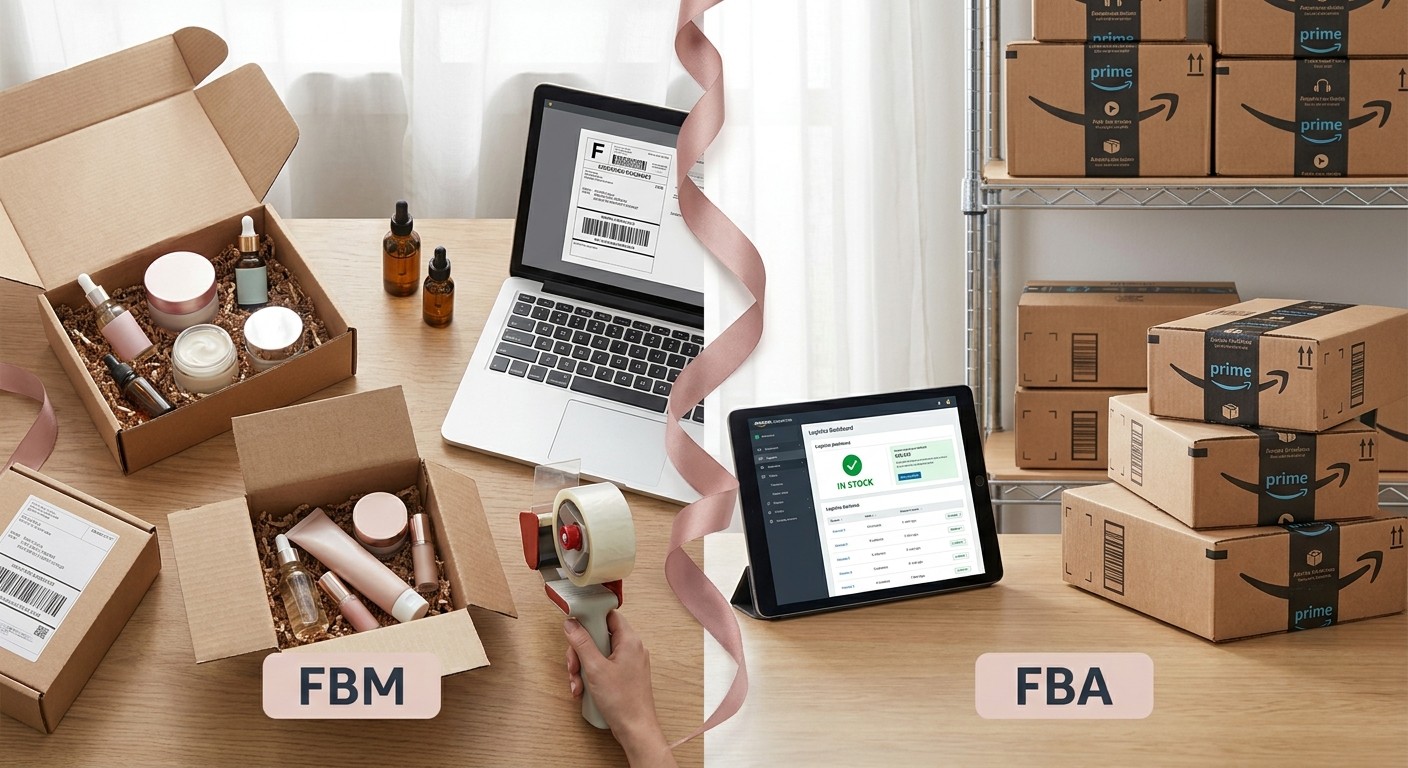
Moving a beauty brand off Fulfilled by Merchant and onto Fulfilled by Amazon sounds like a checkbox exercise until the first stockout hits mid-transition and your best-seller drops off page one. This guide walks through the sequence that keeps inventory flowing while Amazon takes over fulfillment.
TL;DR
A beauty brand fbm to fba transition fails when brands flip the switch all at once instead of running FBM and FBA in parallel for 30-45 days. The fix: stage inbound shipments by SKU tier, keep FBM live as a buffer until FBA stock confirms received, and sync PPC spend so ad dollars don't chase an out-of-stock listing. Done right in 2026, a mid-size skincare or color cosmetics brand can complete the switch in six to eight weeks with zero stockout days. Rushed transitions cost brands their Amazon organic rank inside of two weeks.
Why this matters
Amazon's algorithm rewards consistent in-stock status. A single seven-day stockout on a top SKU can erase months of organic ranking gains, and beauty categories move fast enough in 2026 that a competitor's listing fills the gap before yours recovers. FBA also changes your Buy Box eligibility, Prime badge, and eligibility for Subscribe & Save — all of which affect conversion the moment the switch happens. Brands that treat this as a weekend project usually pay for it in Q1 2027 with an inventory health score penalty they didn't see coming.
What you'll need
Brand Registry enrollment confirmed and active
FBM sales velocity data for the last 90 days, by SKU
Cosmetics compliance documentation (INCI lists, safety data sheets) ready for Amazon's review queue
A phased SKU list — hero SKUs first, slow movers last
30-45 days of runway where both fulfillment methods can run in parallel
A PPC pause/resume plan tied to inventory status, not a calendar date
Buffer stock equal to at least 14 days of average sell-through at the new FBA warehouse
The steps
1. Audit your FBM sell-through before you touch anything
Pull 90 days of unit velocity per SKU. This tells you which products need buffer stock first and which can wait until month two of the transition. Brands that skip this step guess at reorder quantities and either overstock slow movers or understock the hero SKU — the exact product that can't afford a gap. Expected outcome: a ranked SKU list by velocity, with reorder points calculated for each.
Common mistake: averaging sell-through across all SKUs instead of calculating it per-SKU. A single viral TikTok mention can double one product's velocity while the rest of the line stays flat.
2. Split your catalog into three transition waves
Move your top 20% of SKUs by revenue first, mid-tier SKUs second, and slow movers last. This limits your exposure — if something goes wrong with the first FBA shipment, you're only risking a fraction of the catalog, not the whole brand.
Wave 1 should ship inbound with at least 21 days of lead time before you touch the listing's fulfillment channel. Expected outcome: your hero SKU is live on FBA and confirmed in-stock before wave 2 even ships.
3. Keep FBM live as a parallel buffer, not a backup
Don't deactivate FBM the day FBA inventory arrives at the warehouse. Amazon's receiving process — check-in, quality inspection, bin placement — can take 3-10 business days in 2026, longer during Q4 peak. Run both channels simultaneously until FBA shows In Stock on the live listing, not just received at fulfillment center.
Common mistake: switching the primary fulfillment method the moment tracking shows delivery, before Amazon has actually processed and shelved the units.
4. Stage inbound shipments in smaller, frequent batches
Instead of sending 90 days of stock in one shipment, send 30 days at a time across three shipments. This reduces the chance of a single receiving delay knocking out your entire supply, and it keeps your Inventory Performance Index healthier since Amazon penalizes excess storage relative to sell-through. Beauty brands managing seasonal inventory peaks around Q4 or Prime Day should shift this cadence — front-load 45 days of stock two to three weeks before the event window, not during it.
5. Sync PPC spend to inventory status, not a launch date
The single most common cause of wasted ad spend during a transition: campaigns keep running full-bid while the listing sits out of stock during the FBM-to-FBA handoff. Set automated rules or manual checks tied to inventory levels — pause Sponsored Products when stock drops below 5 days of cover, resume once FBA confirms availability. Skip this step and you'll burn budget driving clicks to a listing that can't convert.
6. Watch for listing suppression during the fulfillment switch
Changing fulfillment channels can sometimes trigger a detail page review, especially for cosmetics SKUs with ingredient claims. Check listing status daily for the first two weeks of each wave. A suppressed listing during transition compounds the stockout risk — you lose both inventory and visibility at once.
7. Confirm Buy Box and Prime eligibility per SKU before deactivating FBM
Don't assume FBA status transfers instantly to Prime badge and Buy Box eligibility. Check each ASIN individually — variation children sometimes lag behind parent-level status by 24-48 hours. Expected outcome: every SKU in the wave shows the Prime badge and wins the Buy Box before FBM goes dark for that product.
Troubleshooting
Stranded inventory at the fulfillment center. Check the Inventory Dashboard for a stranded flag — usually a listing mismatch or missing compliance doc. Fix the listing error first; Amazon won't release stranded units into sellable inventory until it's resolved.
IPI score dropping mid-transition. This usually means excess stock relative to sell-through in the early waves. Slow down shipment frequency and let sell-through catch up before sending more units.
PPC ACOS spikes right after the switch. This is often a bidding algorithm re-learning phase as Amazon recalibrates around FBA delivery speed and Prime eligibility. Expect 5-10 days of volatility before performance stabilizes; don't panic-cut budget in the first week.
Listing shows out of stock despite units at the warehouse. Check whether the units cleared quality inspection — receiving and sellable status are two different steps. This is the most common false alarm during a transition.
Buy Box lost to a third-party seller mid-switch. This happens when FBM pricing sat higher than FBA-equivalent competitors during the parallel period. Align pricing across both channels before the transition starts, not after.
EU-bound SKUs failing compliance checks. Cosmetics ingredient documentation requirements differ between US and EU marketplaces — confirm docs are market-specific before shipping inventory across borders.
Tools and resources
Amazon Seller Central Inventory Dashboard for IPI tracking and stranded inventory alerts
90-day Brand Analytics export for velocity calculations
A FBA vs. FBM cost comparison model to confirm the margin math before committing shipment volume
A compliance checklist specific to cosmetics ingredient disclosure for each target marketplace
PPC dashboard rules tied to inventory thresholds, not manual daily checks
Booscala runs this exact sequence for K-beauty and premium beauty brands moving onto Amazon's fulfillment network, treating the transition as an operations project with a PPC and content team embedded, not a one-time inventory dump.
What to do next
Once your first wave is stable and confirmed in-stock for 14 consecutive days, move to wave two. Don't compress the timeline to hit an internal deadline — a stockout in wave two costs more in lost rank than the two extra weeks of patience saves.
FAQ
What's the safest way to switch a beauty brand from FBM to FBA? Run both fulfillment methods in parallel for 30-45 days, moving SKUs in three waves by revenue tier, and don't deactivate FBM for a given SKU until FBA shows confirmed in-stock status for that specific listing.
How long does a beauty brand FBM to FBA transition typically take? Six to eight weeks for a mid-size catalog when staged in three waves; rushing it into one or two weeks is the most common cause of mid-transition stockouts in 2026.
Will switching to FBA hurt my organic rank temporarily? A well-staged transition shouldn't hurt organic rank at all since the listing stays continuously in stock; rank damage comes from stockout gaps, not from the fulfillment method switch itself.
Does FBA cost more than FBM for beauty products? Fees vary by SKU size, weight, and storage duration — run the actual numbers per SKU rather than assuming FBA is uniformly more expensive, since Prime eligibility often lifts conversion enough to offset the fee difference.
Should I pause PPC during the transition? Pause only the campaigns tied to SKUs with under 5 days of stock cover; keep campaigns running for SKUs that are staying in stock throughout the switch.
Can I run FBA and FBM on the same listing at the same time? Yes — Amazon supports both fulfillment methods on one ASIN simultaneously, which is exactly the buffer period that prevents stockouts during a transition.
What's the biggest mistake brands make during this switch? Deactivating FBM the moment FBA inventory arrives at the warehouse, before Amazon has actually processed and shelved the units as sellable.
Do compliance documents need to be resubmitted for FBA? Cosmetics SKUs sometimes trigger a fresh compliance review when the fulfillment channel changes — have ingredient documentation ready before the switch, not after a suppression notice.
One last thing
The transition detail brands miss most in 2026: Amazon's receiving times at fulfillment centers stretch furthest in the two weeks before Prime Day and Black Friday, exactly when brands are most tempted to rush a switch to catch peak-season Prime eligibility. Start the transition in a quiet month instead — the parallel-run buffer works far better without a seasonal deadline pressing against it.
