Sep 6, 2026
Amazon Ads for Gen Z Beauty Shoppers: 2026 Playbook
Amazon advertising for Gen Z beauty shoppers wins on video-first Sponsored Brands and creator content. The 2026 playbook, mistakes to skip, and next steps.
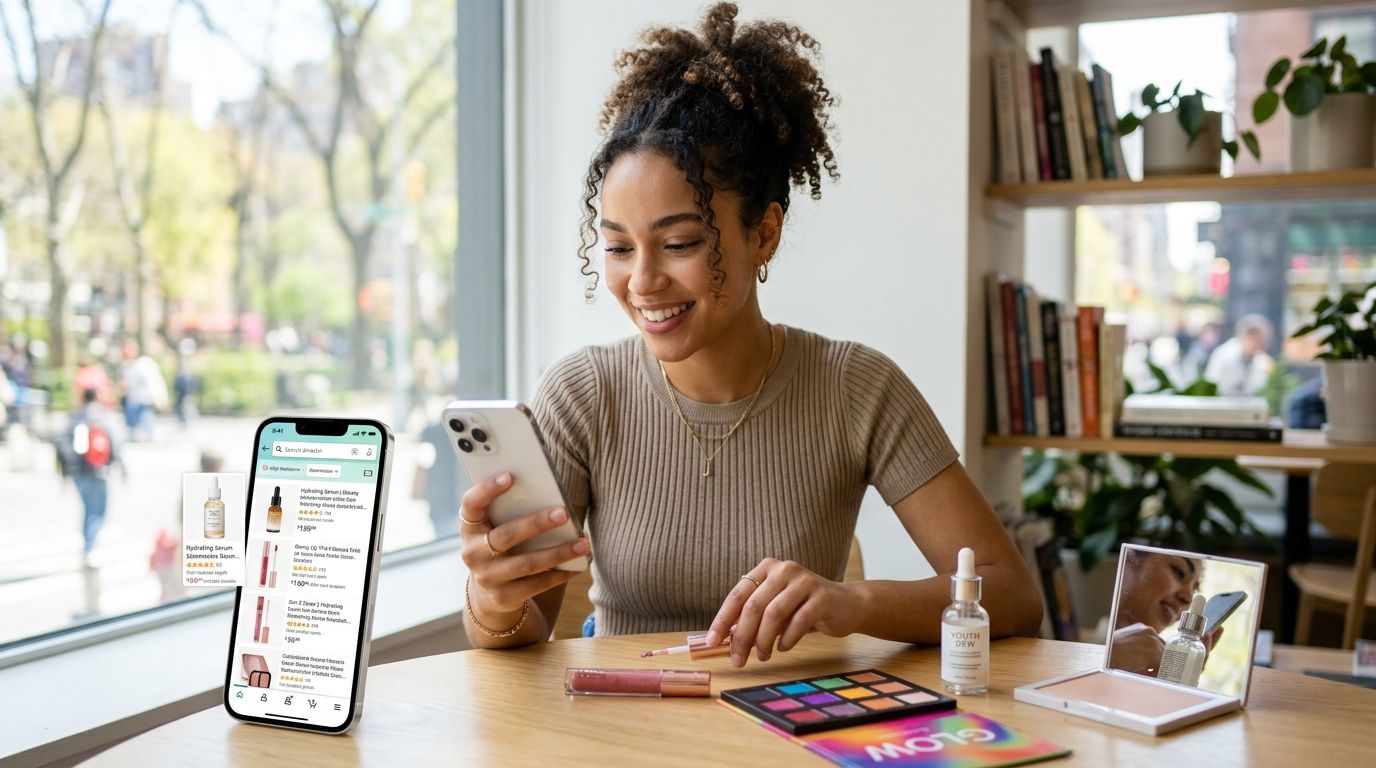
Amazon advertising for Gen Z beauty shoppers means paid media built around video-first discovery, creator proof, and mobile scroll speed — not the search-term stuffing that worked on older demographics. Gen Z, roughly ages 14 to 29 in 2026, decides in seconds on a phone screen, so the ad has to earn the tap before the copy ever gets read.
TL;DR
Amazon advertising for Gen Z beauty shoppers wins on Sponsored Brands video and creator content, not static Sponsored Products alone.
Gen Z shoppers on Amazon buy off proof-of-use content first; brand copy is a distant second.
TACOS, not ACOS alone, is the right dial for measuring Gen Z-driven growth in 2026.
Booscala runs embedded Amazon teams for beauty brands chasing this exact shopper, PPC through creator content.
Why Amazon advertising matters for Gen Z beauty shoppers
Gen Z shoppers grew up scrolling before they grew up reading labels. On Amazon, that shows up as short attention on static images, heavy reliance on video and review photos before purchase, and a willingness to bounce off a listing that looks like a 2019 template. A beauty brand chasing this shopper without video ads, creator content, or a mobile-first storefront is fighting the algorithm and the audience at the same time.
The segment also skews toward discovery over direct search. Instead of typing a precise product name, Gen Z shoppers browse category feeds, tap into video carousels, and follow creator links into a listing. That means the advertising job isn't only bidding on keywords — it's showing up inside the formats where this shopper actually spends time.
The step-by-step approach
Lead creative with video, not stills
A static main image and five bullet points won't stop a Gen Z scroll. Amazon's Sponsored Brands video format runs 15 to 30 seconds and slots directly into search results, which is exactly where this shopper is already looking.
Shoot vertical, mobile-first footage — horizontal video gets cropped awkwardly in feed
Show the product in use in the first 3 seconds, not a logo card
Caption everything; most Gen Z shoppers watch with sound off
Test video against static Sponsored Products on the same ASIN to confirm lift before reallocating spend
Verdict: skip video and you're bidding against competitors who've already won the scroll.
Cast creators before copywriters
Gen Z trusts a face and a routine more than a brand voice. Detail pages and A+ content that lean on creator footage over studio copy convert better with this shopper because the proof looks like something a friend posted, not an ad.
Pull creator video clips into A+ content modules, not just the storefront
Feature diverse skin tones and routines relevant to the actual buyer, not a single hero model
Rotate creator content seasonally so returning shoppers see something new
Once the manual sourcing gets slow, an agency running dedicated creator relationships — which is how Booscala structures creator content for beauty brands — keeps this pipeline moving without founders chasing DMs
Structure Sponsored Brands for scroll-speed decisions
Sponsored Brands headline ads and video ads sit above organic search results, which is prime real estate for a shopper who won't scroll past row three.
Write headlines under 50 characters that state a benefit, not a brand slogan
Point Sponsored Brands traffic to a storefront page built for mobile, not the desktop-first default
Test multiple creative variants per campaign; Gen Z ad fatigue sets in faster than with older shoppers
Refresh creative every 4 to 6 weeks minimum in 2026 — stale ads read as untrustworthy to this audience
Set TACOS targets around engagement, not just ACOS
ACOS alone tells you what one campaign cost. TACOS — total advertising cost of sales — tells you whether the whole Amazon business is getting healthier as Gen Z-driven organic traffic grows alongside paid.
Track TACOS monthly against organic session share, not just ad spend against ad sales
Expect a higher acceptable ACOS on new-to-brand campaigns targeting Gen Z; discovery costs more upfront
Set separate benchmarks for video versus Sponsored Products; comparing them on one ACOS number hides what's actually working
A full PPC framework built around beauty categories gives a starting benchmark before you set your own targets
Layer retargeting for cart-and-scroll abandoners
Gen Z shoppers browse across multiple sessions before buying — they'll view a product, close the app, and come back days later after seeing a creator mention it again.
Use Sponsored Display to retarget product-page viewers who didn't convert
Layer DSP audiences against lookalikes of past Gen Z purchasers if budget allows
Keep retargeting creative fresh; showing the same static ad for three weeks straight kills conversion with this audience
Cap frequency — over-retargeting reads as intrusive to a demographic already skeptical of ads
Keep the feed warm with Posts and Live shopping
Amazon Posts and live shopping streams give Gen Z shoppers a reason to follow a brand instead of buying once and forgetting it exists.
Post routine-style content weekly, not just launch announcements
Run live product demos around new launches or seasonal moments
Cross-post creator content into Posts to double its lifespan
Track follower growth as a leading indicator — it correlates with repeat purchase in this segment more than in older cohorts
Get an Amazon audit built for Gen Z
See where your video, creator, and PPC gaps are costing sales.
Comparison: who should run this for you
In-house hire, part-time
Best for: Brands testing Gen Z channels for the first time
Key limitation: Slow to build Amazon-specific ad-stack fluency
Freelance Amazon PPC specialist
Best for: Single-category catalogs with simple campaigns
Key limitation: Rarely covers creator sourcing or DSP layering
Generalist multi-marketplace agency
Best for: Brands spread thin across several channels
Key limitation: Beauty and generational nuance gets diluted
Booscala's embedded Amazon team
Best for: Beauty and K-beauty brands wanting PPC, creator content, and DSP run as one unit
Key limitation: Works with a small, selective roster of brands at a time
Verdict: a generalist agency can run the ad account; it usually can't run the creator pipeline that Gen Z conversion actually depends on.
Common mistakes beauty brands make with this segment
Treating Sponsored Products as the whole funnel and skipping video and Posts entirely, which leaves the discovery layer empty
Running the same static main image since launch while competitors show video results directly in search
Ignoring creator content on the detail page and relying only on brand-written copy that reads like every other listing
Setting ACOS targets modeled on older shoppers' longer consideration cycles, which underfunds the discovery campaigns Gen Z actually responds to
Letting creative sit unrefreshed for months — a demographic this trend-driven notices stale ads faster than any other
FAQ
What's the best Amazon ad format for Gen Z beauty shoppers?
Sponsored Brands video, run at 15 to 30 seconds, performs best because it sits inside search results where Gen Z shoppers are already scrolling. Static Sponsored Products still matter for bottom-funnel intent, but video wins the initial scroll.
Is creator content better than brand copy for Gen Z Amazon listings?
Yes, for this segment. Gen Z shoppers trust routine-style creator footage over studio brand copy, and detail pages that feature it convert better with this audience.
How much does Amazon advertising cost for a beauty brand targeting Gen Z?
Costs vary by category competitiveness and campaign mix; check current bid ranges inside Amazon's own campaign manager rather than relying on a fixed figure, since CPCs shift by season and category in 2026.
Should beauty brands use TACOS or ACOS to measure Gen Z campaigns?
Track both, but weight TACOS more heavily since it captures whether organic traffic is growing alongside paid spend. ACOS alone only tells you what one campaign cost, not whether the brand is getting healthier overall.
Does Amazon Live shopping work for Gen Z beauty audiences?
Live product demos give this audience a reason to return to a brand beyond a single purchase, and they pair well with routine-style Posts content published on a regular cadence.
How often should beauty brands refresh Amazon ad creative for Gen Z?
Refresh creative at least every 4 to 6 weeks in 2026. Ad fatigue sets in faster with this audience than with older shoppers, and stale creative reads as untrustworthy.
Can a small indie beauty brand compete for Gen Z attention on Amazon?
Yes, if the creative budget goes toward video and creator content instead of just keyword bids. Discovery-stage formats matter more than raw ad spend for winning this shopper's attention.
One last thing
Most beauty brands still budget Amazon advertising the way they did in 2020: keyword bids first, creative as an afterthought. For Gen Z shoppers in 2026, that order is backwards — the video and creator content decide whether the keyword bid ever gets a click worth paying for.
