Aug 21, 2026
Amazon PPC for Acne Skincare: Keyword Mapping 2026
Map acne and blemish-care keyword intent for Amazon PPC in 2026 — which clusters to buy, which to skip, and how to cut wasted spend by search stage.
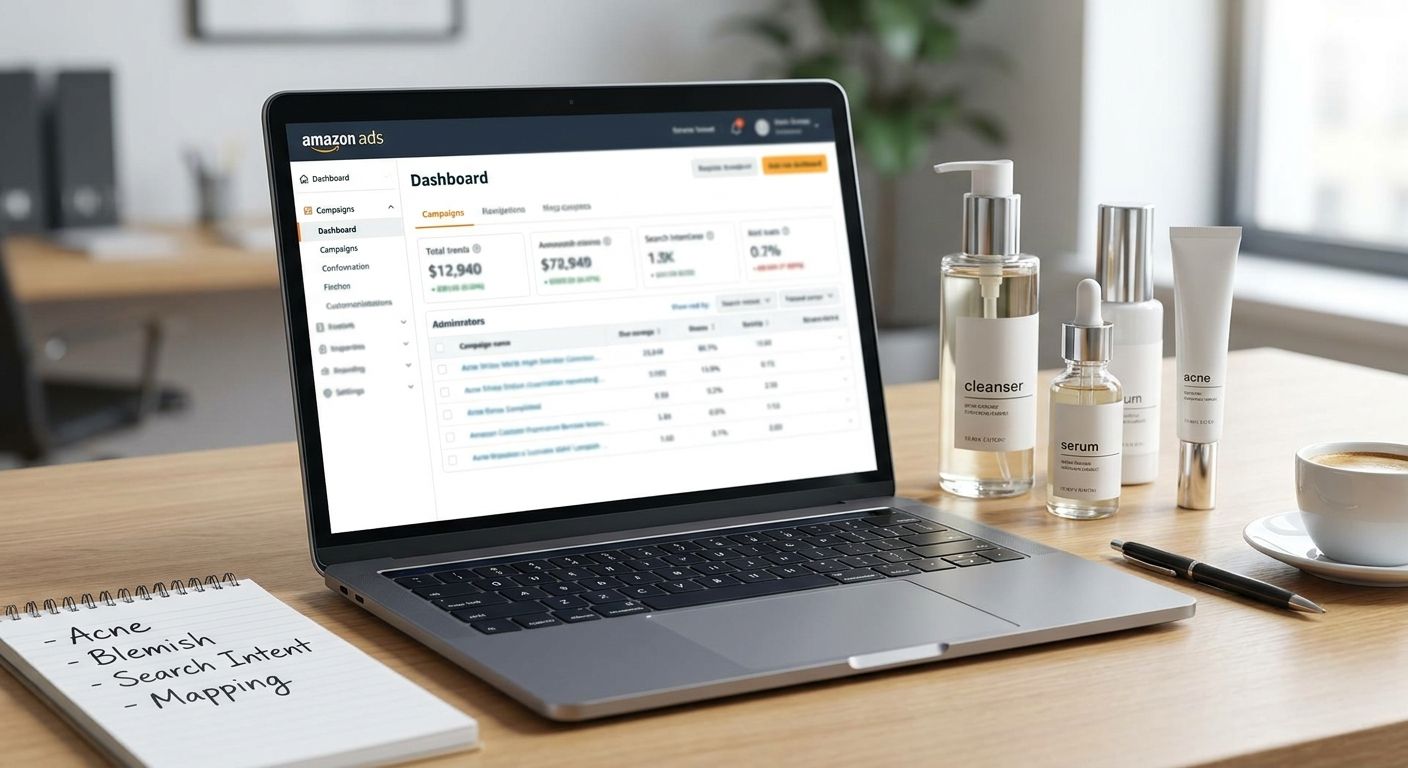
Acne and blemish-care Amazon PPC dies in generic keyword buckets — cystic acne shoppers and prevention shoppers never share a campaign, yet most beauty brands run them together. This guide maps the exact intent clusters that separate profitable acne-care spend from wasted impressions in 2026.
TL;DR
Segment acne PPC into at least 4 intent clusters — symptom stage, ingredient, routine stage, skin type — before scaling spend in 2026.
Hydrocolloid patch and spot-treatment exact match convert fastest for cystic-acne searchers: Buy this cluster first.
Broad-match 'acne treatment' and 'acne cream' burn budget on browsers, not buyers: Skip until you have a negative list built.
Post-inflammatory and dark-spot correction terms are the underbid growth lane for acne PPC in 2026: Consider testing now.
Why this matters
Acne shoppers on Amazon search in stages, not categories. Someone typing "cystic acne patch" is closer to checkout than someone typing "acne treatment," but Amazon's default campaign structure treats them as the same buyer.
Run both through one ad group and you'll pay the same bid for a browser and a buyer. That's how acne-care ACOS creeps past 30% while conversion rate barely moves — the spend isn't wrong, the mapping is.
Getting amazon ppc for acne skincare keyword mapping right means building campaigns around where the shopper is in their skin journey, not around your product catalog. That's the difference between a brand scaling ad spend efficiently in 2026 and one still guessing at match types.
Who this is for
This is for a beauty brand founder or Amazon manager running (or about to run) Sponsored Products for an acne, blemish, or spot-treatment line — patches, cleansers, spot gels, or a full acne regimen — and seeing ACOS numbers that don't match the category's search intent. If your acne SKU is buried in the same campaign as your moisturizer line, this applies directly.
What to look for when mapping acne PPC keyword intent
Symptom-stage intent
Acne search terms split by severity and stage: "whitehead spot treatment," "cystic acne patch," and "post-acne dark spot corrector" describe three different buyers at three different funnel positions. Bidding all three into one ad group blends a $9 impulse buyer with a $30 regimen buyer, and your bid strategy can't optimize for both at once.
Ingredient-led intent
Searches for "salicylic acid acne cleanser" or "benzoyl peroxide spot treatment" signal a shopper who's already diagnosed their own skin and wants a specific active. These buyers convert faster than generic "acne treatment" searchers because they've done the research before landing on Amazon.
Routine-stage intent
"Acne patch for overnight" and "daily acne prevention serum" sit at opposite ends of the routine. One is reactive, one is maintenance. Grouping them means your ad copy and bid strategy can't speak to either shopper directly.
Skin type and demographic modifiers
"Acne treatment for sensitive skin" and "teen acne face wash" carry different compliance and messaging requirements than a generic adult acne term. Ignoring the modifier means your top-converting search query report gets diluted by irrelevant impressions.
Branded vs. generic vs. competitor intent
A shopper searching your brand name is already sold — treat that traffic as a different intent bucket entirely from someone typing "best acne patches" or a competitor's ASIN. Bidding all three the same way wastes budget defending demand you already own.
Review-influenced and comparison intent
"Best acne patches for cystic acne 2026" and "hydrocolloid vs pimple patch" are comparison-stage searches. These shoppers read before they buy — your listing and A+ content need to close the argument your ad copy opened, which is where a tight keyword research process earns its keep before a single dollar goes to ad spend.
The intent clusters — ranked
1. Symptom + product-type exact match — the safe pick
Exact-match terms like "cystic acne patch" or "whitehead spot treatment" carry the highest conversion intent in the acne category because the shopper has already named their problem and their solution format. Run this cluster with dedicated exact-match campaigns and tight budgets — it should carry the lowest ACOS in your acne portfolio by month two.
Verdict: Buy. Fund this cluster first and scale it as your search query performance data confirms conversion.
2. Ingredient generic — the volume driver
Terms like "salicylic acid acne treatment" or "benzoyl peroxide gel" pull real volume because shoppers search by active ingredient more than by brand in the acne category. These terms sit mid-funnel: the shopper knows the ingredient, not yet the product.
Verdict: Consider. Use broad-to-phrase match here and mine the search query performance data weekly to promote winners into exact match.
3. Competitor ASIN conquesting — the wildcard
Bidding on a named competitor's product term or ASIN puts your listing in front of a shopper actively comparing acne treatments. It's higher CPC and lower conversion than your own branded terms, but it captures share you'd otherwise lose entirely.
Verdict: Consider. Cap daily budget on this cluster and monitor ACOS separately — it should never share a budget line with your branded campaign.
4. Broad generic "acne treatment" — the trap
This is the highest-volume, lowest-intent term in the category. It pulls in browsers researching acne causes, parents shopping for teens, and comparison shoppers three steps from purchase. Without a disciplined negative keyword strategy, this single term can eat 20-30% of total acne ad spend for almost no return.
Verdict: Skip on broad match. Run it only in phrase match with a heavy negative list already built.
5. Post-inflammatory and dark-spot correction — the underbid growth lane
"Dark spot corrector for acne scars" and "post-acne mark treatment" get less PPC attention than active-breakout terms, which means CPCs are lower and competition is thinner heading into 2026. Shoppers here have already treated the breakout and are now solving the aftermath — a distinct, underserved intent.
Verdict: Buy. Test this cluster with a modest budget now, before more brands catch on to the lower CPC.
What to avoid
Stuffing skin-type modifiers into one broad ad group. "Sensitive skin acne treatment" and "teen acne wash" look similar but trigger different compliance considerations and different buyer expectations — mixing them dilutes both.
Running comparison-intent terms without matching A+ content. If your ad wins the click on "best acne patches 2026," a thin listing loses the sale a competitor's detail page would have closed.
Treating post-acne and active-breakout as the same funnel. A shopper searching for scar treatment already resolved their breakout — pitching them a spot patch in your ad copy is a mismatch that tanks click-through rate.
Get your acne PPC mapped correctly
Booscala runs Amazon advertising for beauty brands as an embedded team, not a vendor.
Verdict comparison across intent clusters
Symptom + product-type
Match Type: Exact
Funnel Stage: Bottom
Verdict: Buy
Ingredient generic
Match Type: Broad to phrase
Funnel Stage: Mid
Verdict: Consider
Competitor ASIN conquesting
Match Type: Exact/product targeting
Funnel Stage: Mid
Verdict: Consider
Broad "acne treatment"
Match Type: Broad
Funnel Stage: Top
Verdict: Skip
Post-inflammatory / dark spot
Match Type: Phrase to exact
Funnel Stage: Bottom
Verdict: Buy
For the full campaign build once clusters are mapped, see how to structure running Amazon PPC for a beauty brand from ad group setup through bid strategy.
FAQ
What is keyword intent mapping for Amazon PPC in acne skincare?
Keyword intent mapping groups acne search terms by buyer stage — symptom, ingredient, routine, and skin type — so each ad group targets one buyer instead of blending browsers with buyers. It's the fix for acne PPC campaigns stuck at a high ACOS despite steady traffic.
Is exact match or broad match better for acne PPC?
Exact match wins for bottom-funnel symptom terms like cystic acne patch because the shopper has already named their solution. Broad match works only for ingredient-generic terms when paired with a strict negative keyword list.
How much does Amazon PPC cost for acne and blemish-care brands in 2026?
Cost depends on category competition and bid strategy, and varies brand to brand — the more useful metric is ACOS by intent cluster, not a flat spend number. Brands that segment by intent typically see the biggest ACOS gap between exact-match symptom terms and broad generic terms.
Should acne brands bid on competitor ASINs?
Yes, but as a capped, separately tracked cluster — competitor ASIN conquesting captures comparison shoppers your organic listing would otherwise lose, but it runs at a higher CPC than branded defense campaigns.
What's the biggest keyword mistake acne skincare brands make on Amazon?
Running broad-match 'acne treatment' without a negative keyword list. That single term routinely pulls in the lowest-intent traffic in the category and inflates spend without matching conversion.
How do post-acne and active-acne keywords differ in PPC strategy?
Post-acne terms like dark spot corrector target a shopper who already resolved their breakout, while active-acne terms target someone mid-flare-up. Each needs its own ad copy and its own campaign — pitching a spot patch to a scar-treatment searcher wastes the click.
Do teen and sensitive-skin acne searches need separate campaigns?
Yes. Both modifiers change buyer expectations and often compliance considerations, and folding them into a generic adult acne campaign dilutes your search query performance data.
One last thing
Most acne-care brands build their negative keyword list after launch, once ACOS has already spiked. Build it before the first campaign goes live in 2026 — pull every adjacent skincare term (moisturizer, anti-aging, sunscreen) your acne SKU shouldn't match to, and exclude them on day one. It's the single highest-leverage 30 minutes in the whole keyword mapping process.
