Sep 4, 2026
Scalp Care Brand Amazon PPC: Keyword Strategy for 2026
Scalp care brand Amazon PPC needs concern-bucketed keywords, not general haircare campaigns. See the structure, negatives, and mistakes to fix in 2026.
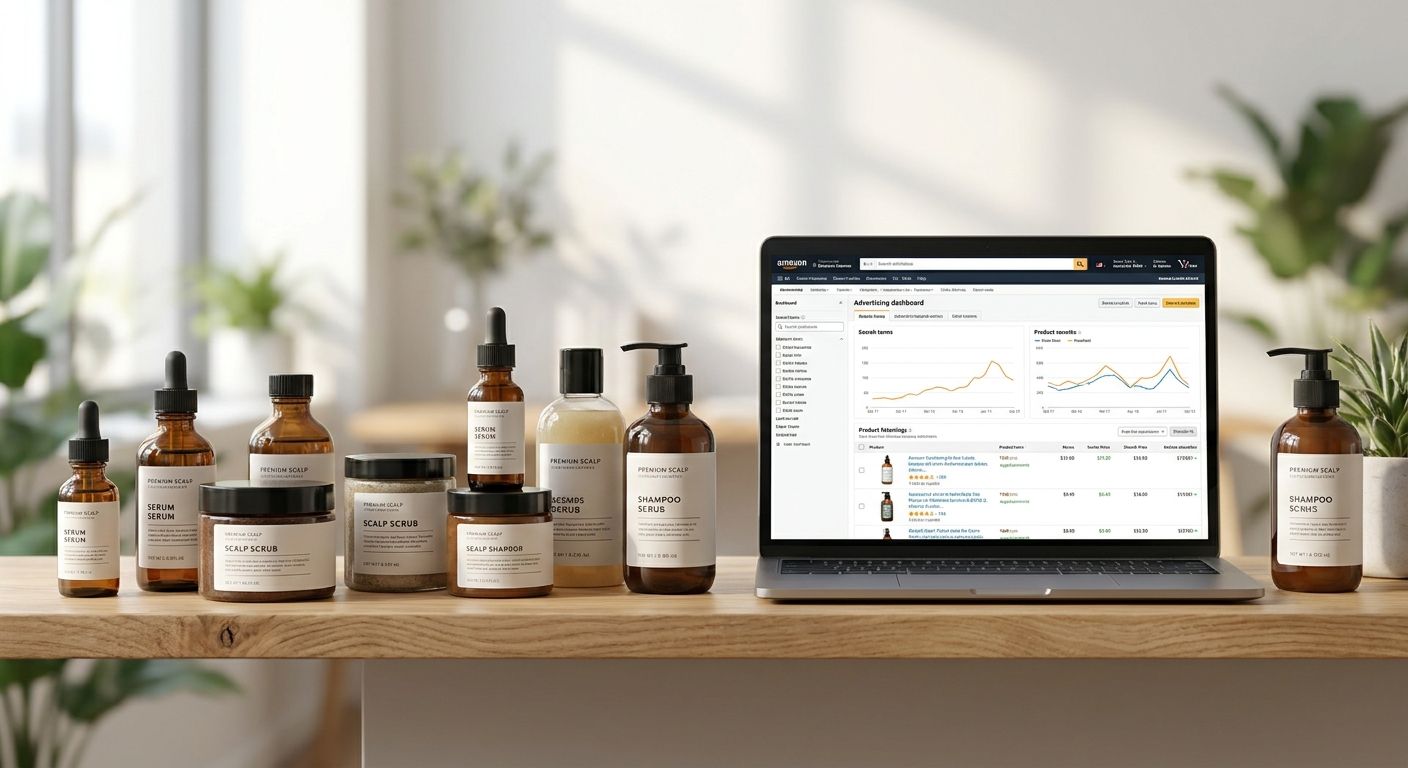
Scalp care brand Amazon PPC is the paid-search strategy scalp-focused haircare sellers run across Sponsored Products, Sponsored Brands, and Sponsored Display to win placement against dandruff shampoos, hair-growth serums, and general haircare giants, with the goal of turning ad spend into repeat, subscription-driven revenue. Scalp care sits in an awkward overlap between skincare and haircare intent, so keyword strategy that works for a shampoo brand often wastes spend for a scalp serum or exfoliating scrub.
TL;DR
Scalp care brand Amazon PPC needs intent-split campaigns by concern (dandruff, oily scalp, thinning-adjacent, scalp acne) — not one general haircare campaign.
Negative keywords matter more here than in most beauty subcategories because 'hair growth' and drug-adjacent terms pull irrelevant, high-CPC clicks.
Sponsored Display retargeting works well for scalp care because it's a routine product, not a one-time purchase.
Booscala runs scalp care PPC for K-beauty and beauty brands as an embedded in-house team, not a bolt-on agency.
Why Amazon PPC matters for scalp care brands
Scalp care buyers search differently depending on what's bothering them. Someone typing "flaky scalp treatment" wants a fast fix; someone typing "scalp exfoliator for buildup" is shopping a routine. Bid the same on both and you'll bleed spend on shoppers who never convert on your listing.
The category also collides with drug-claim territory. Terms tied to dandruff, psoriasis, or hair loss can pull in searchers expecting medicated or prescription-strength products, which inflates clicks without inflating sales. A scalp care brand running Amazon PPC in 2026 without a keyword bucket structure is paying for traffic it can't convert.
Build the keyword bucket structure first
Map keyword intent by scalp concern
Before you touch a campaign, sort every candidate keyword into a concern bucket. This is the single highest-leverage step in scalp care brand Amazon PPC because it determines everything downstream — bids, ad copy, and negative lists.
Flaking and dandruff-adjacent terms ("flaky scalp", "scalp flakes treatment")
Itch and irritation terms ("itchy scalp relief", "scalp itch serum")
Buildup and oil control terms ("scalp exfoliator", "clarifying scalp scrub")
Thinning-adjacent wellness terms ("scalp health serum", "scalp care for hair growth")
Ingredient-led searches ("salicylic acid scalp treatment", "tea tree scalp oil")
Buckets like these give you a keyword map before you spend a dollar. Amazon keyword research for skincare brands covers the same segmentation logic if your line straddles both categories.
Split campaigns by concern, not by SKU
Once buckets exist, build separate ad groups (or full campaigns at scale) around them instead of one campaign per product. A single scalp serum might belong in three concern buckets at once, and each bucket needs its own bid ceiling and its own Sponsored Brands headline.
One campaign per concern cluster, not per ASIN
Exact match for high-intent bucket terms, phrase match for discovery
Separate budgets so a spike in one bucket doesn't starve another
Bid caps set higher for symptom-relief terms, which typically convert faster
This is also where the manual approach starts to strain. Spreadsheet-tracked bucket campaigns work at one or two SKUs; past that, an in-house team or a managed partner like Booscala keeps the structure from collapsing into one lumped catch-all campaign, which is what most scalp care brands drift back into by month three.
Build a negative keyword list before you build anything else
Scalp care terms sit close to medicated and prescription-strength search queries. Without negatives, you're paying for clicks from people who want something your listing can't legally claim to be.
Block drug-adjacent terms your product doesn't treat ("psoriasis medication", "prescription scalp treatment")
Block generic hair-growth terms unless your formula is positioned for thinning
Block competitor brand names in broad/phrase campaigns, keep them isolated in a conquesting campaign
Review the search term report weekly in the first 60 days, not monthly
Amazon PPC negative keyword strategy for beauty brands walks through the exact process for pulling these lists from live search term data.
Read search query performance data weekly
Bucket structure only pays off if someone is actually watching it. Search query performance reports tell you which bucket is converting and which one is just burning impressions.
Pull the report weekly for the first 90 days after any bucket launch
Flag any keyword with 15+ clicks and zero sales for a negative review
Track click share against competitor ASINs inside the same bucket
Move winning search terms from broad/phrase into exact match campaigns
How to read Amazon search query performance data for beauty brands breaks down what "good" looks like inside this report by category.
Bid defensively on your own brand terms
Scalp care shoppers comparison-shop hard once they've found a brand they trust, because scalp issues are recurring and buyers get loyal fast. If you're not bidding on your own branded terms, a competitor's Sponsored Brands ad sits above your organic listing.
Bid on your exact brand name plus product line names
Watch for competitor conquesting on your ASIN page
Keep branded ACOS targets separate from category ACOS targets — branded should run far leaner
Layer Sponsored Display for repeat purchase
Scalp care is a routine category, not a one-time buy. A shopper who bought a scalp scrub in January is a strong retargeting candidate in March when the tube runs low.
Retarget past purchasers with Sponsored Display views-remarketing
Layer product-targeting on adjacent haircare ASINs your buyer also browses
Test a 30-day and a 60-day retargeting window separately, since scalp routines vary
Get your scalp care PPC structure audited
Booscala reviews bucket structure, negatives, and bid caps for beauty brands scaling on Amazon.
Comparison: PPC management options for scalp care brands
Manual, spreadsheet-tracked bucketing
Best for: Single-SKU brands testing the category
Key limitation: Breaks down past 2-3 SKUs or concern buckets
Amazon's automated targeting (auto campaigns)
Best for: Early discovery and harvesting new search terms
Key limitation: No control over drug-adjacent or off-claim traffic
Third-party bid-automation software
Best for: Brands with in-house PPC staff who need scale, not strategy
Key limitation: Optimizes bids, not bucket structure or claims risk
Booscala managed PPC (embedded in-house model)
Best for: Beauty brands ready to scale scalp care past the single-SKU stage
Key limitation: Works best once you have live sales data to build buckets from
Verdict: scalp care brands should run auto campaigns only for discovery, then move every keyword into a concern-bucketed manual structure within 30 days — this is where most of the wasted spend in scalp care Amazon PPC actually lives.
Common mistakes scalp care brands make
Lumping scalp SKUs into one general haircare campaign. A dandruff-relief serum and a scalp exfoliator have different buyers and different CPCs; one campaign averages away the signal.
Skipping negative keywords on drug-adjacent terms. Scalp care sits closer to OTC-drug search behavior than shampoo or conditioner, and it shows up in wasted spend within the first two weeks.
Ignoring bullet point and backend keyword alignment. PPC keywords convert better when the listing copy actually mirrors the concern bucket the ad targets — see how to write Amazon bullet points for haircare products for the copy side of this.
Not defending branded terms. Loyal scalp care buyers repeat-purchase; a competitor's Sponsored Brands ad above your listing steals that repeat sale.
Treating hair growth-adjacent terms as free volume. They carry higher CPCs and higher compliance risk than most scalp brands account for — Amazon PPC for hair growth brands: compliance and keywords covers where the line sits.
FAQ
What's the best Amazon PPC campaign structure for scalp care brands?
Bucket campaigns by scalp concern (dandruff, itch, buildup, thinning-adjacent) rather than by SKU or one general haircare campaign. This lets you set separate bid ceilings and negative keyword lists per concern, which is where scalp care converts differently from shampoo or conditioner PPC.
Is Sponsored Brands or Sponsored Products better for scalp care?
Sponsored Products should carry most of the budget for concern-bucket keywords, while Sponsored Brands works best on branded and comparison-shopping terms. Scalp care buyers research before buying, so a Sponsored Brands headline that names the concern directly tends to outperform a generic brand headline.
How much should a scalp care brand spend on Amazon PPC?
There's no fixed number — spend should scale against your TACOS target and how many concern buckets you're actively running in 2026, not a flat percentage of revenue. Brands running 3+ buckets need separate budgets per bucket to avoid one cluster starving another.
Do negative keywords matter more for scalp care than other beauty categories?
Yes. Scalp care search terms sit close to drug-adjacent and prescription-strength queries, so unmanaged campaigns pull in clicks from shoppers looking for medicated treatments your listing can't claim to be.
Should scalp care brands bid on hair growth keywords?
Only if the formula is positioned for thinning or growth support, and only inside a separate bucket with its own bid cap. Blending growth terms into a general scalp campaign inflates CPCs without matching buyer intent.
How often should scalp care brands review search query performance?
Weekly for the first 90 days after launching any new concern bucket, then biweekly once bucket performance stabilizes. Waiting a full month to review lets wasted spend compound before you catch it.
Does Sponsored Display work for scalp care brands?
Yes, because scalp care is a routine, repeat-purchase category. Retargeting past purchasers on a 30- or 60-day window catches shoppers right as their product runs low.
One last thing
Most scalp care brands treat their PPC keyword list like a haircare keyword list with a few extra terms bolted on. The brands that actually scale in 2026 build the concern-bucket structure first and let the listing copy, backend search terms, and ad groups all point at the same buckets — that alignment is what separates a scalp care Amazon PPC account with a sane ACOS from one that's quietly funding a competitor's traffic.
