May 25, 2026
Amazon Product Photography for Cosmetics (2026)
Amazon cosmetics listings need white-background main images, macro texture shots, and video. This 2026 guide covers every image slot and what to avoid.
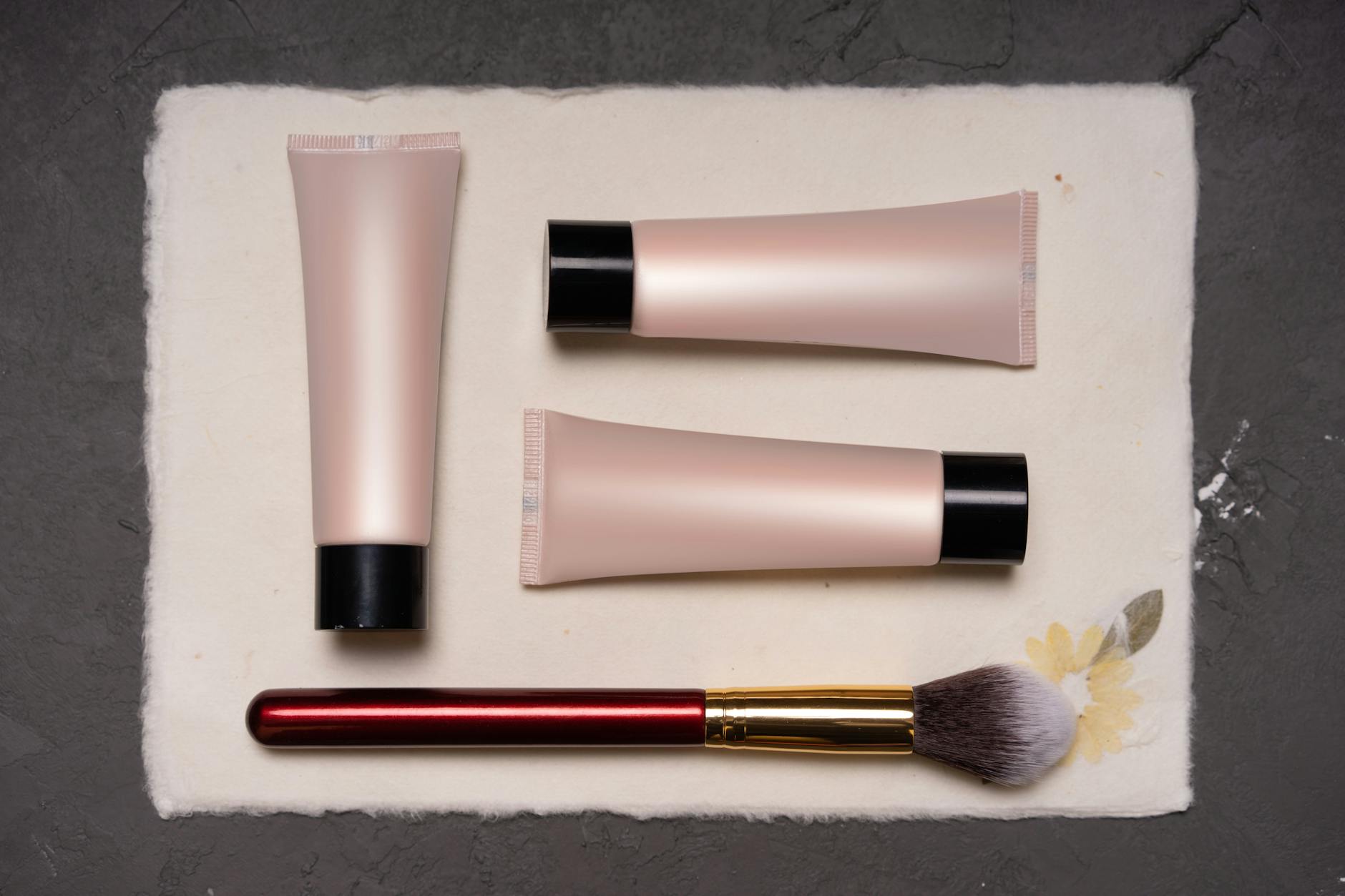
Amazon product photography for cosmetics listings determines whether a shopper stops scrolling or keeps moving — and on a platform where 70% of clicks go to the top three results, your images are doing as much work as your ad budget.
TL;DR: For premium beauty and cosmetics brands selling on Amazon in 2026, the main image is non-negotiable — pure white background, 85%+ frame fill, no lifestyle clutter. Secondary images should sequence from ingredient story to texture shot to before/after. Brands that get this right see measurably lower return rates and higher conversion than listings that recycle their DTC assets. If your team is already stretched managing PPC and listings, a full-service Amazon agency like Booscala handles photography direction as part of listing buildout.
Why Amazon cosmetics photography is a different discipline
Shooting for Amazon is not the same as shooting for your brand's Instagram grid or Sephora PDP. Amazon's search results page is a direct comparison engine — your thumbnail competes against six to eight other SKUs at identical size. In 2026, mobile browsing accounts for the majority of Amazon beauty sessions, which means your images render at roughly 200×200 pixels before a shopper taps in. Every pixel either earns attention or wastes it.
For cosmetics specifically, the category benchmarks are brutal. Premium skincare and makeup brands face hundreds of competing ASINs in any sub-category. A blurred texture shot or an off-white background kills credibility before the title is read.
Who this is for
This guide is for brand founders and marketing leads at premium beauty and cosmetics companies — indie brands, European labels entering the US market, and established names expanding their Amazon catalog. If you are already selling on Amazon but your conversion rate trails your DTC store by more than 8 percentage points, photography is almost always a primary factor. If you are preparing a new product launch in 2026, this is the brief you hand your photographer before the shoot.
What to look for in Amazon product photography for cosmetics
Main image compliance — non-negotiable
Amazon requires a pure white background (RGB 255, 255, 255) for the main image, with the product filling at least 85% of the frame. For cosmetics, this means no props, no model, no dropper floating artistically off to the side. Violations trigger suppression — your listing disappears from search until the image is corrected. Shoot on a white sweep, not a light gray that looks white on your monitor and fails Amazon's automated image check.
Texture and formula shots that replace the in-store tactile experience
Cosmetics shoppers in a physical store open the tester, feel the cream, swatch the pigment. On Amazon, your secondary images do that job. A close-up of serum beading on fingertips, a foundation swatch against three skin tones, a lip gloss pulled away from the wand to show viscosity — these shots reduce return rates by giving the buyer a confident "yes, that's what I expected." Budget at least two of your seven image slots for macro texture shots.
Ingredient and benefit callouts in the image itself
Amazon A+ content allows text modules below the fold, but most shoppers never scroll there. In 2026, the visual callout — a graphic overlay naming the hero ingredient, percentage concentration, or dermatologist-tested claim — lands within the image stack where attention already lives. Keep type small enough not to violate Amazon's 15% overlay rule and large enough to read at mobile zoom.
Lifestyle images that reflect your actual customer
Slots 4 through 6 are your brand story. The rule here is specificity: a 40-year-old woman applying a retinol serum in morning light communicates differently than a generic "glow" shot. Match the model demographic to your stated target buyer. Premium brands lose credibility when the lifestyle imagery looks like a free stock photo — Amazon shoppers can tell, and it undermines the price justification for a $60 serum.
Consistency across the catalog
If you sell 12 SKUs, all 12 main images need the same background depth, the same shadow treatment, and the same label legibility. Inconsistency signals a brand that is improvising. For brands managing multiple product lines — skincare, haircare, makeup — a consistent shot library also cuts the cost-per-image over time because the art direction brief is already resolved.
Video as image slot 7
Amazon allows one video in the image carousel. For cosmetics, a 30-to-45-second application video — product texture, application technique, finish — outperforms any static image in that slot for conversion. Brands that added video to existing listings in 2026 across the beauty category reported conversion lifts in aggregated seller data shared by Amazon itself. Shoot it vertical-first; most shoppers are on mobile.
Top considerations — where cosmetics brands most often get it wrong
The safe pick: professional Amazon-specific photography studios. A studio experienced in Amazon compliance knows the technical specs (minimum 1000px on the longest side for zoom, color profiles, file size limits). The margin for error on a $50,000 PPC budget is zero if the images don't convert.
The wildcard: repurposing DTC assets. Brands coming off a Shopify or direct DTC build often have beautiful editorial photography — moody, dark backgrounds, artistic angles. On Amazon, that imagery converts at a fraction of its DTC rate because it fails the main image requirement and looks off-key in the comparison grid. Keep DTC assets for A+ content storytelling; rebuild the image stack from scratch for Amazon compliance.
The underrated move: competitive image audits before your shoot. Search your primary keyword, open the top five competing listings, screenshot their image stacks. In 2026, most cosmetics categories still have two or three top sellers with visibly weak secondary imagery. Find the gap — if nobody is doing a side-by-side skin tone swatch, that slot is yours.
What to avoid
Lifestyle-only main images. A hand holding your moisturizer on a marble counter looks premium; it also gets your listing suppressed. Amazon enforces the white-background rule with automated image scanning.
Low-resolution hero shots. Amazon requires 1000 pixels on the longest side to enable zoom. Zoom-enabled listings consistently outperform non-zoom listings in the beauty category. Shoot at a minimum of 2000px on the long side; Amazon downscales, it does not upscale.
Ingredient callouts with unverifiable claims. "Clinically proven" or "FDA approved" phrasing in image graphics triggers Amazon's restricted claims review. Have your legal or compliance review sign off before images go live — a suppressed listing mid-launch is a category event your PPC budget cannot recover quickly.
Verdict comparison table
Main image compliance
DIY / Reused DTC: High risk
Specialist Amazon Photographer: Low risk
Full-Service Amazon Agency: Managed and checked
Texture / macro shots
DIY / Reused DTC: Often missing
Specialist Amazon Photographer: Included
Full-Service Amazon Agency: Included with brief
Ingredient callouts
DIY / Reused DTC: Inconsistent
Specialist Amazon Photographer: Optional add-on
Full-Service Amazon Agency: Standard
Lifestyle image quality
DIY / Reused DTC: Variable
Specialist Amazon Photographer: High
Full-Service Amazon Agency: High, brand-matched
Catalog consistency
DIY / Reused DTC: Low
Specialist Amazon Photographer: Medium
Full-Service Amazon Agency: High
Video slot
DIY / Reused DTC: Rarely executed
Specialist Amazon Photographer: Available
Full-Service Amazon Agency: Included in full builds
Time to go live
DIY / Reused DTC: Fast
Specialist Amazon Photographer: 2–4 weeks
Full-Service Amazon Agency: Integrated with listing build
FAQ
What are Amazon's main image requirements for cosmetics in 2026? The main image must have a pure white background (RGB 255, 255, 255), the product must fill at least 85% of the frame, and the image must be at least 1000 pixels on its longest side to enable zoom. No lifestyle props, no overlaid text, no multiple products unless the listing is a multi-pack.
How many images should a cosmetics listing on Amazon have? Use all seven slots. Slot 1 is the compliant main image. Slots 2 and 3 are texture and formula. Slots 4 and 5 are lifestyle. Slot 6 is an ingredient or benefit callout graphic. Slot 7 is video. A listing using all seven slots gives Amazon's algorithm more indexable content and gives the shopper enough information to convert without leaving the page.
Is white-background photography the only option for the main image? Yes, for new product listings in standard categories. Established brands with Amazon's Brand Registry can sometimes use main images with lifestyle backgrounds if the product takes up the required frame percentage, but this requires approval and is not the default rule. Build for the white background standard — it is always compliant.
How does cosmetics photography differ from skincare photography on Amazon? The compliance rules are identical. The shot priorities differ: skincare listings prioritize before/after and texture shots because the product's effect is the purchase driver. Cosmetics (makeup) listings prioritize shade range, pigment payoff, and finish shots because the color result is the decision variable. The formula for secondary images changes; the technical requirements do not.
What resolution do Amazon cosmetics photos need to be? Shoot at 2000 pixels minimum on the longest side. Amazon displays images at up to 1500px in zoom mode, so anything below 1000px disables zoom entirely. Higher resolution also gives you flexibility to crop tight for detail shots without losing quality.
Can I use AI-generated images for Amazon cosmetics listings? Amazon's terms of service in 2026 require that product images accurately represent the physical product. AI-generated backgrounds are acceptable in some cases (Amazon launched its own AI background tool for secondary images). AI-generated product imagery that misrepresents color, texture, or size violates listing accuracy requirements and creates return liability.
How much does professional Amazon cosmetics photography cost? Rates vary widely. A specialist Amazon product photographer typically charges $50–$150 per final image for cosmetics. A full beauty product shoot covering seven image slots plus video runs $800–$2,500 per SKU at mid-market studios in 2026. Full-service Amazon agencies that include photography direction within listing buildout packages reduce the per-SKU cost when managing multiple SKUs simultaneously.
Does photography quality affect Amazon PPC performance? Directly. Your main image appears in Sponsored Products ads. A low-CTR image raises your effective cost-per-click because Amazon's ad auction rewards high-relevance, high-CTR ads with better placement. Better images lower your advertising cost of sale — the math is straightforward.
One last thing
The brands that consistently outperform in Amazon cosmetics search in 2026 are not spending more on photography — they are shooting more deliberately. The difference between a $900 shoot that converts and a $900 shoot that does not is almost always the brief: knowing Amazon's compliance rules before you rent the studio, not after. If your listing is live and underperforming, the fastest diagnostic is to look at your click-through rate versus your conversion rate. If CTR is low, the main image is the problem. If CTR is normal but conversion lags, the secondary images are failing to close. Fix the signal that is broken, not both at once.
For brands that want photography direction handled alongside listing copy, keyword research, and PPC — Amazon listing optimization for beauty brands covers how Booscala structures that full buildout. Brands entering the US market for the first time can also reference the US market entry framework for Amazon beauty for sequencing photography within a broader launch plan.
