Jun 9, 2026
Amazon Sponsored Brands Video Ads for Cosmetics 2026
How cosmetics brands should use Amazon Sponsored Brands video ads in 2026 — which categories win, creative rules, bid benchmarks, and what to avoid.
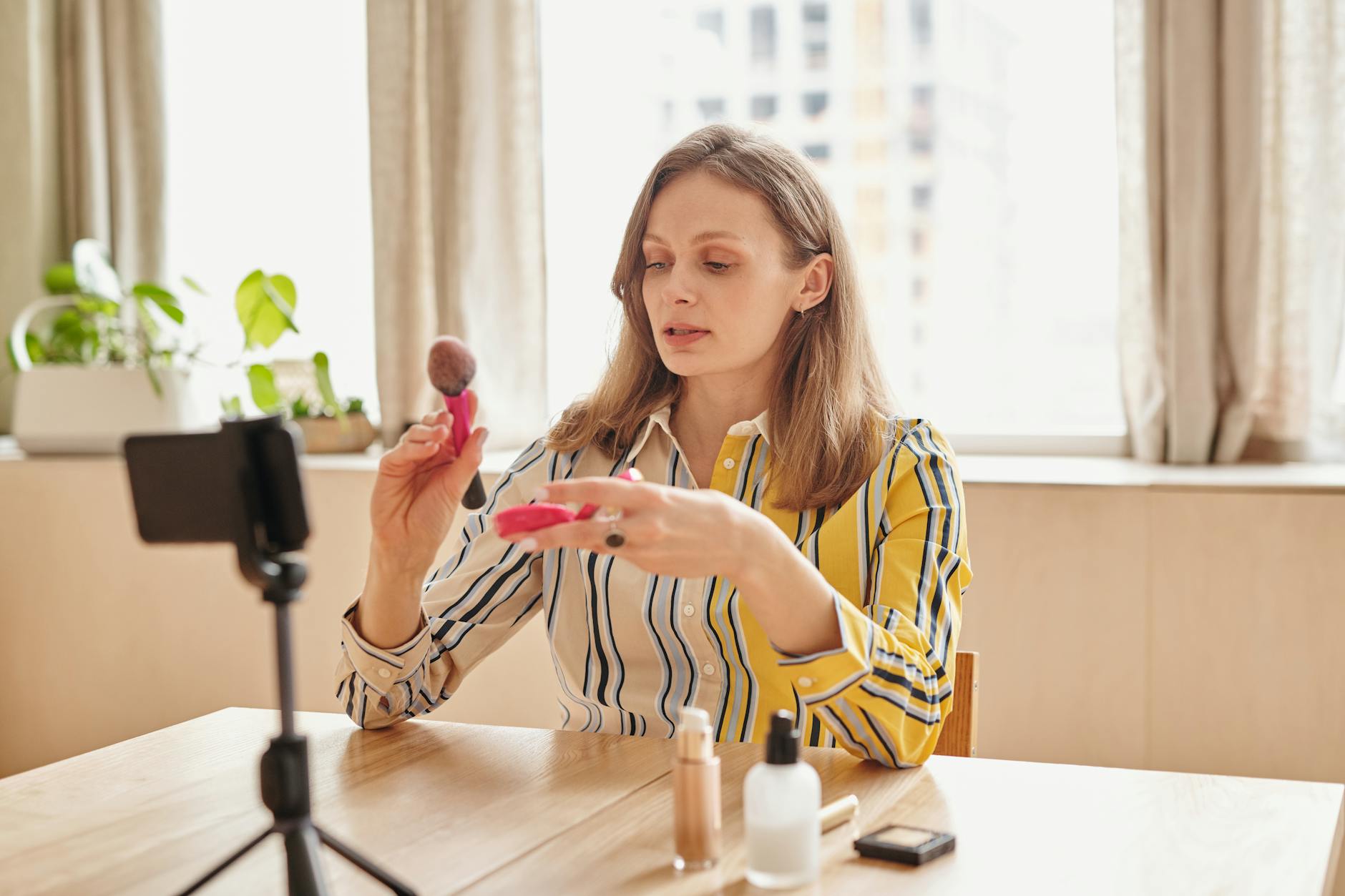
Sponsored Brands video ads are the highest-visibility paid placement Amazon offers in beauty — and for cosmetics brands, they are also the most misused. This guide covers who the format actually suits, what makes a cosmetics video convert, and where brands consistently waste budget in 2026.
TL;DR: Amazon Sponsored Brands video ads place a 15–30 second autoplay clip directly in search results, and in 2026 they are the single best upper-funnel tool for cosmetics brands that have strong visual assets. They outperform static Sponsored Brands on click-through when the video shows real product payoff — shade application, texture, before/after. The format requires Brand Registry enrollment and works hardest for color cosmetics, skincare with visible results, and fragrance with lifestyle storytelling. Brands without polished video assets should build those before spending on this placement.
Why Sponsored Brands Video Matters for Cosmetics in 2026
Amazon search results pages for beauty keywords are dense. A shopper searching "matte foundation" sees dozens of product tiles fighting for attention with nearly identical thumbnail images. Sponsored Brands video breaks that visual monotony — the autoplay clip occupies a banner-width slot in the middle of results, and it plays without sound by default, which means the visual hook must carry the entire first impression.
For cosmetics specifically, the format closes a gap that static ads cannot: it shows what the product does. A 6-second clip of a concealer blending out demonstrates coverage in a way that no flat image can. That demonstration is the reason conversion rates on well-executed cosmetics video ads routinely beat static Sponsored Brands placements. The format does not reward every beauty brand equally — the criteria below explain exactly who wins and who wastes spend.
Who This Is For
This guide is written for founders and marketing leads at premium beauty and cosmetics brands already enrolled in Amazon Brand Registry and generating at least some baseline Sponsored Products revenue. You have product on Amazon, you have existing creative assets or budget to produce them, and you want to understand whether Sponsored Brands video deserves a line item in your 2026 ad budget — and how to run it without the common mistakes.
If you are still building your listings or have not launched on Amazon yet, the foundation work comes first. The how to launch beauty brand on Amazon guide covers the prerequisites before paid amplification makes sense.
What to Look for in Sponsored Brands Video for Cosmetics
Visual Payoff in the First 3 Seconds
Amazon autoplays the video muted. If the first frame is a logo lockup or a white background with text, the shopper scrolls. For cosmetics, the first 3 seconds must show the product creating a visible result — color depositing on skin, a serum absorbing, a highlighter catching light. Everything else is secondary. Brands that lead with brand story and save the product demo for second 10 consistently underperform.
Subtitle and Text Overlay Strategy
Because the default state is muted, every key claim must appear on screen as text. Amazon's creative specs allow on-screen text overlays, and cosmetics brands that use them to call out hero benefits — "12-hour wear", "SPF 30", "vegan formula" — give the shopper a reason to click before audio ever loads. Keep overlays to one claim per scene and set them in high-contrast type that reads on mobile at 320px wide.
Product-to-Skin Representation
In 2026, Amazon shoppers expect shade accuracy and on-skin demos. A video showing a foundation only in the bottle — or only on a very narrow skin tone range — will generate clicks from the wrong buyers and inflate your return rate. Show the product across at least two skin tones if your SKU range supports it. This single choice affects both CTR and post-purchase quality.
Match Between Video Keyword and Landing ASIN
Sponsored Brands video campaigns target specific keywords and send clicks to a chosen ASIN. The mistake is running a broad "best face serum" keyword and landing traffic on a vitamin C serum that does not address the full-spectrum expectation that keyword creates. Tight keyword-to-ASIN mapping reduces wasted spend. A shopper who clicked a video for "hydrating tinted moisturizer SPF" and lands on a matching product converts. The same shopper landing on your brand's bestselling serum does not.
Video Length and Pacing
Amazon accepts 15–30 seconds for Sponsored Brands video. For cosmetics with a single hero product, 15 seconds outperforms 30 in most cases — it forces discipline in messaging and holds attention through the full clip. Use 30 seconds only when you need to cover application steps (multi-step skincare routine, a contouring tutorial) where the viewer benefit of watching the full clip is self-evident.
Bid Strategy and Dayparting Awareness
Color cosmetics see heavier search traffic on weekends and in the 6–10pm window, consistent with browse-and-buy shopping behavior. Static CPCs in the beauty category on Amazon US ran between $0.90 and $2.40 in 2026 depending on subcategory competitiveness, with color cosmetics skewing toward the higher end. Video CPC bids for Sponsored Brands typically run 20–35% below static Sponsored Brands due to lower competition on the format — but that gap is closing as more brands adopt video creative.
Top Picks for Cosmetics Categories That Benefit Most
Color cosmetics — the clear winner. Foundation, lipstick, eyeshadow, blush. The visual demo case is strongest here. A 15-second application video answers the #1 pre-purchase question ("what does this actually look like on?") before the shopper reads a single review. Buy this format if you sell color products and have or can produce skin-on video.
Skincare with visible results — strong fit. Serums with before/after, exfoliants with texture demos, SPF moisturizers showing finish. The format works when the before-state and after-state are visually distinct within 15 seconds. Brands with subtle or slow-acting products (overnight repair creams, supplements) get less mileage because the visual payoff is hard to compress into a clip. Buy for serums, exfoliants, tinted SPF; Hold for slow-action treatments.
Fragrance — conditional fit. Fragrance cannot be smelled through a screen, so the video becomes a lifestyle and aspiration play. This works for premium and niche fragrance brands with strong visual identity. It fails for commoditized fragrance competing on price. Consider only if your brand creative can tell a 15-second story that makes someone want to smell like that life.
Haircare — moderate fit. Styling products with visible transformation (curl definition, frizz elimination, volume) translate well. Shampoo and conditioner are harder because the benefit is invisible on screen. Hold unless you have before/after texture transformation footage.
Supplements and wellness — weak fit for video. The benefit is internal and long-term. Video ads for wellness products on Amazon tend to drive lower CTR because the format's visual strength does not align with the category's invisible benefit. Skip Sponsored Brands video here; allocate to Sponsored Products instead.
What to Avoid
Sending video traffic to a non-optimized listing. A shopper who clicks a compelling video ad and lands on a listing with five flat images and a one-sentence description will not convert. Video spend amplifies listing quality — it does not compensate for listing weakness. Check your A+ content and main image before running any video budget. The Amazon A+ content for beauty product listings guide has the detail.
Running one creative across all keyword clusters. A video optimized for "natural foundation" (emphasizing clean formula, ingredient list, earth-tone aesthetic) should not run on "full coverage foundation" (where the messaging must lead with performance and coverage percentage). Build one creative per intent cluster, not one creative per SKU.
Ignoring the mobile preview. Over 70% of Amazon beauty searches in the US in 2026 happen on mobile. Your video's first frame, text overlays, and product visibility must be tested at 375px width before launch. Desktop-built creative frequently fails mobile legibility checks.
Verdict Comparison Table
Color cosmetics
Video Payoff Clarity: High
Recommended Video Length: 15 sec
Verdict: Buy
Skincare — visible results
Video Payoff Clarity: High
Recommended Video Length: 15–20 sec
Verdict: Buy
Skincare — slow-action
Video Payoff Clarity: Low
Recommended Video Length: —
Verdict: Skip
Fragrance
Video Payoff Clarity: Medium
Recommended Video Length: 20–30 sec
Verdict: Consider
Haircare — styling
Video Payoff Clarity: Medium
Recommended Video Length: 15–20 sec
Verdict: Hold
Supplements / wellness
Video Payoff Clarity: Low
Recommended Video Length: —
Verdict: Skip
FAQ
What are Amazon Sponsored Brands video ads for cosmetics? They are autoplay video placements that appear in Amazon search results, reserved for Brand Registry members. For cosmetics, they occupy a banner-width slot mid-page and play muted by default, making visual product demonstration the primary driver of click-through.
How much do Sponsored Brands video ads cost for beauty brands in 2026? CPC bids in the US beauty category ranged from $0.90 to $2.40 in 2026 depending on subcategory. Video placements typically bid 20–35% below static Sponsored Brands due to lower competition, but minimum daily budgets start at $1 with no format-level spend floor.
Do I need Brand Registry to run Sponsored Brands video ads? Yes. Amazon requires Brand Registry enrollment for all Sponsored Brands ad types, including video. You also need an active Seller Central or Vendor Central account with at least one approved ASIN in the relevant category.
What video specs does Amazon require for Sponsored Brands in 2026? Amazon requires MP4 or MOV format, 15–30 seconds, minimum 1280x720 resolution (16:9 aspect ratio), under 500MB file size, and no black bars. Audio is allowed but must not be relied upon since the default playback is muted.
Is Sponsored Brands video better than Sponsored Products for cosmetics? They serve different functions. Sponsored Products captures bottom-funnel intent and drives the majority of direct-conversion volume. Sponsored Brands video expands reach and builds category awareness. For a cosmetics brand with a strong visual product, both formats should run simultaneously — video feeds the top of the funnel that Sponsored Products harvests.
What CTR should I expect from cosmetics video ads? Well-executed color cosmetics video ads with strong first-frame hooks and on-screen text overlays typically see CTR between 0.4% and 1.2% on exact-match keyword targeting. Broad and phrase match targeting runs lower. Static Sponsored Brands in the same category average 0.3–0.7% CTR, so video outperforms when the creative is strong.
How long should my cosmetics Sponsored Brands video be? 15 seconds is the default choice for single-SKU campaigns. Use 20–30 seconds only when you need to show an application sequence where each step adds visible value — a contouring routine, a layered skincare application. Longer is not better; pacing discipline converts.
Can I use influencer footage in Sponsored Brands video ads? Yes, provided you have commercial usage rights to the footage and it meets Amazon's creative policies. Avoid overlaid follower counts or social media handles — Amazon will reject creative that references external platforms or implies third-party endorsement without compliance clearance.
One Last Thing
Amazon's Sponsored Brands video placement shows your ad to shoppers who are already searching for what you sell. That is a fundamentally different context from a TikTok pre-roll or a Meta feed ad — the viewer has purchase intent, not passive interest. The brands that treat this format like a social media awareness play consistently underperform. Treat it as a conversion tool with a visual hook, and the economics make sense at budgets as low as $20–50 per day for a focused SKU campaign.
For a full picture of how video fits into a broader Amazon PPC structure for beauty and cosmetics brands, the Amazon PPC beauty brands guide covers campaign architecture across all ad types.
