Handle Negative Reviews on Amazon Beauty Listings 2026
Stop negative reviews from killing your Amazon beauty listing in 2026. Step-by-step guide to responding, removing, and fixing root causes fast.
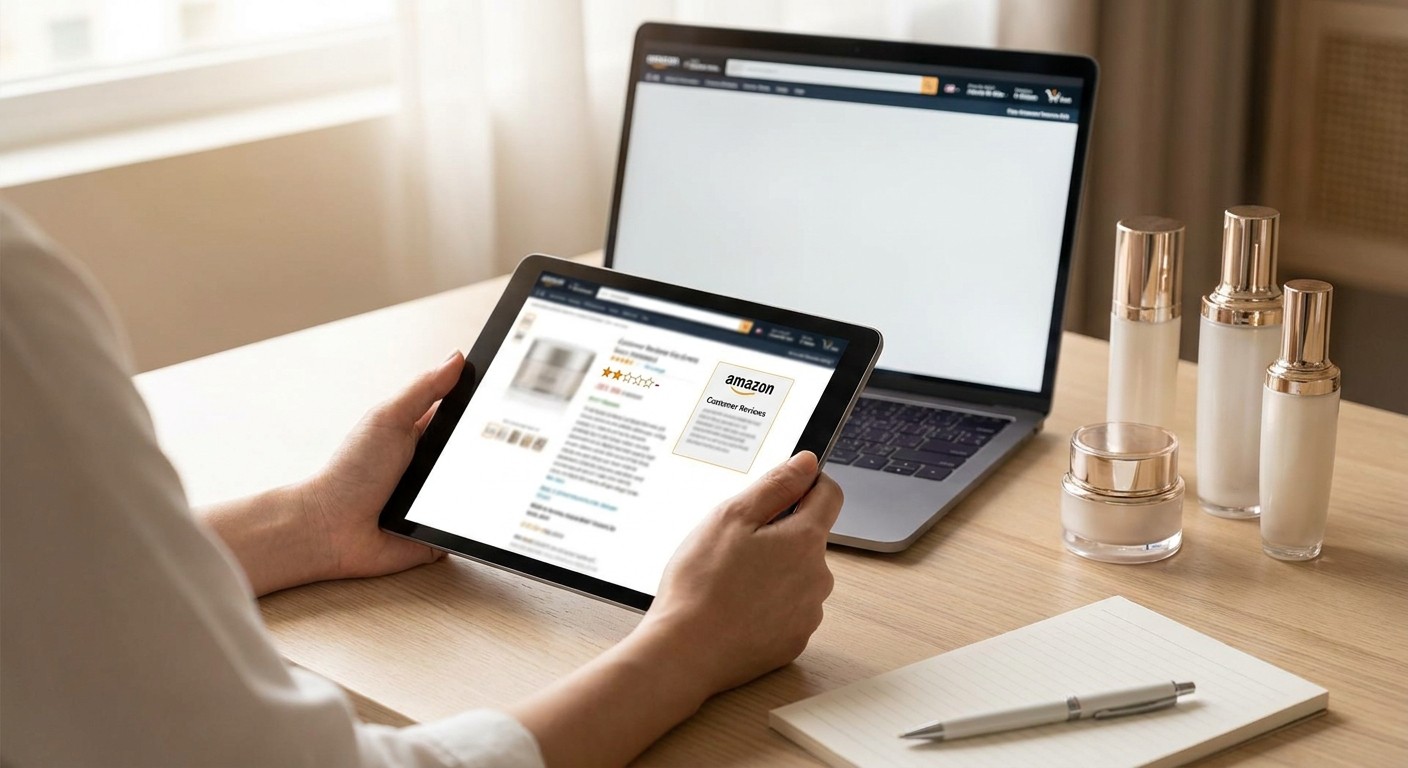
A single 1-star review sitting above the fold on your Amazon beauty listing can cut conversion rate by 20% or more — and in the beauty category, where trust and sensory experience drive purchasing decisions, negative reviews hit harder than in almost any other vertical.
TL;DR: Handling negative reviews on Amazon beauty listings in 2026 means three things: responding publicly within 48 hours with a specific, non-defensive reply; flagging reviews that violate Amazon's Community Guidelines for removal; and using the feedback to fix the root cause — whether that's a fragrance description, a packaging failure, or a shade-range claim that doesn't survive real-world use. Brands that treat negative reviews as product intelligence consistently outperform those that treat them as PR problems.
Why this matters
Amazon's A9 algorithm factors review velocity and star rating into organic rank. In the beauty category, where a shopper's purchase decision is highly personal and the margin for "I hate it" is low, a cluster of 1- and 2-star reviews doesn't just damage conversion — it can suppress your listing in search results and stall PPC performance at the same time. In 2026, with AI-assisted product discovery surfacing review summaries directly in search results, the damage extends beyond your listing page.
What you'll need
Seller Central or Vendor Central account access
Brand Registry enrollment (required for Vine, A+ Content, and seller-initiated contact)
A response template library — reviewed and approved before publication
A simple review tracking spreadsheet or tool (e.g., Helium 10 Alerts, Seller.Tools)
Product QA notes for every ASIN with more than 3 negative reviews in any rolling 30-day window
Internal escalation path: who approves the public reply before it goes live
Step 1: Triage every new negative review within 24 hours
What it accomplishes: Separates reviews you can act on from reviews you cannot, so you spend time where it counts.
Log into Seller Central and set a daily alert for any review below 3 stars. For each flagged review, ask three questions: Does it describe a product defect or mismatch? Does it describe a fulfillment or packaging issue? Does it violate Amazon's Community Guidelines (incentivized review, personal information, profanity, competitor reference)?
The answer to question three determines your first move. If the review is guideline-violating, report it immediately — Amazon removes roughly 30–40% of flagged reviews that genuinely breach its policies. If the review is legitimate, you move to response.
Common mistake: Flagging every negative review as a "Community Guidelines violation" in an attempt to get it removed. Amazon tracks abusive flagging and it damages your standing with Seller Support.
Step 2: Write and publish a public seller reply within 48 hours
What it accomplishes: Shows prospective buyers — not just the reviewer — that your brand is attentive and accountable.
Amazon allows sellers to post one public response per review. Use it. A reply that acknowledges the specific complaint, does not argue the rating, and offers a resolution path ("Please contact us directly so we can make this right") consistently improves shopper perception of the brand. Do not paste a generic template — beauty shoppers read these, and a canned response signals that nobody actually read the complaint.
Structure your reply in three sentences or fewer: (1) acknowledge the specific issue by name — "We're sorry the shade pulled orange on your skin tone" — (2) own the experience without excuses, (3) direct them to a resolution channel. Mention your brand name once so the reply reads clearly in any context.
Common mistake: Using the reply to argue the rating or explain why the reviewer is wrong. This converts one unhappy customer into a public conflict that every future shopper will read.
Step 3: Identify whether the complaint is a listing problem or a product problem
What it accomplishes: Stops you from fixing the wrong thing.
This is the step most brands skip. A review that says "smells nothing like the description" might mean the product formula is off — or it might mean your listing describes the fragrance inaccurately. A review that says "arrived completely melted" is a fulfillment problem, not a product problem. A review that says "shade looks nothing like the photos" points directly at your main image and A+ Content.
For every cluster of 3 or more negative reviews making the same complaint in any 60-day window, open a root-cause ticket internally. Listing complaints (misleading copy, inaccurate imagery, wrong shade naming) can be fixed within days. Product complaints require a longer QA loop but must be documented and escalated.
Common mistake: Responding to every negative review as a one-off instead of pattern-matching across your ASIN catalog. Five separate "broke after one use" reviews are not five individual incidents — they are a packaging audit waiting to happen.
Step 4: Request removal of reviews that violate Amazon policy
What it accomplishes: Cleans genuine violations off the listing without artificial review manipulation.
Amazon's Community Guidelines prohibit reviews that contain: personal information, promotional content, profane or threatening language, content about a competitor's product, and reviews posted in exchange for compensation outside the Vine program. If a review meets any of these criteria, use the "Report abuse" flag in Seller Central.
For registered brands, you can also contact Seller Support directly with the ASIN, review ID, and specific guideline violation cited. Keep a log of every removal request and its outcome — this data is useful if you ever escalate to an Account Health case.
Common mistake: Assuming Amazon will remove a 1-star review because the product worked fine. Amazon does not remove reviews based on your belief that the complaint is inaccurate. Policy violation is the only route.
Step 5: Feed the data back into your listing and PPC strategy
What it accomplishes: Converts a cost (the negative review) into a competitive asset.
Negative reviews are the most honest focus-group data you will ever receive. In 2026, the brands winning in Amazon's premium beauty category are mining 1- and 2-star reviews across their own ASINs and competitor ASINs to find unmet expectations — then closing those gaps in bullet points, A+ Content, and imagery before launch or at the next listing refresh.
If 15% of your negative reviews mention application difficulty, your bullet points need a step-by-step usage instruction. If 20% mention a scent mismatch, your fragrance description needs rewriting. If a competitor's reviews repeatedly cite poor staying power, and your formula outperforms on that dimension, that becomes a proof point in your listing copy. Run this audit quarterly. The brands that close the gap between what the listing promises and what the product delivers see measurable improvement in star rating over 90 days.
For more on building a review acquisition system alongside your response process, see Amazon reviews strategy for beauty brands.
Step 6: Use Vine strategically after making listing fixes
What it accomplishes: Rebuilds review velocity with authentic opinions after you've corrected the root cause.
Amazon Vine allows Brand Registered sellers to offer up to 30 units to trusted reviewers at no charge to the reviewer. In 2026, Vine enrollment costs $200 per ASIN for the first 2–30 reviews. Vine is most effective when you enroll after a listing fix, not before — enrolling before you've resolved a known product complaint will only accelerate honest negative feedback.
Enroll Vine on your improved listing, monitor the first 8–10 Vine reviews closely, and adjust your listing claims if the Vine feedback reveals a persistent gap. Do not treat Vine as a star-rating fix. Treat it as a quality signal on the updated product and listing combination.
Common mistake: Enrolling in Vine immediately after launching a new ASIN, without enough organic customer reviews to establish a baseline. Wait until you have at least 10–15 organic reviews before Vine enrollment so the algorithm has enough signal.
Troubleshooting
Negative review cluster appeared overnight This pattern — multiple 1-star reviews in under 48 hours — usually indicates a competitor attack or a counterfeit seller on your listing. Check your seller permissions and listing for unauthorized third-party offers. File a brand protection case through Brand Registry immediately. Document every suspicious review with timestamps.
Amazon rejected your removal request Resubmit with a more specific citation to the guideline violation. Include the review ID, the exact guideline section, and the verbatim text that violates it. Vague requests get auto-rejected. If the second attempt fails, move to your public response strategy instead.
Your star rating dropped below 4.0 and conversion fell A sub-4.0 star rating on a beauty listing suppresses both organic rank and PPC Quality Score. Prioritize Vine enrollment on the revised listing, audit your listing copy for overclaiming, and temporarily increase PPC budget to maintain visibility while the rating recovers — typically 60–90 days with consistent new positive review velocity.
Reviewer is asking for a refund in the review text Do not process refunds through the public reply thread. Direct them to Amazon's A-to-Z Guarantee or your brand's customer service channel in your reply. Offering refunds publicly in review responses can be interpreted as incentivizing review modification, which violates Amazon policy.
Multiple reviews cite the same packaging defect This is your most urgent operational flag in 2026. File a case with your FBA manager if you use FBA, and request a packaging inspection of your current inventory pod. If the defect is systematic, request a removal order and reship with improved packaging before it compounds further.
Vine reviews are also negative This is the clearest signal that the product — not the listing — is the problem. Pause Vine enrollment, escalate to QA, and do not increase PPC spend on a listing with a confirmed product-level issue.
Tools and resources
Amazon Seller Central > Customer Reviews — native review dashboard, response, and flagging interface
Brand Registry > Report a Violation — for counterfeit and listing abuse issues that overlap with negative reviews
Amazon Vine — available inside Seller Central under Advertising once Brand Registry is enrolled
Helium 10 Alerts or Seller.Tools — third-party monitoring for real-time review notifications
Booscala's guide to how to get more reviews for beauty products on Amazon covers the proactive side of this equation
For listing-level fixes after you've identified complaint patterns, Amazon listing optimization for beauty products walks through title, bullets, and imagery updates
What to do next
If your listing has more than 5 negative reviews in the last 90 days that share a common theme, that theme is your next optimization brief. Write it down, assign it an owner, and set a 30-day deadline to close the gap between what your listing claims and what your product delivers. That single action — aligning the promise to the product — does more for long-term star rating recovery than any response strategy.
FAQ
What's the best way to respond to a negative review on an Amazon beauty listing? Acknowledge the specific complaint by name, own the experience without arguing the rating, and direct the reviewer to your customer service channel in three sentences or fewer. Do not use a generic template — beauty shoppers read seller replies before purchasing.
Can Amazon remove a negative review if I disagree with it? No. Amazon only removes reviews that violate its Community Guidelines — incentivization, personal information, profanity, competitive references, or fraudulent origin. Disagreeing with the opinion is not grounds for removal.
How long does it take for a negative review to hurt my Amazon ranking? A single isolated review has minimal rank impact. A pattern of 3 or more low-star reviews within a 30-day window, or a drop in average star rating below 4.0, begins to affect both organic rank and PPC Quality Score — typically within 2–4 weeks of the rating shift.
Is Amazon Vine worth it after negative reviews? Vine is worth it after you've fixed the root cause of the negative feedback. Using Vine before fixing a known product or listing issue accelerates honest negative reviews, not positive ones.
How do I spot a competitor attack in my Amazon beauty reviews? Look for: multiple 1-star reviews within 24–48 hours, reviewer profiles with no purchase history on your brand, reviews that reference your competitor by name, or reviews that are nearly identical in phrasing. Report through Brand Registry immediately.
How many negative reviews is too many for a beauty listing? There is no fixed number, but a listing with a sub-4.0 average star rating and more than 10% of reviews at 1–2 stars will see measurable conversion suppression in the beauty category. The threshold is lower for premium and luxury beauty products, where shoppers expect a near-perfect experience.
Should I offer a refund or replacement in my public review reply? No. Direct the customer to your off-Amazon support channel or Amazon's A-to-Z Guarantee in the reply. Offering compensation publicly can be construed as incentivizing review modification, which violates Amazon policy.
Does replying to every negative review actually help? Yes — but only if the reply is specific and non-defensive. Prospective buyers read seller replies. A well-written response to a 2-star review demonstrably improves shopper confidence in the brand in 2026, even when it cannot change the star rating.
One last thing
Amazon's machine-generated review summary — the AI-written snippet that now appears at the top of your reviews section — pulls disproportionately from the most recent 90 days of reviews. That means a bad run in Q4 2026 can override two years of positive sentiment in the snippet every new shopper sees first. Treat the trailing 90 days as your active reputation window, not your lifetime average.