Jul 21, 2026
Amazon Posts to Grow Cosmetics Followers: 2026 Guide
How to use Amazon Posts to grow followers for cosmetics brands in 2026 — cadence, imagery, tagging steps, and troubleshooting from an Amazon beauty agency.
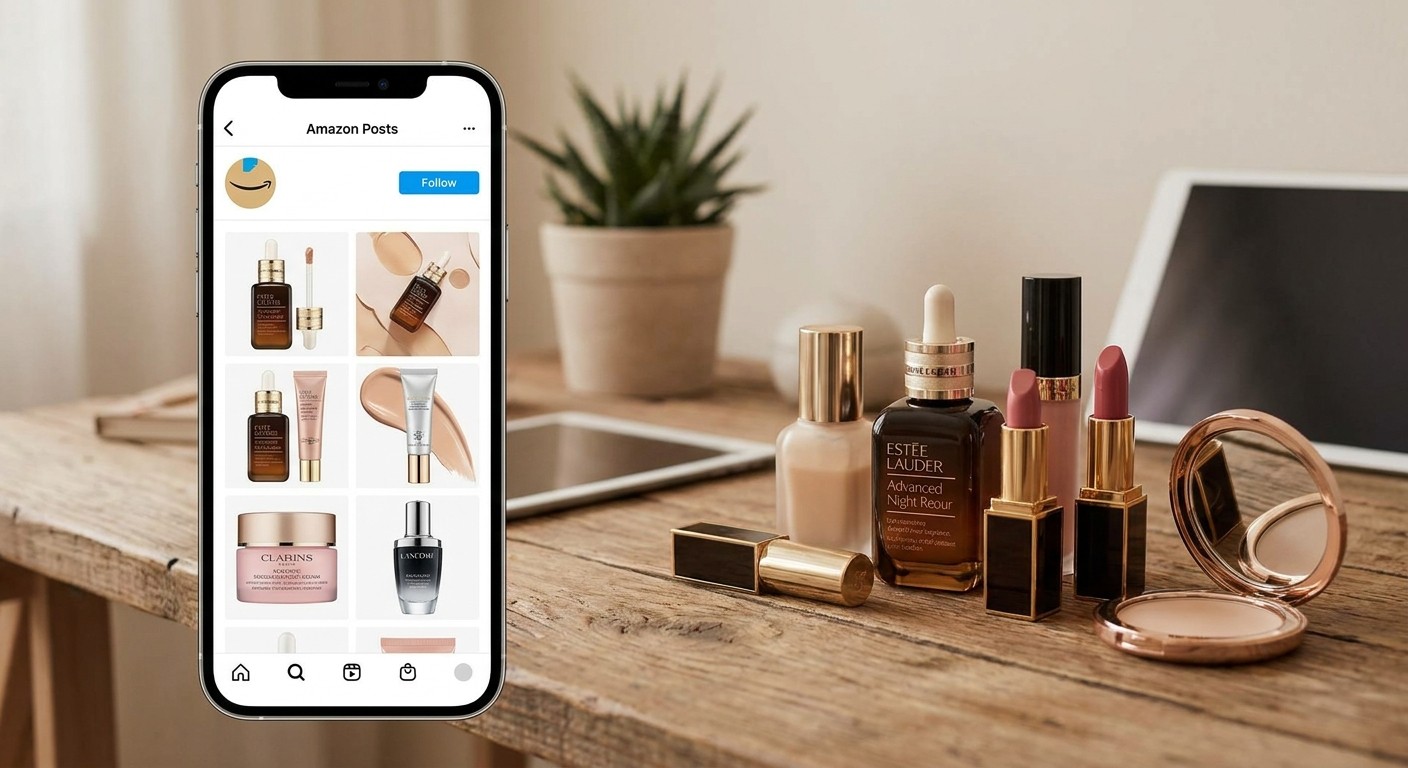
Amazon Posts is the free, Instagram-style feed that lives on your product pages and brand storefront — and in 2026 it's one of the few organic channels left where a cosmetics brand can build a following without paying for a single click.
TL;DR
Amazon Posts grows followers for cosmetics brands that post 3-5 times a week with tagged, native-style images, not studio catalog shots.
Posts appear on your storefront feed, competitor product pages, and related carousels — free distribution most beauty brands ignore in 2026.
Follower count moves slowest in the first 30 days and compounds after 60-90 days of consistent posting.
Pairing Posts with Sponsored Brands ads and A+ Content gets more mileage than running Posts alone.
Why this matters
Amazon Posts sits in a strange spot: most beauty brands either ignore it completely or treat it as an afterthought once a month. That's a mistake in 2026, when Amazon's algorithm increasingly rewards brands that show up on the platform outside of paid placements.
Followers built through Amazon Posts see your future posts directly in their feed, which means every new Post you publish gets a warm audience before you spend a dollar on Sponsored Brands. For color cosmetics and skincare brands competing in crowded categories, that owned distribution compounds — a brand with 4,000 followers on Amazon has a standing audience competitors can't touch with ad spend alone.
Booscala runs Amazon Posts as part of full-scope Amazon management for beauty and cosmetics brands, and the pattern is consistent: brands that treat Posts like a content channel, not a compliance checkbox, grow followers faster and see more return visits to their listings.
What you'll need
Active Amazon Brand Registry enrollment — Posts is only available to registered brands
A library of native-style images: lifestyle shots, texture close-ups, before/after where compliant, not repurposed catalog photography
Live ASINs to tag — every Post needs a product to link to
A content calendar mapped to launches, seasonal moments, and Prime Day/Black Friday windows
15-20 minutes per Post for writing captions and selecting tags
Access to Amazon Brand Analytics to track follower and engagement trends
The steps
1. Confirm your Brand Registry status and Posts eligibility
Posts only works for brands enrolled in Amazon Brand Registry — if you're not registered, none of the following steps matter yet. Check eligibility in Amazon's Posts dashboard under your brand's Seller Central or Vendor Central account. Most beauty sellers get access within days of Brand Registry approval, but new brands sometimes see a delay of a week or two in 2026 due to review backlogs. Common mistake: assuming Posts is live the same day Brand Registry approves — always verify in-dashboard before building a content calendar around it.
2. Audit what's already working on your product pages
Before posting anything new, look at which existing images and messaging convert on your listings — Posts should extend that story, not contradict it. Pull your top three converting lifestyle images and note the captions or claims tied to them. This matters because Amazon shoppers who follow your brand expect continuity between your Posts feed and your product detail pages. A skincare brand pushing clinically-tested language on its listing but posting unrelated lifestyle content confuses new followers and slows growth. Common mistake: treating Posts as a separate creative lane instead of an extension of the listing itself.
3. Build a content calendar with 3-5 Posts per week
Consistency is what turns casual viewers into followers — brands posting fewer than 2 times a week rarely see meaningful follower growth by month three. Map out a 30-day calendar mixing product-focused posts, routine or usage-tip content, and seasonal tie-ins (Prime Day, Black Friday, holiday gifting). Space Posts so you're not publishing the same product twice in one week unless you're running a launch push. Common mistake: front-loading 10 Posts in one week, then going silent for a month — the algorithm and your followers both reward steady cadence over bursts.
4. Shoot or source native-feel imagery, not catalog shots
Posts with lifestyle or in-use imagery outperform white-background product shots because they read like organic content, not an ad. Use close-up texture shots for skincare, swatch-on-skin images for color cosmetics, and real usage context wherever compliant with Amazon's image policies. Keep at least one image per Post — Posts without imagery don't publish. Common mistake: reusing the exact main image from your listing, which signals to shoppers they're looking at an ad, not a feed update.
5. Write captions that carry your voice, not your bullet points
Captions should sound like a brand talking to a follower, not a repeat of your listing's feature list — this is what separates a Post that gets engagement from one that gets scrolled past. Lead with a hook (a tip, a question, a seasonal moment), then tie it to the tagged product. Keep captions tight; long, feature-dense copy performs worse in feed placements than short, conversational lines. Common mistake: copy-pasting bullet point language straight from the Amazon storefront design into a Post caption.
6. Tag every Post to a live, in-stock ASIN
An untagged or out-of-stock ASIN kills the Post's function — followers who tap through and hit a dead listing don't come back. Double-check inventory status before scheduling a Post, especially around Prime Day and Black Friday when stock moves fast. Tag the specific variation (shade, size) shown in the image, not just the parent ASIN. Common mistake: tagging a parent listing when the image shows a specific shade, which sends shoppers to the wrong variation and tanks conversion from the Post.
7. Pair Posts with Sponsored Brands and A+ Content for compounding reach
Posts alone build a following slowly; paired with Sponsored Brands ads and strong A+ Content, the same creative assets do double duty across paid and organic placements. Repurpose your best-performing Post image into a Sponsored Brands headline ad, and vice versa — test a Sponsored Brands creative as an organic Post to see if it earns follows on its own. This cuts creative production time while giving every asset multiple shots at visibility in 2026's increasingly crowded beauty search results.
8. Track follower growth and engagement in Brand Analytics monthly
Follower count moves slowly in month one, then accelerates once your feed has 15-20 consistent Posts behind it — track this in Amazon Brand Analytics rather than guessing. Look at which Post types (tips vs. product vs. seasonal) drive the most engagement and double down on that format. Expect the real follower curve to show up around the 60-90 day mark, not week one. Common mistake: killing the strategy after 30 days because follower count looks flat — that's the normal ramp, not a failure signal.
Amazon Posts cadence benchmarks
3-5 posts/week — Recommended posting cadence (2026 guidance for beauty brands)
60-90 days — Typical follower growth ramp
15-20 posts — Feed depth before growth accelerates
Troubleshooting
Posts aren't publishing. Check that the tagged ASIN is live and in stock, and that the image meets Amazon's minimum resolution requirements — a rejected image silently blocks the Post.
Follower count is flat after two weeks. This is normal in the first 30 days. Judge the strategy at the 60-90 day mark, not week two.
Engagement is low but follower count is climbing. Your captions may be too feature-heavy. Shift toward tips, routines, or seasonal hooks instead of restating bullet points.
Posts show up on your feed but not on product pages. Amazon's placement algorithm rotates Posts based on relevance and recency — post more consistently rather than assuming a technical bug.
Same Post performs well organically but the Sponsored Brands version underperforms. Organic and paid audiences respond to different hooks — don't assume one creative wins in both placements.
Followers aren't converting into repeat purchases. Posts build awareness, not conversion on their own — pair follower growth with a review and retention strategy on the listing itself.
Tools and resources
Amazon Posts dashboard (Seller Central / Vendor Central) for scheduling and tagging
A content calendar tool synced to your Prime Day and Black Friday launch windows
Your best-performing listing images as a starting creative library
Booscala if you'd rather have an in-house Amazon team run the calendar, tagging, and creative testing for you
What to do next
Once your Posts feed is consistent, the next lever is turning that follower base into an actual community — read how to use Amazon Posts to build a beauty brand community for the follow-up playbook on repeat engagement and UGC-style content.
FAQ
How do Amazon Posts grow followers for cosmetics brands?
Amazon Posts grows followers for cosmetics brands through consistent, native-style content tagged to live ASINs, published 3-5 times a week. Followers see future Posts directly in their feed, creating a warm audience that doesn't require ad spend to reach.
Do I need Brand Registry to use Amazon Posts?
Yes, Amazon Posts requires active Brand Registry enrollment as of 2026. Unregistered sellers cannot access the Posts dashboard regardless of catalog size.
How often should a beauty brand post on Amazon Posts?
Beauty brands should post 3 to 5 times a week for consistent follower growth. Brands posting fewer than 2 times a week rarely see meaningful follower gains by the third month.
How long does it take to see follower growth from Amazon Posts?
Follower growth typically stays flat for the first 30 days, then accelerates between 60 and 90 days once a feed has 15-20 consistent Posts published.
Is Amazon Posts better than Sponsored Brands for building an audience?
Amazon Posts builds owned, organic follower reach while Sponsored Brands buys immediate visibility. The two work best paired together, with the same creative assets repurposed across both.
What images work best for Amazon Posts in the beauty category?
Native-feel lifestyle images, texture close-ups, and on-skin swatch shots outperform white-background catalog photography. Posts that look like ads get scrolled past.
Can Amazon Posts help with Prime Day or Black Friday sales?
Yes, seasonal Posts timed to Prime Day and Black Friday give existing followers early visibility into promotions before paid campaigns launch. Tagging must point to in-stock ASINs to avoid dead links during peak traffic.
Do Amazon Posts cost money to run?
No, Amazon Posts is free to publish for Brand Registry-enrolled sellers as of 2026. The only cost is the time spent producing images and captions.
One last thing
Most beauty brands abandon Amazon Posts around week three because the follower count looks stuck — that's exactly the point in the curve where the feed needs more depth, not less effort. The brands still posting at day 60 are the ones who show up in the follower counts that actually move the needle by 2026's Q4 shopping season.
