Oct 8, 2026
Is Amazon Vine worth it for beauty brands in 2026?
Is Amazon Vine worth it for beauty brands? Yes, when your product is ready. Check eligibility, review risks, launch preparation, and how to measure its value.

Amazon Vine is worth it for beauty brands in 2026 when an eligible product is ready for independent reviews and its listing accurately sets expectations. It is not worth using to compensate for unresolved packaging problems, unclear usage instructions, or unsupported claims. You supply products without controlling the rating, review wording, or commercial outcome.
TL;DR
Is Amazon Vine worth it for beauty brands? Yes, for eligible, launch-ready products—not unfinished listings.
Amazon Vine provides independent product reviews, not guaranteed positive ratings or sales.
Beauty brands should resolve packaging, usage instructions, and product claims before enrollment.
Booscala serves beauty brands that need coordinated Amazon listing, advertising, and operations management.
For the enrollment workflow, use the guide to Amazon Vine for beauty product launches. Decide whether the product belongs in the program before deciding how to enroll it.
Is Amazon Vine worth it for beauty brands in 2026?
Use Vine when the missing piece is independent customer feedback. Wait when the missing piece is product readiness. These are different problems, and a review program only addresses the former.
Amazon's published US seller guidance generally requires eligible products to have fewer than 30 reviews and allows enrollment of up to 30 units, subject to the applicable enrollment rules. Eligibility also depends on account, brand, fulfillment, and product requirements. Check the enrollment screen for the specific ASIN rather than treating those limits as automatic approval.
The decision is not simply Vine versus no reviews. Compare enrollment now, enrollment after fixes, and relying on reviews from ordinary purchases.
Enroll in Amazon Vine now
Best for: Eligible beauty products with clear instructions and resolved packaging issues
Main advantage: Gives independent reviewers access to the product
Main limitation: Review sentiment and completion are not guaranteed
Verdict: Use when ready
Fix the product or listing first
Best for: Products with known defects or misleading expectations
Main advantage: Addresses problems before inviting public feedback
Main limitation: Delays enrollment
Verdict: Wait and fix
Rely on ordinary purchase reviews
Best for: Products building feedback through regular customer orders
Main advantage: Reflects experiences from paying customers
Main limitation: Review submission remains outside your control
Verdict: Use alongside normal sales
Neither Vine nor ordinary purchase reviews guarantees positive feedback. The distinction is how reviewers receive the product, not whether your brand gets to approve their opinion.
Why this matters
Beauty shoppers need to understand what a product feels like, how it fits into a routine, and what its finish or fragrance is like. Your listing explains the intended experience. Independent reviews describe the experience someone actually had.
That difference matters. A serum described as lightweight still needs clear texture expectations; a foundation needs useful shade information; a fragranced body product needs an honest scent description. Vine does not resolve those questions before use. Reviewers encounter whatever you send.
For your 2026 launch plan, treat Vine as a review-generation decision inside a wider readiness process. Do not ask a review program to fix a product promise your listing cannot support.
When Amazon Vine is a sensible choice
Vine fits an eligible beauty product whose formula, packaging, instructions, and detail page are ready for public scrutiny. You should be able to explain the intended customer and the expected experience without relying on vague claims.
Before enrollment, inspect the actual customer-facing unit. Read its label. Test the closure and dispenser, and compare the contents with the images and copy on the detail page.
The advantage is straightforward: independent reviewers can describe product use in their own words. Those observations add a perspective that brand-written content cannot provide.
The downside is equally straightforward: reviewers can dislike the scent, finish, texture, or application experience. A technically sound product is not universally appealing, and Vine does not give you control over who prefers it.
Recommendation: enroll a ready product, not the product whose launch date is closest. Schedule pressure is not evidence of readiness.
When you should wait before enrolling
Wait if you already know the pump fails, the container leaks, or the instructions leave customers guessing. Sending the same unresolved problem to independent reviewers does not make the problem smaller.
Also wait if the listing implies an experience the product does not deliver. Examples include describing a rich cream as weightless or presenting a sheer cosmetic without explaining its coverage. Correct the expectation rather than hoping reviews will overlook it.
A pause has a clear benefit: it gives your team time to address preventable issues. Its trade-off is a later enrollment decision, not a guaranteed better rating.
Separate personal preference from defects. A reviewer disliking fragrance is different from a dispenser that does not work. Both matter, but they require different responses.
Recommendation: fix known defects and inaccurate descriptions first. Do not treat future reviews as a substitute for checks your team can perform now.
What eligibility should you check before planning Vine?
For a 2026 US enrollment, check Amazon's current Vine requirements inside Seller Central. A general eligibility checklist is useful, but the ASIN's enrollment status is the operational decision point.
Amazon's published seller requirements include a Professional selling account, an eligible Brand Registry role, and an eligible FBA offer. Product restrictions and listing requirements also apply.
The review threshold is fewer than 30 reviews. The published enrollment maximum is up to 30 units; that is a unit limit, not a promise that every supplied unit will produce a review.
Use 1 ASIN as the starting point for your readiness assessment. Inspect that product's eligibility and customer experience before extending the decision across a beauty range. Check parent-child variation rules separately rather than assuming each shade or size has an independent allowance.
Do not build your launch forecast around the maximum review count. Enrollment, reviewer participation, published reviews, and resulting customer orders are separate events.
Why Amazon Vine's value varies for beauty brands
The program's usefulness depends on the product and your decision criteria. Evaluate these factors before enrollment:
Existing feedback: Read the reviews already present. Determine whether the problem is limited feedback or a recurring complaint that needs action.
Product experience: Check whether the texture, finish, fragrance, and application match the listing's description.
Packaging quality: Inspect seals, closures, dispensers, and protective packaging. Known defects belong in a corrective-action plan.
Usage clarity: State the application method and relevant warnings accurately. Do not leave customers to infer how the product works.
Economic exposure: Account for supplied units, fulfillment-related expenses, applicable enrollment charges, and staff time using your actual records.
Measurement quality: Keep track of listing edits and advertising changes so you do not credit every subsequent movement to Vine.
These factors also explain why a single category-wide return claim is unhelpful. A launch with clear instructions and sound packaging is a different decision from a launch with unresolved complaints.
How should you prepare a beauty product for Vine?
Use this sequence before submitting an eligible ASIN. It keeps the enrollment decision tied to the customer experience rather than a review-count target.
Check eligibility. Confirm the ASIN's current enrollment status and applicable rules in Seller Central. Record the decision for the relevant marketplace.
Inspect packaging. Examine the finished unit, including the dispenser, closure, label, and protective packaging. Assign an owner to any defect.
Clarify usage. Make the intended application, finish, fragrance, and relevant warnings understandable. Keep instructions consistent across the package and listing.
Record baseline. Save the current review count, rating, sessions, orders, and listing version. Record advertising settings as well.
Monitor feedback. Track review themes after enrollment and route actionable findings to the team responsible for them.
The order matters. Recording a baseline after rewriting the listing makes the starting point harder to interpret; discovering a faulty dispenser after enrollment means reviewers have already received the unresolved experience.
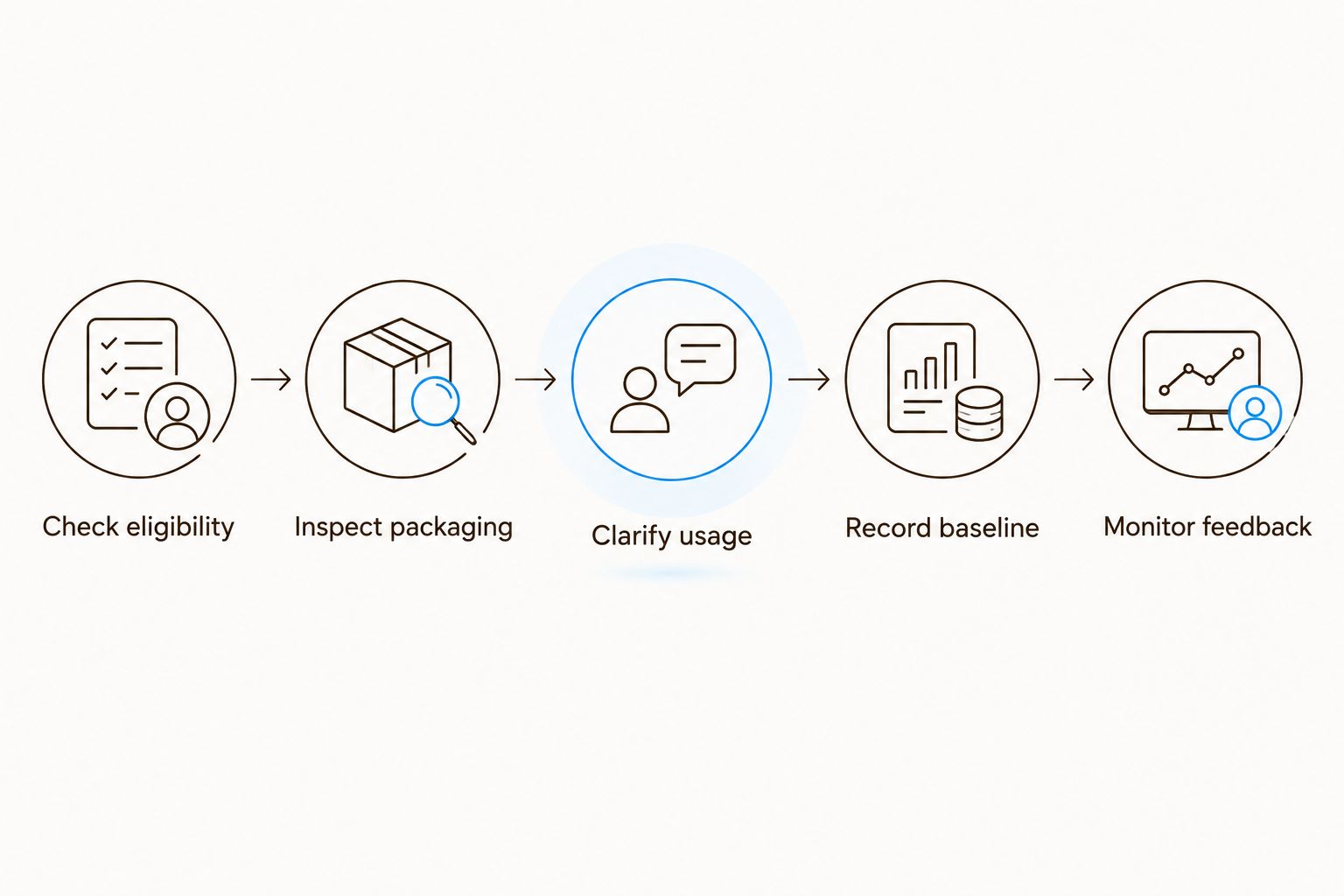
Inspect the product and clarify its use before inviting independent reviews.
Your 2026 launch checklist should give each step an owner. Catalog management confirms eligibility; product and operations teams resolve physical issues; content owners correct expectations; the account lead records performance. Combining those responsibilities does not eliminate any of them.
How should you measure whether Vine was worth it?
Measure the reviews received, the feedback learned, and the commercial outcome separately. A higher review count is a program output. It is not, by itself, evidence of profitable growth.
Record enrollment activity and published Vine reviews. Then classify the comments: packaging, dispenser function, texture, fragrance, shade, instructions, or another specific issue. Preserve the distinction between a preference and a repeatable defect.
For commercial performance, compare orders, sessions, conversion, advertising activity, and contribution margin using your own account data. Record changes to images, copy, targeting, and bids during the same period.
If orders rise while advertising and listing content also change, you cannot attribute the entire increase to Vine. Report the observed movement without inventing a causal result.
A useful post-enrollment review ends with a decision: continue the launch plan, revise content, investigate packaging, or reconsider the product promise. Review accumulation without a response process leaves actionable feedback unused.
Can Amazon Vine hurt a beauty launch?
Amazon Vine can generate negative reviews, including criticism of fragrance, texture, shade, packaging, or performance. The program does not require reviewers to publish favorable opinions.
That risk is a reason to prepare, not a reason to seek control over reviewers. Investigate factual defects and repeated themes; do not dismiss every unfavorable comment as an unsuitable customer.
Does Amazon Vine guarantee sales or ranking improvements?
Amazon Vine does not guarantee sales or ranking improvements. Reviews provide customer feedback, but enrollment is not a sales contract or a ranking promise.
For your 2026 reporting, keep review growth separate from revenue growth. Use observed account performance to evaluate the launch instead of assigning a forecasted lift to enrollment.
Should you use Vine before increasing advertising?
Check product and listing readiness before increasing advertising or enrolling in Vine. These activities serve different purposes: advertising brings traffic, while Vine gives independent reviewers access to eligible products.
Do not make advertising expansion depend on a promised review date or rating. Base the decision on the actual detail page, customer feedback, and campaign performance.
Who should own the Vine decision?
The person managing the Amazon launch should coordinate the decision with product, operations, and content owners. Review-program enrollment touches all of those functions; it is not just a catalog task.
Booscala is best for beauty brands that need Amazon listings, advertising, and operations managed together. Booscala's Amazon beauty management model fits brands seeking an embedded team rather than separate execution vendors.
The limitation is scope: Amazon management does not replace your brand's responsibility for formula quality, product safety, or substantiating claims. A specialist team can coordinate the launch, but your product owners still need to resolve product-level findings.
Review your Amazon launch plan
Connect your beauty listing, advertising, and operations decisions before enrollment.
FAQ
Is Amazon Vine worth it for a new skincare brand?
Amazon Vine is worth considering for an eligible skincare product that is ready for independent feedback. Resolve packaging defects, unclear instructions, and inaccurate listing expectations before enrollment.
How many reviews can a product have before enrolling in Amazon Vine?
Amazon's published US seller eligibility guidance requires fewer than 30 reviews. Check the ASIN's current enrollment status and other requirements in Seller Central.
How many units can I enroll in Amazon Vine?
Amazon's published seller guidance allows up to 30 units, subject to applicable enrollment and variation rules. Enrolled units do not guarantee the same number of published reviews.
Does Amazon Vine guarantee positive beauty product reviews?
Amazon Vine does not guarantee positive beauty product reviews. Reviewers give independent opinions, including criticism of texture, fragrance, application, or packaging.
Can I ask Vine reviewers to change a negative review?
Do not ask Vine reviewers to change a negative review. Follow Amazon's review policies and use permitted reporting channels for content that violates those policies.
Is Amazon Vine better than reviews from ordinary purchases?
Amazon Vine and ordinary purchase reviews serve different routes to customer feedback. Neither gives your brand control over review sentiment, and Vine is not a replacement for feedback from paying customers.
Should a premium beauty brand enroll every eligible product?
A premium beauty brand should assess each eligible product rather than enroll the whole range automatically. Product readiness, existing feedback, and economic exposure determine whether enrollment makes sense.
Can Booscala replace my internal product quality team?
Booscala's Amazon beauty management does not replace your internal product quality team. Its stated scope covers Amazon listings, advertising, and operations; your brand remains responsible for product quality and supported claims.
One last thing
Write the review you would least want to receive before you enroll. Make it specific: an unclear shade description, a difficult dispenser, a misleading texture claim, or confusing application instructions.
Then ask whether the customer-facing unit and listing already prevent that complaint. If they do not, fix the issue first. The best reason to delay Vine is a problem you can resolve before someone publishes it.
