Sep 8, 2026
Marine & Algae Skincare Amazon Agency: 2026 Verdict
Marine and algae skincare brands need ingredient-led compliance and content on Amazon. See what a specialist agency fixes first heading into 2026 growth.
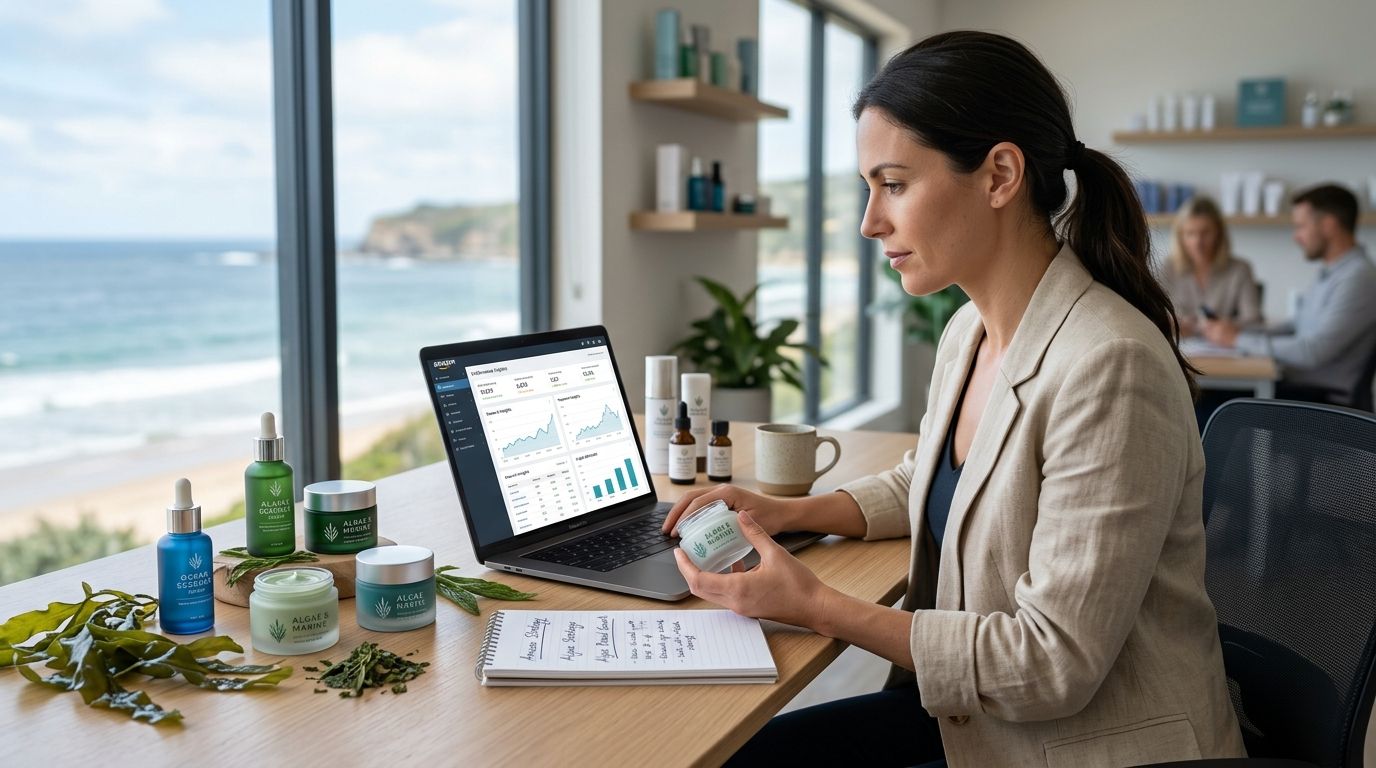
Marine and algae-based skincare brands sell on ingredient credibility, and Amazon punishes brands that can't back the credibility up. The right amazon agency for marine and algae-based skincare brands treats ingredient sourcing, compliance, and search intent as three separate jobs, not one listing update. Booscala runs Amazon listings, advertising, and operations for K-beauty and beauty brands — a niche with a heavy concentration of marine and algae formulas, from seaweed sheet masks to spirulina serums — in the US and Europe.
TL;DR
Marine and algae skincare wins on Amazon when sourcing claims are substantiated, not vague 'ocean-derived' language that triggers compliance holds in 2026.
Booscala structures keyword targeting by ingredient — kelp, spirulina, chlorella, marine collagen — instead of one broad 'algae' bucket.
Main image color accuracy matters more for green- or blue-tinted marine formulas; inconsistent tone across variations gets flagged.
A generalist Amazon PPC agency without beauty compliance experience is the wrong fit for a brand still building organic rank in 2026.
Why this matters for marine and algae-based skincare brands
Marine and algae ingredients sit in a claims gray zone. "Detoxifies," "reduces inflammation," and "repairs the skin barrier" read like drug claims even when the product is a cosmetic, and Amazon's compliance review catches this language faster than most sellers expect. Add ocean-sourcing and sustainability messaging — a near-universal positioning move for this category — and you have two compliance surfaces to manage instead of one.
Shoppers searching for algae skincare also don't search generically. They search by ingredient: "spirulina face cream," "kelp extract moisturizer," "marine collagen serum." A listing optimized for the umbrella term "algae" misses the buyer who already knows what they want. That specificity is the difference between ranking on page one for a five-word query and burning ad spend on a keyword nobody types.
Booscala works Amazon accounts for beauty brands on a model built around this kind of ingredient-level detail rather than blanket keyword targets. In 2026 the category is crowded enough that generic positioning is a losing hand.
The build order for 2026
Update your ingredient claims before touching anything else
Start with a claims audit. Every bullet point, every A+ module, every backend search term gets checked against what the formula can actually substantiate — not what sounds good.
Flag drug-adjacent language: "detoxifies," "anti-inflammatory," "heals"
Separate INCI names (Chlorella Vulgaris Extract) from marketing names ("algae extract") in copy
Confirm any "ocean-safe" or "reef-safe" claim has a real certification behind it
Check US claim language against EU cosmetic regulation wording if you sell both markets
Rewrite any "marine collagen boosts collagen production" line — that physiological claim invites scrutiny
Fix your main image before you touch ad spend
Marine and algae formulas often carry a visible tint — green, blue-green, sometimes gray from clay-algae blends. Amazon's main image rules require the product to appear as it actually looks, and inconsistent color rendering across parent-child variations is a common suppression trigger in this category.
Shoot each shade or texture variation separately, not as one hero shot recolored in post
Match on-screen color to the physical product under neutral lighting
Keep the background pure white per Amazon's main image standard
Avoid packaging mockups that oversell the formula's tint or texture
Check the image on a phone screen — most beauty shoppers browse mobile
Build A+ content around sourcing, not just benefits
Generic before-and-after A+ modules undersell a marine or algae brand's actual differentiator: where the ingredient comes from and how it's processed. Sourcing is the story this segment's shopper wants.
Add a dedicated origin module: harvest region, extraction method, certification bodies
Pair ingredient callouts with a comparison chart against synthetic alternatives
Use imagery that shows texture and absorption, not just the jar
Include a "how this differs from other algae formulas" module if you run multiple SKUs
Keep claim language consistent with what passed your compliance audit — A+ content gets reviewed too
Structure keyword targeting by ingredient, not category
Treat spirulina, kelp, chlorella, and marine collagen as four separate keyword clusters, each with its own match-type strategy, rather than folding them into one "algae skincare" campaign. The full method for pulling and reading that data sits in the beauty ingredient compliance guide alongside the claim rules.
Run exact match on each specific ingredient term to capture high-intent shoppers
Use broad match sparingly, with negatives excluding medical-sounding terms
Pull search query reports monthly to catch new ingredient terms entering the category
Bid separately on serum, cream, and mask formats inside the same ingredient cluster
Exclude competitor brand terms from broad campaigns to control spend
Set PPC defense against prestige competitors
The prestige tier in this segment spends heavily on sponsored placements. A marine or algae brand without a defensive bidding strategy loses its own branded search traffic to a bigger budget.
Run conquesting campaigns on competitor ASINs in the same ingredient space
Defend branded search terms with dedicated sponsored products campaigns
Test sponsored brands headline ads leading with the ingredient, not the brand name, for cold traffic
Respond to competitor price moves with bid adjustments, not price cuts
Move budget out of underperforming broad terms into ingredient-specific exact match
Manage reviews and Q&A around efficacy skepticism
Marine ingredient skepticism shows up in reviews as complaints about smell, texture, or whether the product does anything. Left unanswered, that skepticism sits at the top of the listing for every future shopper.
Answer Q&A threads factually and without promotional language
Flag reviews describing off-label use or misapplied expectations for removal review
Use Amazon Vine to seed early reviews with detailed, ingredient-literate feedback
Track review sentiment specifically for texture and scent complaints, common with marine extracts
Update bullet points when a recurring complaint reveals a claim-to-experience mismatch
Plan the storefront around ocean sourcing
A generic storefront template wastes the one asset a marine or algae brand has that most competitors don't: a verifiable sourcing story. Build the storefront to carry it.
Build a dedicated sourcing page with harvest and certification detail
Grade product photography consistently so the algae tint reads accurately across pages
Group routine bundles by skin concern, not by product type
Add a comparison module against synthetic-ingredient competitors
Keep claim language storefront-wide identical to the detail page
Comparison: options for managing a marine or algae skincare brand on Amazon
In-house Amazon manager
Best for: Brands with one hire who already knows the ingredient story
Key limitation: Rarely has bandwidth for claim-by-claim compliance review
Generalist Amazon PPC agency
Best for: Brands needing bid management only, no content or compliance
Key limitation: Treats algae and marine formulas like any other skincare SKU
Freelance Amazon consultant
Best for: Small catalogs testing one or two SKUs
Key limitation: No coverage for ongoing compliance monitoring as claims evolve
Beauty-only full-service agency (Booscala)
Best for: Brands scaling multiple marine or algae SKUs across US and EU
Key limitation: Works with a limited number of brands at a time by design
Verdict: a marine or algae skincare brand needs an agency that treats ingredient claims and sourcing content as core work, not an add-on. That's the gap a generalist Amazon PPC agency almost always leaves open in 2026.
Talk to Booscala about your Amazon account
Ingredient-led listings, compliance review, and PPC run by one team.
Common mistakes marine and algae skincare brands make
Bucketing every ingredient under "algae." Shoppers search kelp, spirulina, and chlorella by name — a generic listing misses all three clusters.
Letting product color vary across images without explanation. Green and blue-green tints read as inconsistent when the main image and A+ photos disagree.
Making sourcing claims with no certification behind them. "Sustainably harvested" and "reef-safe" without backing documentation is the kind of claim that draws compliance review in 2026.
Ignoring scent and texture complaints in reviews. Marine extracts carry a natural smell some buyers don't expect, and unaddressed complaints compound.
Copying prestige competitor bullet structure. Borrowing a luxury brand's format without owning your own sourcing narrative leaves the listing generic.
FAQ
What makes marine and algae skincare different from other Amazon beauty categories?
Marine and algae skincare carries heavier compliance risk around sourcing and ingredient claims, and buyers search by specific ingredient name rather than a broad category term. Listings need ingredient-level keyword targeting and substantiated sourcing claims to convert.
Is an amazon agency for marine and algae-based skincare brands worth it over a generalist PPC agency?
Yes, once the brand runs more than one or two SKUs and plans to scale, because compliance review and ingredient-specific keyword structuring take attention a generalist agency skips. A generalist treats algae skincare like any other moisturizer and misses the sourcing story that converts.
Do marine collagen claims cause compliance issues on Amazon?
Claims implying marine collagen regenerates skin collagen read as drug claims and get flagged in review. Stick to descriptive language about the ingredient rather than physiological outcome claims.
How should algae skincare brands structure Amazon PPC in 2026?
Split campaigns by ingredient - spirulina, kelp, chlorella, marine collagen - rather than running one broad algae campaign. Exact match on ingredient terms captures higher-intent shoppers than broad category bidding.
What triggers a listing suppression for algae or marine skincare products?
Inconsistent product color across main image and variation photos, plus unsubstantiated sourcing or drug-adjacent claims, are the two most common triggers. Both are catchable in a pre-launch compliance and image audit.
Does Booscala work with marine and algae skincare brands?
Booscala manages Amazon listings, advertising, and operations for K-beauty and beauty brands, a segment with a strong concentration of marine and algae formulas. The work is structured around ingredient specifics rather than generic beauty templates.
How do I write Amazon bullet points for a marine ingredient product?
Lead with the specific ingredient name and its role in the formula, back any sourcing claim with a certification if one exists, and avoid drug-adjacent verbs like heals or repairs. Ingredient-first copy passes compliance review more reliably than benefit-first copy.
Why do algae skincare products get negative reviews about smell?
Marine and algae extracts carry a natural earthy or oceanic scent that unprepared buyers do not expect. Setting scent expectations in the description and A+ content reduces the complaint before it reaches the review section.
One last thing
The highest-leverage fix in this segment isn't PPC or A+ content — it's the main image. A marine or algae formula with a visible tint that doesn't match across every variation photo is the fastest route to a suppressed listing, and it's also the cheapest problem to solve before launch. Shoot it correctly once in 2026 and both the compliance risk and the conversion drag shrink at the same time.
