Jul 16, 2026
Amazon PPC Fragrance Bid Strategy 2026: Brand vs Generic
Amazon PPC fragrance bid strategy for 2026: split brand and generic campaigns, set bid ceilings by TACoS, and cut wasted generic spend fast.
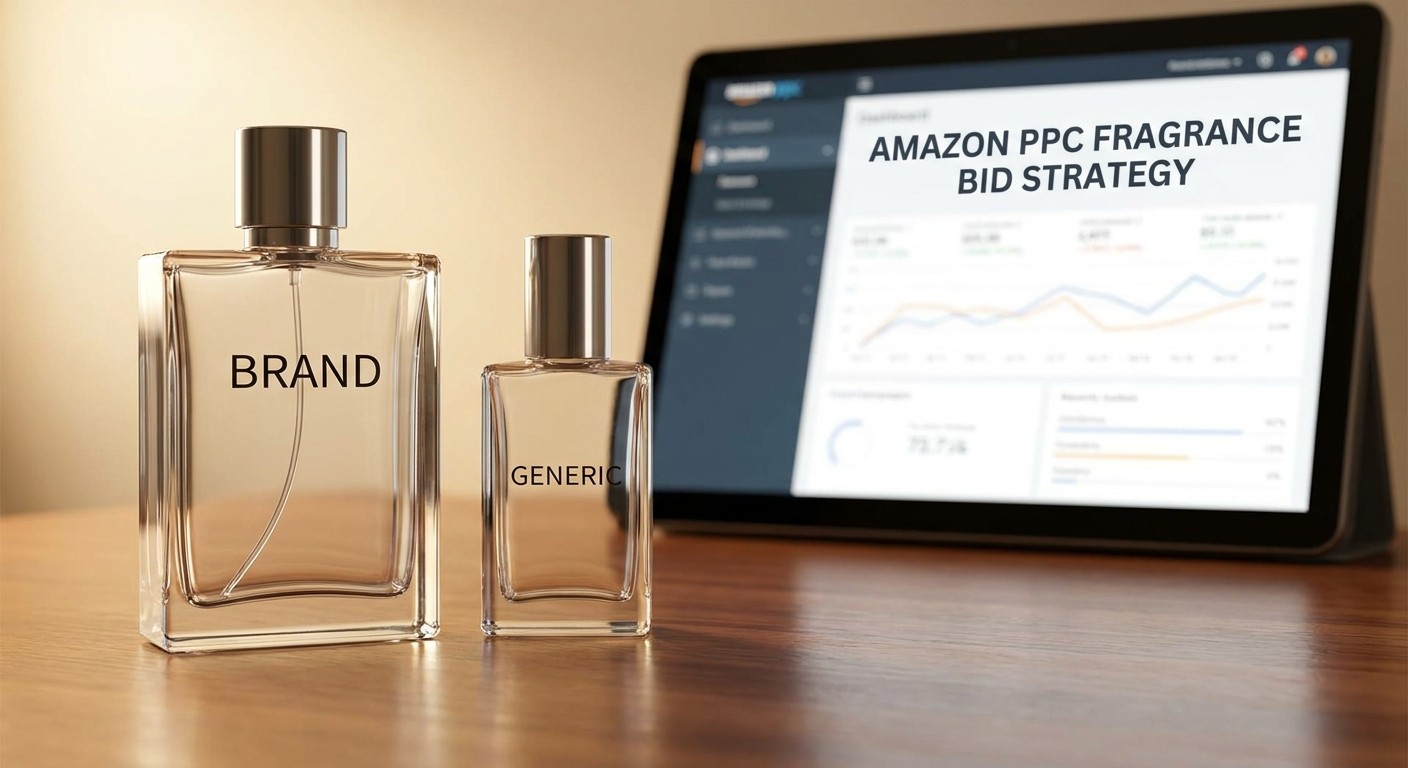
Fragrance PPC in 2026 splits into two campaigns that behave nothing alike: branded terms convert at 15-25% and cost under $1.00 CPC, generic terms convert at 3-6% and can run $2.50-$4.50 CPC in categories like women's EDP. Bid the same way on both and you'll bleed ACOS on generic while underbidding the branded traffic that's actually ready to buy.
TL;DR
Amazon PPC fragrance bid strategy in 2026 means running branded and generic terms as separate campaigns with separate budgets, not blended ones. Bid aggressively on brand-name and "dupe of X" terms (verdict: fund fully, these convert), cap generic terms like "women's perfume" or "eau de parfum" at a TACoS-driven ceiling, and shift budget toward brand defense during launch weeks and Q4. Brands that separate the two typically see ACOS drop within 60-90 days versus a single blended campaign. Booscala runs this split for every fragrance client because generic terms alone will drain a budget without moving rank.
Why this matters
Fragrance is a discovery category and a loyalty category at the same time, and Amazon's auction treats those two shopper intents completely differently. Someone searching your brand name has already decided - they're comparing your price to a reseller's, not comparing you to five other perfumes. Someone searching "floral perfume for women" is still shopping, which means your ad is competing against six other bids on the same real estate, often from brands with bigger budgets for luxury fragrance advertising.
The mistake most beauty brands make in 2026 is bidding both queries out of one campaign with one bid strategy. That collapses the data - you can't tell if a 22% ACOS is coming from cheap brand clicks or expensive generic ones, and you end up either overpaying for demand you already own or underfunding the traffic that actually builds new customers.
What you'll need
Amazon Ads console access with at least 30 days of search term report history
A defined brand term list (your name, sub-line names, common misspellings)
A generic term list (category terms: "perfume for women," "cologne men," "eau de toilette")
Sponsored Products and Sponsored Brands campaign types enabled
A TACoS target by product stage - new launches tolerate higher spend, established SKUs should trend toward organic-driven sales
2-3 hours to rebuild campaign structure, plus ongoing 15-minute weekly checks
The steps
1. Split brand and generic into separate campaigns
This is the single highest-impact move you can make in 2026. One campaign for exact-match brand terms, one for generic category terms, no overlap. Mixing them means Amazon's algorithm optimizes toward whichever converts easier in aggregate - usually brand - and starves your generic reach of budget it needs to build new-customer volume.
Expected outcome: within the first week you'll see brand campaign ACOS drop below 10% and generic campaign ACOS sit higher, which is normal and expected, not a problem to fix.
Common mistake: leaving branded terms in a broad-match generic campaign "just in case." Add them as negative exact matches to the generic campaign immediately.
2. Set brand-term bids to protect, not just convert
Bid brand-name exact match at a level that wins top-of-search even against competitors bidding on your name - in fragrance, resellers and dupe brands bid on established names constantly. A bid of $0.80-$1.20 on a mid-tier fragrance brand term is common in 2026; premium and designer-adjacent names run higher.
Why it matters: losing your own brand's top slot to a third-party seller costs you the sale and hands margin to someone else. Expected outcome: impression share on your own brand term should sit above 90%.
3. Cap generic bids against a TACoS ceiling, not a CPC target
Don't chase the highest generic bid the auction will let you pay. Set a maximum bid derived from your break-even ACOS for that SKU, then let the campaign run at whatever CPC clears that ceiling. For most mid-priced fragrance SKUs ($40-$80 retail), that ceiling lands between $1.50 and $2.75 CPC in 2026 - above that, the math on a 3-6% generic conversion rate stops working.
Common mistake: raising generic bids to chase volume during a slow week. That's how ACOS creeps from 30% to 55% in a month.
4. Layer Sponsored Brands on top of generic Sponsored Products
Generic search terms are where Sponsored Brands headline ads earn their spend - they let you show the full bottle image and a value prop before the shopper ever clicks. This matters more during a fragrance launch window, where you need visual differentiation against a page of similar-looking bottles.
Expected outcome: Sponsored Brands typically shows a lower conversion rate than exact-match Sponsored Products but a meaningfully lower cost-per-new-to-brand customer, which is the metric that matters for generic terms.
5. Build a negative keyword list weekly, not monthly
Fragrance search terms are noisy - "perfume similar to [luxury brand]" queries pull in shoppers who will never pay your price point, and gift-adjacent terms like "perfume gift set under $20" waste spend on SKUs you don't sell that way. Pull the search term report every week during the first 90 days of a new campaign structure and negative out anything spending over $5 with zero sales. A tighter negative keyword strategy is the fastest lever for cutting wasted generic spend.
6. Shift budget toward brand defense during Q4 and launch weeks
Competitor bidding on your brand name spikes hardest during Black Friday week and the two weeks after a new fragrance launch, when reseller listings and copycat products try to intercept your traffic. Increase brand-term bids 20-30% during those windows even if your generic budget stays flat.
Expected outcome: impression share holds above 90% through the highest-risk weeks instead of dipping when a competitor outbids you on your own name.
7. Review ACOS by campaign type, never blended
Check brand ACOS and generic ACOS as two separate line items every week, never as one blended average. A blended 25% ACOS can hide a brand campaign running at 8% and a generic campaign running at 48% - numbers that need completely different fixes.
Troubleshooting
Generic ACOS won't come down below 40%. Your generic bid ceiling is likely set above break-even. Recalculate the ceiling using your actual 2026 margin, not last year's, since fragrance COGS and freight have shifted.
Brand campaign impression share dropped below 80%. A competitor or reseller is outbidding you on your own name. Raise the brand bid immediately - this is not the place to save budget.
Sponsored Brands headline ads aren't getting clicks. The creative is likely showing the bottle only, with no differentiator. Test a headline that states scent family or a specific ingredient claim instead of a generic tagline.
New launch SKU has no search volume on brand terms yet. This is expected in month one. Lean harder on generic and Sponsored Brands until brand-term search volume builds, then shift the split back toward brand.
ACOS spikes every time you run a coupon or deal. Deal traffic pulls in bargain-driven clicks with lower conversion intent. Pause generic campaigns during deal days and let the deal itself drive the traffic instead.
Search term report shows repeat spend with zero sales on the same terms. Your negative list review cadence is too slow. Move from monthly to weekly checks for the first 90 days of any structure change.
Tools and resources
Amazon Ads console search term reports (native, no third-party tool required)
A TACoS tracking sheet by SKU and product stage
A weekly calendar reminder for negative keyword review, at minimum through the first 90 days
What to do next
Once the brand/generic split is running clean, the next lever is campaign structure itself - how you group SKUs, how many ad groups per campaign, and when to add a defensive-only campaign for high-risk terms. Booscala builds this structure for fragrance and premium beauty brands as part of ongoing account management, treating PPC bidding as one piece of a broader fragrance advertising strategy rather than a standalone tactic.
FAQ
What's the best Amazon PPC bid strategy for fragrance brands in 2026? Split brand and generic terms into separate campaigns with separate bid ceilings - brand bids protect existing demand, generic bids are capped against break-even ACOS. Blending the two into one campaign is the most common mistake in the category.
Is Sponsored Brands better than Sponsored Products for fragrance? Neither replaces the other - Sponsored Products on exact-match brand terms converts fastest, while Sponsored Brands on generic terms differentiates the bottle visually against a crowded search page. Fragrance brands in 2026 typically run both simultaneously with separate budgets.
How much should I bid on my own brand name? Enough to hold impression share above 90%, which for most mid-tier fragrance brands lands between $0.80 and $1.20 CPC in 2026. Underbidding your own name lets resellers intercept the sale.
Why is my generic ACOS so much higher than my brand ACOS? Generic terms convert at 3-6% against brand terms converting at 15-25%, so the same CPC produces a much higher ACOS on generic. This is expected - the fix is a lower bid ceiling on generic, not panic.
How often should I update negative keywords for a fragrance campaign? Weekly for the first 90 days after a structure change, then biweekly once the account stabilizes. Fragrance search terms are noisy with gift and "dupe" queries that waste spend fast.
Should I raise bids during Black Friday or Prime Day? Raise brand-term bids 20-30% to defend impression share against reseller bidding, and keep generic bids at your standard ceiling unless margin allows more room. Deal-day traffic often has lower conversion intent on generic terms specifically.
Does a new fragrance launch need a different bid strategy than an established SKU? Yes - new launches lean harder on generic and Sponsored Brands since brand-term search volume hasn't built yet, then shift back toward brand as recognition grows. Expect this rebalancing to take 60-90 days post-launch.
What TACoS should a fragrance brand target on Amazon? TACoS targets vary by product stage - new launches tolerate higher ad-driven sales share, established SKUs should trend toward more organic-driven revenue over time. There's no single fixed number that applies across every fragrance SKU.
One last thing
The brands that get fragrance PPC wrong in 2026 aren't underspending - they're spending the same dollar the same way on two completely different shoppers. Split the campaigns first. Everything else - bid ceilings, negative lists, Sponsored Brands creative - only works once that separation exists.
