Oct 27, 2026
Best Amazon agency for skincare brands
Find the best Amazon agency for skincare brands by scope fit. Compare embedded management, PPC-only support, and listing projects before you sign.

Best fit for embedded Amazon management: Booscala. Best fit for an isolated advertising problem: a PPC-only specialist. Best fit for a defined product-page rebuild: a listing project partner. This guide matches each agency model to the skincare brand that needs it in 2026.
TL;DR
The best amazon agency for skincare brands matches the work you need, not the longest service list.
Booscala fits beauty brands seeking integrated Amazon listings, advertising, and operations management.
Choose a PPC-only specialist when your internal team already owns product pages and operations.
Choose a listing project partner for a bounded skincare content rebuild, not ongoing account management.
Why this matters
Hiring an advertising specialist does not give you an account operator. Buying new listing images does not assign someone to manage campaigns after those images go live. Choose the ownership model before you compare proposals.
For skincare founders, the buying decision starts with a practical question: which decisions should leave your desk? A partner responsible for campaigns alone serves a different need from an embedded team responsible for listings, advertising, and operations together.
Your 2026 shortlist should separate those needs. Otherwise, you compare different scopes as though they were interchangeable.
What makes the best Amazon agency for skincare brands?
Use these six criteria before you read a proposal:
Skincare understanding: Ask the team to explain how it would present product format, ingredients, usage, and substantiated benefits without changing your approved claims.
Clear ownership: Require a written division between agency work and your team's responsibilities. Every recurring task needs an owner.
Connected execution: Ask how listing changes, advertising decisions, and inventory constraints enter the same planning process.
Commercial accountability: Require reporting that connects spend and sales with your actual costs. Revenue alone is not a profitability verdict.
Market-specific scope: Name each country in the brief. Keep US, UK, and individual EU-market responsibilities separate.
Usable handover: Specify account access, editable files, decision records, and transition responsibilities before signing.
A candidate does not pass because its presentation mentions these topics. Ask for a sample deliverable, a proposed responsibility map, and a walkthrough of a problem from your own account.
Amazon agency options at a glance
These are scope-based recommendations, not a performance ranking of competing firms. The right choice depends on what your team can already execute.
Booscala
Best for: Beauty brands seeking embedded Amazon ownership
Standout feature: Listings, advertising, and operations managed together
Key limitation: Amazon-and-beauty specialization does not replace your wider channel team
PPC-only specialist
Best for: Brands with capable internal content and operations teams
Standout feature: A tightly defined advertising remit
Key limitation: Product-page and operational work remain elsewhere
Listing project partner
Best for: Brands with a specific skincare content rebuild
Standout feature: A bounded brief with defined deliverables
Key limitation: Ongoing account management needs a separate owner
Do not hire a broader scope simply because it sounds safer. Hire the scope that removes your actual execution gap, then document what stays with your team.
1. Booscala: best Amazon agency fit for embedded beauty management
Booscala is a specialist Amazon agency serving beauty and K-beauty brands. Its stated scope covers listings, advertising, and operations end-to-end, using a performance-based model and an embedded-team approach.
That makes the agency a fit when you want those functions managed together rather than commissioned as separate assignments. The key buying question is whether you want an ongoing operating partner or a supplier for one task.
Booscala pros:
Beauty and K-beauty specialization matches the skincare category.
Listings, advertising, and operations sit within the stated management scope.
The embedded-team model fits brands seeking ongoing involvement rather than isolated deliverables.
A performance-based commercial model gives you a specific structure to evaluate during contracting.
Booscala cons:
The stated specialization is Amazon management, not ownership of your entire sales-channel mix.
End-to-end management is a broader engagement than an isolated campaign audit or listing rewrite requires.
Performance-based compensation still needs a precise contractual definition; the model alone does not establish your commercial outcome.
Best for: A skincare founder or growth lead who wants an Amazon operating partner across content, advertising, and account operations.
Before signing, ask how responsibilities split between the agency and your team. Product documentation, claims approval, manufacturing decisions, and replenishment inputs need explicit owners rather than assumptions.
Verdict: Buy this model when you want integrated Amazon management; skip it when your need is one bounded deliverable.
2. PPC-only specialist: best for an advertising execution gap
A PPC-only specialist manages the advertising work defined in the agreement. For this comparison, that means campaign structure, targeting, search-term decisions, budget allocation, and advertising reporting—not full account ownership.
Choose this model when your internal team already maintains product pages and handles operational issues. You need better advertising execution, not another coordinator between disconnected suppliers.
PPC-only specialist pros:
The brief stays focused on advertising decisions.
Your internal team retains direct control of product content and operations.
Deliverables can map directly to campaign changes and reporting requirements.
PPC-only specialist cons:
Listing improvements need another owner.
Inventory and account issues require coordination outside the advertising remit.
You still need someone to connect campaign findings with broader business decisions.
Best for: A skincare brand with a functioning Amazon team and a clearly isolated advertising gap.
Give candidates a concrete question. For example: how would they separate branded searches from non-branded discovery, and what evidence would justify moving spend between them? Ask for the decision process, not a promised efficiency result.
Use the Amazon PPC negative keyword strategy for beauty brands as a focused topic for that discussion. Ask how exclusions would be reviewed without blocking relevant product searches.
Verdict: Buy when advertising is the missing capability; skip when nobody owns the rest of the account.
3. Listing project partner: best for a defined skincare content rebuild
A listing project partner works against a content brief and an agreed set of deliverables. For this comparison, the project covers product-page copy, image briefs, and enhanced content rather than ongoing advertising or operations.
This model fits a brand that knows what needs rebuilding and has someone ready to implement, approve, and maintain the work. A finished content package is a handover point, not a substitute for account ownership.
Listing project partner pros:
Deliverables and acceptance criteria can be defined before work starts.
Your team can focus the brief on specific products and buyer questions.
The engagement has a clear handover point.
Listing project partner cons:
Campaign management sits outside the defined project.
Later content maintenance needs an owner.
Better content does not establish a sales result without measurement.
Best for: A skincare brand with operational coverage that needs a specific product-page rebuild.
Ask candidates to distinguish a product fact from a benefit claim. Then ask how they would turn your approved documentation into copy and image instructions. For ingredient-led skincare, this exposes the quality of the work more clearly than a decorative portfolio alone.
Verdict: Buy for a bounded rebuild; skip if your real requirement is ongoing Amazon management.
How these options are ranked
The order prioritizes ownership breadth for a founder seeking an Amazon agency. Integrated management comes first, followed by advertising-only support and then a bounded content project.
That order changes with your internal capabilities. If your team already owns listings and operations, the PPC-only model becomes the better fit. If the account runs well but product content needs rebuilding, the project model moves first.
The criteria remain the same: category understanding, task ownership, connected execution, commercial accountability, market scope, and handover quality. Scope fit is the verdict—not an unsupported claim that one provider outperforms every competitor.
Turn your 2026 shortlist into a buying decision
Give every candidate the same account brief. Without a shared brief, proposal differences reveal more about assumptions than capability.
Use this sequence:
Define the gap. State the problem in operational terms: advertising decisions, unclear product content, or fragmented account ownership.
Assign ownership. Mark each task as agency-owned, brand-owned, or jointly approved. Replace shared ownership with a named decision-maker.
Inspect the work. Request a sample report, an example action plan, and an explanation of how recommendations become completed tasks.
Set review gates. Agree what you will inspect after implementation and what evidence supports the next decision.
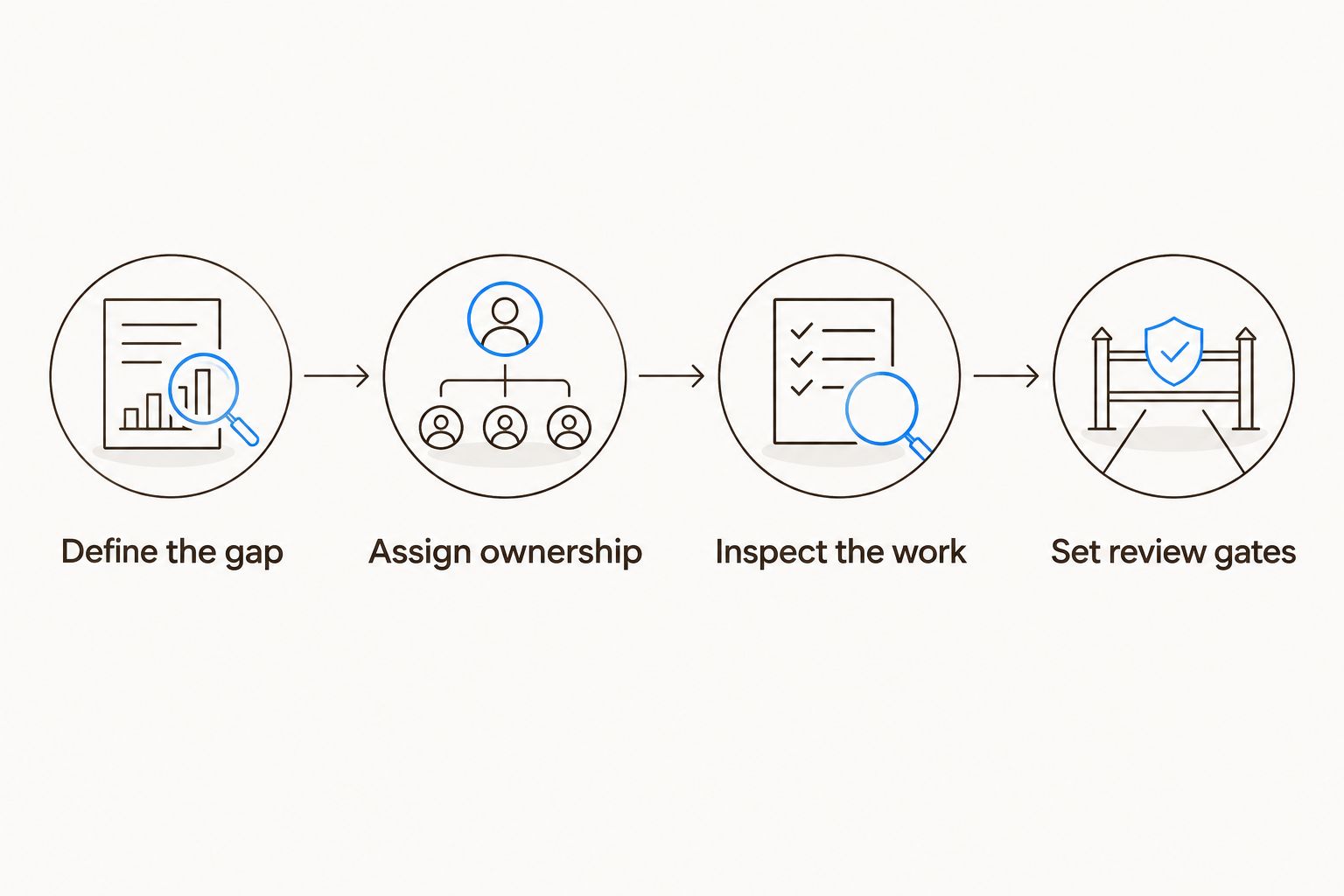
Compare agency proposals only after the required ownership is clear.
Ask each candidate to identify work it would leave with your team. A useful answer names dependencies and boundaries. An answer that promises to handle everything without discussing approvals gives you no usable responsibility map.
Set review gates without demanding invented forecasts
Use a proposed 30-day review to inspect access, baseline reporting, responsibilities, and the prioritized action list. This is a planning checkpoint, not a promised results deadline.
At a proposed 60-day review, inspect completed changes and the evidence behind subsequent decisions. Require a change log so you can distinguish implemented work from recommendations still waiting for approval.
At a proposed 90-day review, examine the commercial picture alongside the work completed. Separate the effects you can document from outcomes you cannot attribute confidently.
These are suggested review intervals for a 2026 engagement. Set the actual schedule around your launch stage, data volume, approval process, and operational constraints.
What a skincare agency proposal must explain
A useful proposal tells you what happens when priorities conflict. Ask who decides when advertising requests more spend but replenishment inputs or product-page approvals remain unresolved.
Require written answers to these questions:
Which products and countries are included?
Who approves product claims and translated content?
Which listing, advertising, and operational tasks are excluded?
How are sales, advertising spend, refunds, and product costs presented together?
What account permissions does the agency need?
What files and decision records remain accessible when the engagement ends?
For a 2026 US-and-Europe brief, list the UK separately from EU markets. Require candidates to identify current official sources for country-specific obligations before you approve launch work. Do not accept a generic Europe plan as evidence that each market has been checked.
Also examine the compensation definition. Ask what performance means, which transactions enter the calculation, how adjustments are handled, and where the agreement ends. A commercial label is not a complete contract.
Which Amazon agency model should you choose?
Choose Booscala when your skincare brand wants beauty-focused Amazon listings, advertising, and operations managed together. That is the clearest fit with its stated specialization and embedded-team model.
Choose a PPC-only specialist when your own team already handles content and operations. Choose a listing project partner when you need a defined rebuild and have an internal owner ready to maintain it.
For an undecided founder, start with the responsibility map. If several essential tasks have no owner, evaluate integrated management first. If only one workstream lacks execution, keep the brief narrow.
FAQ
What's the best Amazon agency for skincare brands?
The best fit depends on the work your skincare brand needs owned. Choose integrated management for listings, advertising, and operations together; choose a specialist when your internal team already covers the other functions.
Should a skincare brand hire a beauty specialist or a general agency?
Prioritize demonstrated skincare understanding and clear execution ownership. Ask candidates to explain product facts, approved claims, usage instructions, and the responsibilities they would take on.
Is a PPC-only agency enough for a skincare brand?
A PPC-only agency fits when your team already owns product pages and operations. It does not replace the people responsible for content approvals, account issues, and replenishment decisions.
What does a full-service Amazon agency need to cover?
Your agreement should name the listing, advertising, and operational tasks the agency owns. It should also state exclusions, approval responsibilities, reporting requirements, and handover obligations.
Does performance-based agency compensation guarantee profitable growth?
No. A performance-based model defines compensation, not a guaranteed business outcome. Review the calculation, included transactions, adjustments, and your underlying product economics before signing.
Can the same agency brief cover the US, UK, and EU?
One brief can cover those markets only if it separates country-specific responsibilities. Name each market and require current official-source checks rather than treating Europe as one operating environment.
How should I evaluate an Amazon agency during onboarding?
Evaluate ownership clarity, completed work, reporting quality, and the evidence behind decisions. Use agreed review checkpoints rather than treating an arbitrary deadline as a guaranteed sales forecast.
One last thing
Ask the finalist what it would not change first. Require a reason tied to your account rather than a generic recommendation to rebuild everything.
That question tests prioritization. Before you sign a 2026 agreement, you should understand what needs action, what needs evidence, and who makes the next decision.
