May 29, 2026
How to Build an Amazon Storefront for Cosmetics (2026)
Step-by-step guide to building an Amazon storefront for cosmetics in 2026 — Brand Registry, page hierarchy, compliant copy, and paid media routing.
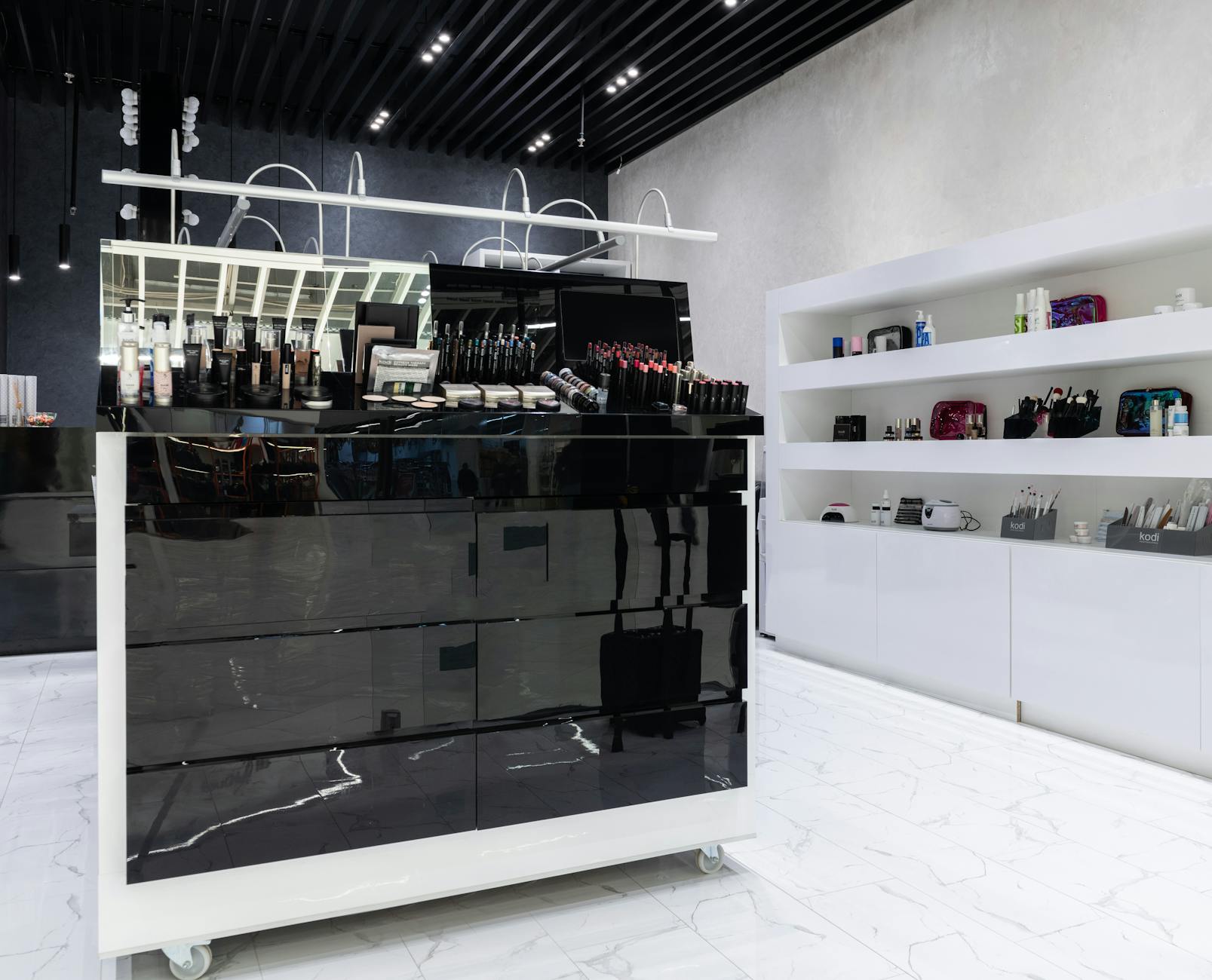
Your Amazon storefront is the only real estate on the platform where a cosmetics brand can tell its full story — no competitor ads, no sidebar distractions, just your products and your brand. Done right in 2026, it becomes a destination that converts browsers into repeat buyers and supports every paid campaign you run.
TL;DR: Building an Amazon storefront for cosmetics in 2026 requires Brand Registry enrollment, a deliberate page hierarchy that mirrors how shoppers browse beauty categories, compliant imagery, and copy that passes Amazon's editorial guidelines. Brands that pair a well-structured storefront with strong A+ Content and targeted Sponsored Brands ads see measurably higher return-on-ad-spend than those sending traffic to generic search results. This guide walks every step.
Why this matters for cosmetics brands in 2026
Beauty is one of Amazon's most competitive verticals. Shoppers search by concern ("brightening serum", "clean foundation"), not by brand name — which means your storefront has to do real brand education work the moment someone lands. Amazon's own data shows that Stores with 3 or more pages have 83% higher dwell time than single-page stores, according to Amazon Ads internal benchmarks published in 2025. For a premium cosmetics brand, dwell time maps directly to basket size.
Amazon also surfaces storefronts in Sponsored Brands headlines, giving your paid media a quality destination rather than a cluttered search-results page. Building the storefront before scaling ad spend is not optional — it is the foundation.
What you'll need
Amazon Seller Central or Vendor Central account in active standing
Brand Registry enrollment — requires a registered trademark (USPTO or equivalent EU office); approval takes 2–10 business days in 2026
Product catalog live on Amazon — at least one ASIN must be active before Stores unlocks
Brand assets: high-resolution logo (400 × 400 px minimum), hero lifestyle images (3000 × 1500 px recommended), and product shots on white
Copy drafts for each page — Amazon reviews all text; health claims and superlatives require substantiation
Time budget: first-time setup typically runs 8–15 hours across asset preparation, build, and revision cycles
Optional but high-impact: a completed A+ Content module for your hero SKUs (see Amazon A+ Content for beauty product listings)
The steps
Step 1: Enroll in Brand Registry
Log into Seller Central, navigate to Brands > Build Your Brand > Brand Registry, and submit your trademark details. Amazon matches the trademark owner to the seller account — mismatches are the most common delay. If your trademark is pending (not yet registered), Amazon now accepts pending marks in some jurisdictions, but full Stores functionality only unlocks on registration approval. Resolve this before anything else; every subsequent step depends on it.
Common mistake: Submitting a trademark registered in a different entity name than your Seller Central account. Fix the account details or use the brand representative enrollment path before submitting.
Step 2: Access Stores and choose a template
Inside Brand Registry, click Manage Stores > Create Store. Amazon offers four base templates in 2026: Marquee, Product Grid, Highlight, and a blank builder. For cosmetics, Highlight works best for hero-product brands (one hero + supporting range), while Product Grid suits multi-SKU lines (foundations with 20+ shades, for example). Pick the template that matches your catalog depth — you can always add pages later, but restructuring after launch costs time.
Common mistake: Choosing Marquee because it looks premium, then having too few products to fill the grid sections without repetition. Amazon moderators flag thin or repetitive content.
Step 3: Build the page hierarchy
A storefront is a tree: one Home page, multiple sub-pages (categories), and optionally a third tier (product detail sub-pages). Map yours to how a beauty shopper actually browses:
Home: brand story hero, best-sellers grid, one editorial feature (skin concerns, ingredient story, etc.)
Category pages: Skincare / Makeup / Body / Haircare — only build pages that reflect live, in-stock ASINs
Concern or collection pages (third tier): "Brightening", "SPF", "Clean Formula" — these mirror the search intent terms your buyers use
Keep page names short and intuitive. Amazon's internal navigation shows page names as tabs; anything over 20 characters truncates on mobile.
Common mistake: Building category pages for products not yet live on Amazon, then submitting for review. Amazon will reject or suppress those pages.
Step 4: Build the home page
The Home page has four mandatory jobs:
Identify the brand in under 3 seconds — your logo and a brand tagline in the hero tile
Surface the top-selling or highest-margin SKU — use a "Featured product" tile with the ASIN linked directly
Show the range — a 3- to 6-tile product grid below the hero
Route visitors deeper — a navigation bar linking to your sub-pages
For cosmetics, hero image quality is non-negotiable. Blurry or low-contrast images fail Amazon's image quality review and also lose the brand impression you need. Use lifestyle shots that show skin texture and finish — not just pack shots. For cosmetics-specific photography guidance, Amazon product photography for cosmetics listings covers the technical and creative requirements in detail.
Common mistake: Embedding price claims ("from $19.99") in storefront images. Amazon prohibits static price copy in Store assets because prices change; include dynamic price widgets through the builder instead.
Step 5: Write compliant copy for every page
Amazon's editorial guidelines for Stores ban:
Superlative claims without citation ("#1 serum" requires an external ranking with date)
Health or drug claims ("treats acne", "reduces wrinkles clinically") without regulatory backing
Competitor references
Time-limited promotional language ("sale", "% off")
Calls to action that redirect off Amazon
Write copy that describes the product's sensory experience, ingredients, and use-case instead. "A lightweight SPF 50 moisturizer that absorbs in 30 seconds" passes. "The best moisturizer for oily skin" without a citation does not. Every page goes through Amazon moderation — plan for at least one revision round, especially for skincare brands with active ingredients. For keyword-optimized copy that also clears compliance, see Amazon keyword research for beauty product pages.
Common mistake: Copy-pasting marketing language from your DTC site. What works on your own domain fails Amazon's guidelines roughly 60% of the time based on aggregated agency submission data.
Step 6: Submit for review and iterate
Hit Submit for Publishing. Amazon's review SLA in 2026 is 1–3 business days for standard submissions. If rejected, the rejection notice names the specific tile or copy block — fix only that element and resubmit. Do not rebuild the entire store on a rejection; that resets the review queue. Track every revision in a separate document so you are not repeating fixes across submission rounds.
Once live, return to Stores Insights (under Manage Stores > Insights) after 14 days. The metrics that matter most for cosmetics: Visitors, Sales per Visitor, and Units Sold. A Sales-per-Visitor below $1.50 on a premium cosmetics storefront suggests the page hierarchy or hero SKU choice is not matching visitor intent.
Common mistake: Treating the storefront as a one-time build. Amazon allows and expects iterative updates — seasonal hero swaps, new product launches, collection page additions. Brands that update at least quarterly consistently outperform static stores in Stores Insights data.
Step 7: Connect paid media to the storefront
A storefront with no traffic is a silent asset. The primary driver is Sponsored Brands campaigns, where your headline ad links to the storefront Home page or a specific sub-page rather than a search results page. Route collection-specific ad groups to the matching storefront sub-page — a "Clean Beauty" Sponsored Brands ad should land on your Clean Formula sub-page, not the generic home. This single routing change typically lifts campaign conversion rate by 15–25% based on aggregated performance data across managed beauty accounts in 2026.
For brands running DSP, your storefront URL is also a valid retargeting destination, letting you re-engage visitors who browsed but did not buy. See Amazon DSP advertising for beauty brands for retargeting architecture.
Troubleshooting
Store rejected for "quality issues" but no specific tile named Amazon sometimes returns a blanket rejection for image resolution. Export all hero and lifestyle images and confirm they are minimum 72 DPI at final render size. PNG files above 1 MB consistently pass; compressed JPEGs below 200 KB consistently fail.
Brand Registry enrollment stuck for more than 10 business days The most common cause is a mismatch between the trademark registrant name and the Seller account name. Open a Brand Registry support case and upload the trademark certificate directly — do not wait for automated resolution.
Storefront live but generating zero Sponsored Brands impressions Your Sponsored Brands campaign budget may be set below the minimum effective daily spend for your category. Beauty and personal care CPCs in the US averaged $1.10–$1.80 in early 2026. A $5/day budget exhausts in under 5 clicks. Set campaign budgets at $50/day minimum to generate meaningful impression volume.
Page hierarchy showing in desktop but not mobile Amazon's mobile renderer drops sub-navigation tabs when there are more than 6 pages. Consolidate to 5 category pages maximum and re-publish.
Sales-per-Visitor low despite traffic Audit the hero SKU. If your storefront home page features a low-price entry product, visitors self-select to that price point. Promote your highest-margin or best-reviewed SKU as the hero, then cross-sell lower-priced items in the supporting grid.
Compliance rejection for skincare copy Replace claim-based language with sensory and formulation language. "Clinically tested" requires a study citation with date. "Dermatologist-developed" requires the dermatologist's credential in supporting documentation submitted via Brand Registry case.
Tools and resources
Amazon Stores builder — free inside Seller Central once Brand Registry is active
Amazon Brand Analytics — tracks Share of Voice and search term data; available at Brand level inside Seller Central
Amazon Stores Insights — Visitors, Sales, Units, Source traffic breakdown; refreshes daily
Amazon storefront design for cosmetics brands — design-specific guidance for cosmetics storefronts
How to optimize Amazon listings for beauty products — listing-level optimization that feeds storefront performance
Booscala — full-service Amazon agency managing storefronts, listings, and advertising for premium beauty and cosmetics brands in the US and Europe
What to do next
Once the storefront is live and connected to Sponsored Brands, the highest-leverage next move is auditing the listings that feed into it. A well-built storefront pointing to under-optimized product pages leaks conversion at the ASIN level. The guide on how to launch a beauty brand on Amazon covers the end-to-end sequencing — storefront, listings, advertising, and review generation — that brands building for 2026 growth need.
If the storefront build or Brand Registry process is blocking your timeline, Booscala manages this end-to-end for premium beauty and cosmetics brands. The agency handles everything from initial enrollment to live storefront to first paid campaign.
FAQ
What is an Amazon storefront and does every cosmetics brand need one? An Amazon storefront is a branded multi-page microsite inside Amazon.com, accessible only to Brand Registry members. Every cosmetics brand running Sponsored Brands ads needs one — without it, your headline ads have nowhere to direct traffic except a generic search results page, which costs you branded real estate and conversion rate.
How long does it take to build an Amazon storefront for a cosmetics brand? Expect 8–15 hours for a first build covering 4–6 pages, plus 1–3 business days for Amazon's review. If assets are not ready, asset production adds 1–2 weeks. Plan 3 weeks from start to live date on a first launch in 2026.
Do you need Brand Registry to create an Amazon storefront? Yes. Brand Registry enrollment is mandatory. You need a registered trademark — pending applications unlock limited features in some jurisdictions, but full storefront functionality requires a registered mark.
How much does an Amazon storefront cost to build? Amazon charges nothing to build or host a storefront. Costs are in asset production (photography, copy, design) and labor — typically $2,000–$8,000 for a professionally built 4–6-page cosmetics storefront from a specialist agency in 2026, depending on scope and asset availability.
Can you put health claims on an Amazon cosmetics storefront? No. Amazon prohibits drug claims ("treats", "heals", "clinically proven to cure") and requires citation for superlative claims ("#1", "best"). Stick to sensory, formulation, and use-case language. Submissions with health claims are rejected at moderation and can flag your account.
What images work best on a cosmetics Amazon storefront? Lifestyle images showing product texture, application, and skin finish consistently outperform plain pack shots on premium beauty storefronts. Minimum 3000 × 1500 px for hero tiles. Avoid text overlays on images — Amazon moderators flag them, and mobile compression degrades legibility anyway.
How do you drive traffic to an Amazon storefront? Sponsored Brands campaigns are the primary driver. Secondary sources include Sponsored Display retargeting, Amazon Posts (free, Instagram-style content feed), and external social traffic via Attribution links. DSP retargeting becomes viable once the storefront has 1,000+ monthly visitors in 2026.
Should a cosmetics brand use sub-pages or keep the storefront to one page? Use sub-pages. Amazon's own data shows storefronts with 3 or more pages generate 83% higher dwell time. For a cosmetics brand with multiple categories (skincare, makeup, body), sub-pages are also the mechanism that lets Sponsored Brands ad groups route to category-specific landing pages instead of a generic home.
One last thing
Amazon added a "Follow" button to storefronts in 2023 and expanded its reach to post notifications in 2024. As of 2026, brands with 10,000+ followers on their Store can push promotional posts directly to follower feeds — free organic reach inside Amazon's walled garden. Build your follower count from day one by linking the storefront in every Sponsored Brands campaign and every external email touchpoint. Most cosmetics brands ignore this entirely and leave free re-engagement traffic on the table.
